
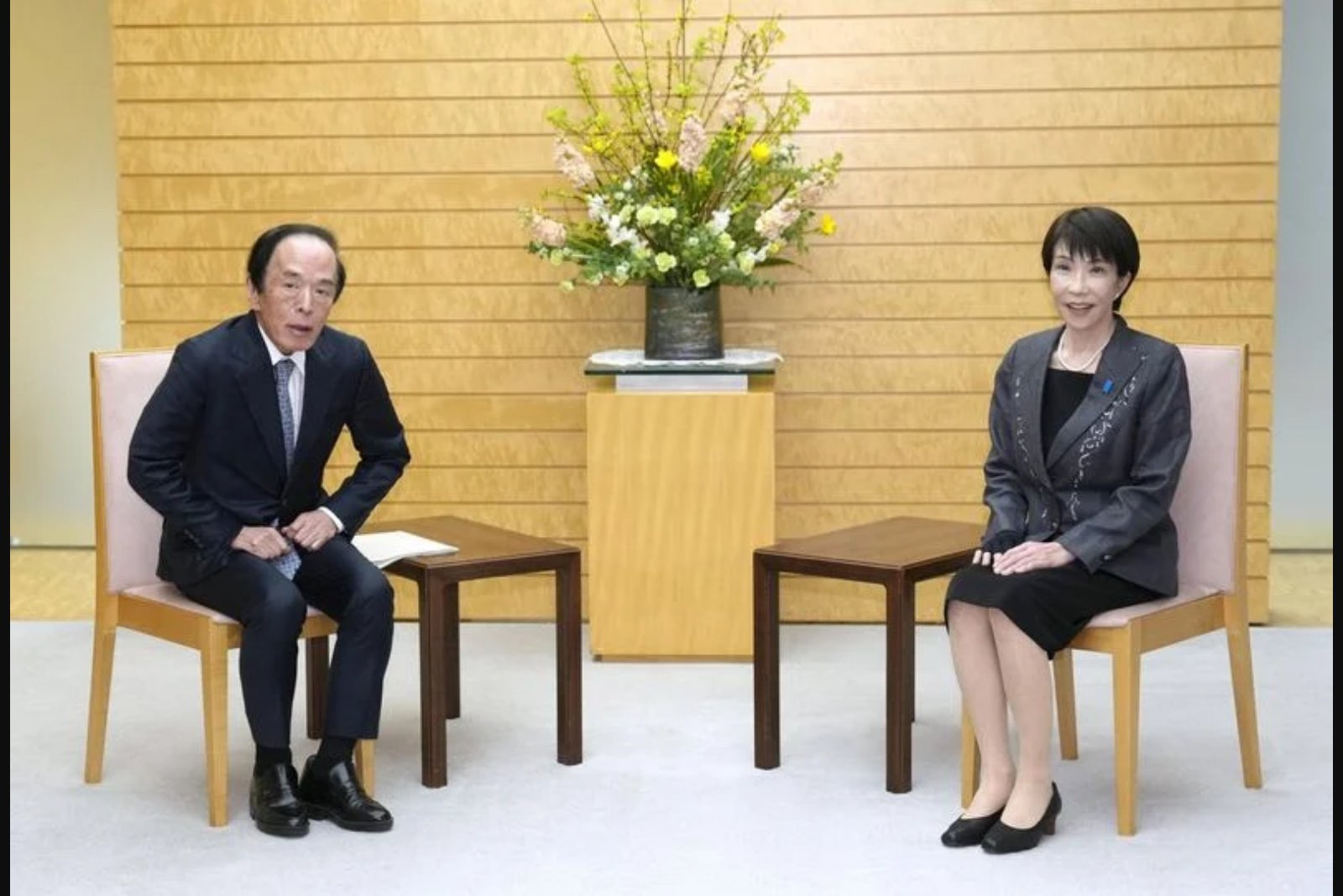
Political dynamics inside Tokyo are injecting fresh uncertainty into the Bank of Japan's monetary outlook, as the administration of Prime Minister Sanae Takaichi moves to restore dovish influence within the central bank. That strategy could shift the BOJ's longer-term direction even as policymakers continue to press ahead with rate increases in the near term.
Officials close to the government have made clear they prefer a BOJ that keeps borrowing costs relatively low, aligning monetary settings with the administration's growth-focused agenda. Those preferences are being expressed through personnel changes to the nine-member BOJ board and broader policy language the government plans to include in its first economic blueprint under Takaichi, due to be finalised in July, according to a draft reviewed by Reuters.
Government caution about publicly opposing the BOJ's decisions has not stopped it from signalling its stance. Economy Minister Minoru Kiuchi, who attended the BOJ's June meeting, urged the bank to take into account government growth initiatives when setting future policy, an intervention that underlines the administration's reservations about lifting rates further.
At the same time, Prime Minister Takaichi and her political allies have publicly advocated keeping borrowing costs down. Those calls are not expected to derail the immediate plans for rate hikes, which culminated in June with the BOJ raising its policy rate to 1% - the highest level in 31 years. But the government’s moves to influence the composition of the BOJ board are widely read as a tool to shape the bank's longer-run stance.
"The Takaichi administration can’t openly criticise the BOJ’s monetary policy for fear of upending markets," said former BOJ board member Makoto Sakurai. "But she can wield influence with personnel decisions. That’s a very powerful weapon."
Personnel shifts and what they mean
Takaichi took office last October as an advocate of policies broadly associated with 'Abenomics', and she campaigned on revivalary fiscal measures that often depend on a low-rate environment. Her initial appointments to the BOJ board signal that tilt: Toichiro Asada, who joined earlier and voted against June’s rate increase, was her first choice. The second appointee, Ayano Sato, joined in June and is also viewed as sympathetic to looser policy.
Two sitting board members viewed as hawks - Naoki Tamura and Hajime Takata - have terms that expire in July next year. That timing offers Takaichi the opportunity to further reshape the board toward officials inclined to favour easier policy. The most consequential inflection point would arrive when Governor Kazuo Ueda's term ends in early 2028. Ueda was selected by the previous administration with a mandate to unwind the BOJ's extensive stimulus programs.
Concerns about Ueda's ability to lead through that full term have already surfaced. The 74-year-old governor missed the June meeting for medical treatment and was discharged from hospital on June 19. He has not made a public statement since his discharge. If Takaichi selects Ueda’s successor - a distinct possibility given the prime minister’s strengthened political position following a landslide election - the new governor could be charged with a different brief from Ueda’s.
Some market participants name former Deputy Governor Masazumi Wakatabe, described in commentary as a reflationist academic with ties to Takaichi, among potential strong candidates to take on the top role. The article notes that such personnel changes are being interpreted as a signal of a more dovish future orientation at the BOJ.
Policy stance and the case for further hikes
Despite the political backdrop, the BOJ's present rhetoric remains focused on countering inflation. In a speech last week read by his deputy, Governor Ueda reiterated the central bank's commitment to continuing rate increases and warned about the risk of inflation overshooting the BOJ's 2% target. Hawkish board member Naoki Tamura has advocated for regular hikes - roughly once every few months - to fulfil the BOJ's role in safeguarding price stability.
Officials at the BOJ pointed to signs of robust demand related to artificial intelligence activity, a factor cited in policymakers' June meeting summary as contributing to growth and inflationary pressures. One source familiar with BOJ thinking said that Japan will likely see inflation broaden and that this should remain the central bank's focus, adding that the policy approach had not changed.
BOJ staff estimate that Japan's nominal neutral rate - the theoretical level of policy rates that neither stimulates nor cools the economy - lies between 1.1% and 2.5%. That range suggests there may still be room for further increases from current settings. In surveys collated by Reuters, most analysts expect the BOJ to raise rates to 1.25% by year-end and to 1.5% by mid-next year.
Market dynamics and external pressures
Market developments themselves may constrain how far the government can press the BOJ to pivot. The June rate increase has not arrested the yen's decline, and the currency remains near four-decade lows. A weak yen raises import prices and squeezes household purchasing power, magnifying the cost of resisting further rate tightening.
Prospective U.S. Federal Reserve rate moves also factor into the calculus. Officials and market participants caution that if the Fed resumes hiking, the BOJ could be compelled to accelerate its own pace of increases to limit currency depreciation and associated inflationary effects. One source said that a Fed tightening cycle might force the BOJ to speed up its hikes; the source requested anonymity due to the sensitivity of the subject.
Outlook and analyst views
Even as the BOJ underscores inflation concerns, politics remains an overarching risk to the bank’s path. Ryutaro Kono, chief Japan economist at BNP Paribas, expects the BOJ to raise rates in October, pointing to the central bank's emphasis on strong AI-driven demand as a driver of inflation. However, Kono also warned that political considerations could delay the timing of further hikes.
For now, the BOJ appears to be walking a careful line: sustaining a campaign of rate increases in response to broadening price pressures while confronting a government that is actively positioning personnel to favour lower rates. How that tension resolves will shape not only policy rates but also broader financial conditions in Japan.
Key takeaways
- The Takaichi administration is using board appointments and policy language to nudge the BOJ toward dovish positions without openly contradicting its decisions.
- BOJ officials continue to justify further rate hikes on inflationary risks, with staff estimates of the nominal neutral rate indicating room to raise rates from current levels.
- Market pressures - notably a weak yen and potential U.S. policy moves - could force the BOJ to tighten more aggressively despite political headwinds.