
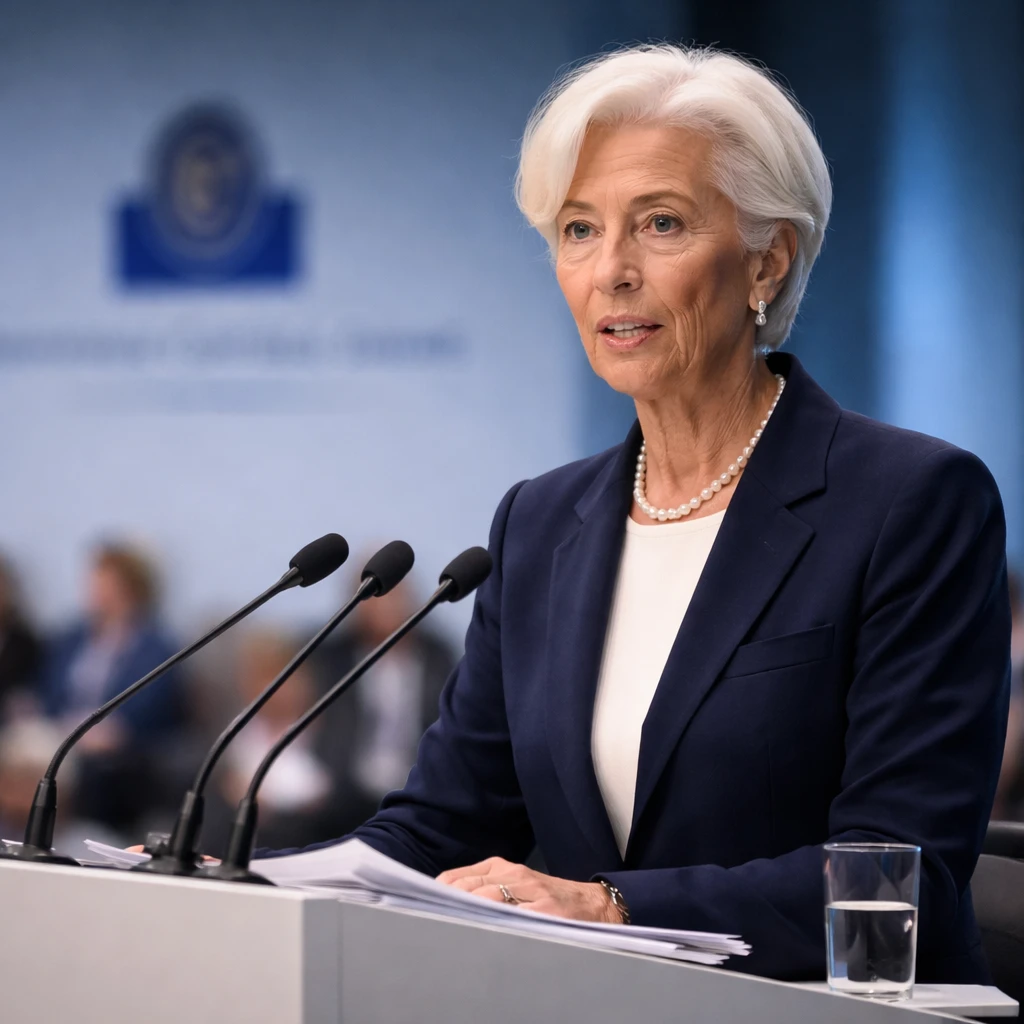
European Central Bank President Christine Lagarde has reiterated that the central bank’s decision to lift interest rates last month was warranted, even though inflation has shown signs of easing in recent data.
Speaking to French newspaper Les Echos on Thursday, Lagarde said: "We are convinced we made the right decision." She added that "as early as April, a large majority of the Governing Council was ready to make a decision but we didn’t have all the necessary information."
The ECB was the first central bank among the Group of Seven to implement a rate increase after the outbreak of the Iran war. At the time the bank acted on the view that the economic shock was spreading and that there was a need to prevent inflation from getting out of control.
Subsequent market developments have included a sharp fall in oil prices since a US-Iran peace accord was reached. In parallel, the most recent euro area data released on Wednesday showed that price growth decelerated by more than economists had expected.
Lagarde emphasized that supply shocks remain a feature of the current outlook, while noting the absence, so far, of broader second-round inflation effects. "We are facing an external supply shock that is spreading through the rest of the economy, and we are now seeing its indirect effects," she said. "We are also paying close attention to the risk of second-round effects, even though they have not materialized so far."
Key takeaways
- The ECB raised interest rates last month and the decision is being defended by its president as appropriate given available information and inflation risks.
- Oil prices have fallen sharply since a US-Iran peace accord, and euro area price growth has slowed more than expected in the latest data release.
- Officials continue to monitor supply shocks and remain alert to the possibility of second-round inflation effects, which have not yet appeared.
Context and implications
Lagarde’s comments underline the ECB’s posture that preventing inflation from becoming entrenched was a key consideration in the policy move. The interaction of external supply shocks and monetary policy remains central to the bank’s assessment of risks to price stability.
Risks and uncertainties
- Risk that supply shocks could continue to ripple through the economy - with implications for energy and inflation-sensitive sectors.
- Potential for second-round inflation effects, which so far have not materialized but remain a monitored risk for policymakers and markets.
- Market and economic responses to changing oil prices create uncertainty for inflation and growth readings in the near term.