
Economy June 15, 2026 11:02 AM

IMF says global growth has held up so far, but elevated risks remain

Kristalina Georgieva warns that renewed conflict or supply shocks could derail an otherwise resilient global economy

By Ajmal Hussain
Share
Twitter Reddit Facebook LinkedIn

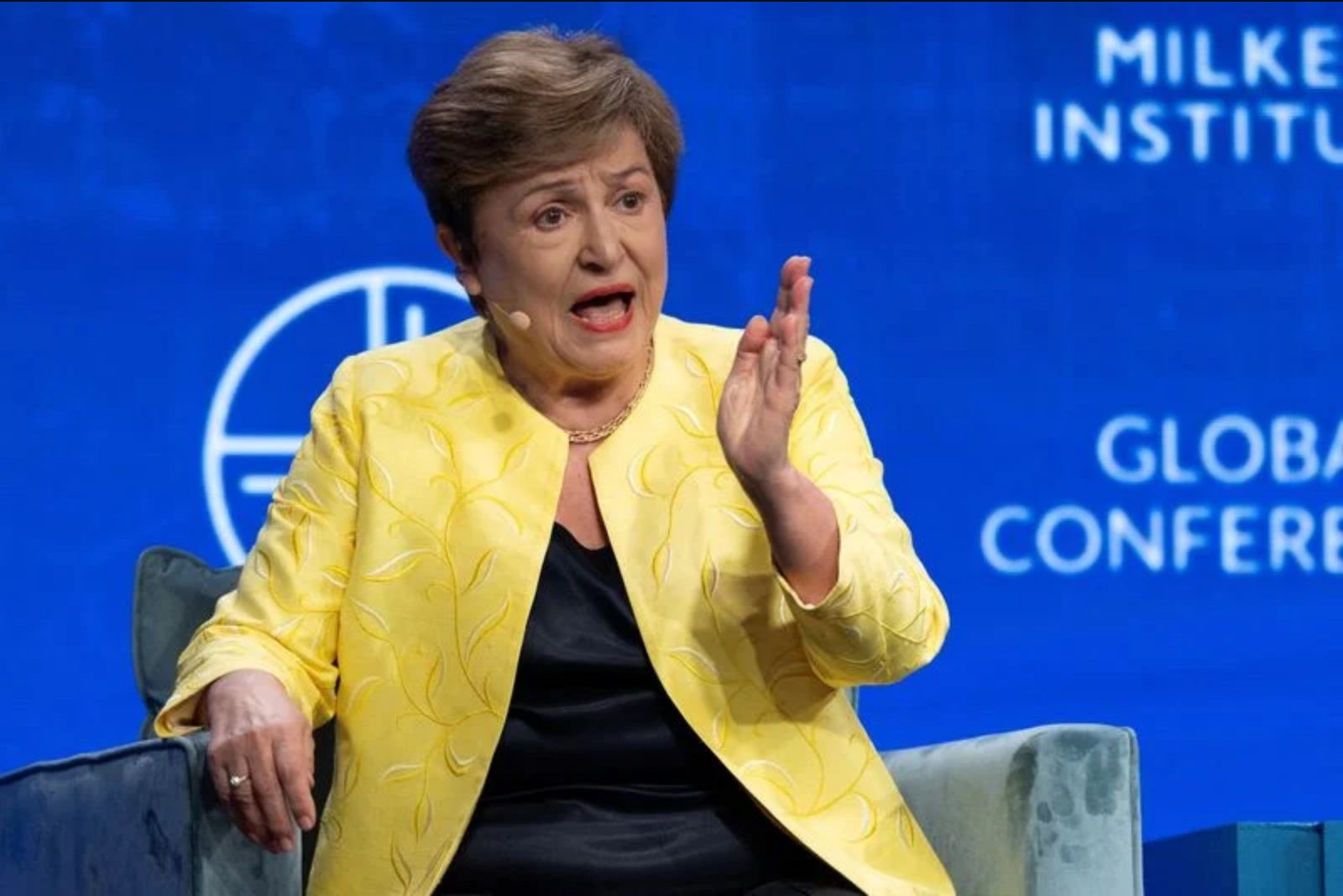
IMF Managing Director Kristalina Georgieva said the world economy is managing the fallout from the Middle East war so far, despite higher commodity prices, rising inflation and tighter financial conditions. She welcomed a U.S.-Iran agreement to end hostilities and reopen the Strait of Hormuz but cautioned that an escalation or supply disruptions would present a clear risk to global growth. The IMF will publish an updated forecast on July 8 after issuing three scenarios in April.

IMF says global growth has held up so far, but elevated risks remain
Summarize with
ChatGPT Perplexity Claude Grok Gemini

Key Points

  • The IMF says the global economy is holding up despite higher commodity prices, rising inflation and strained financial conditions - sectors impacted include energy markets, consumer prices and financial markets.
  • A U.S.-Iran framework deal to end their war and reopen the Strait of Hormuz was welcomed by the IMF, offering a potential easing of near-term supply pressures in energy markets.
  • The IMF will release an updated forecast on July 8; April scenarios included an adverse path showing 2.5% growth in 2026 and 5.4% headline inflation, and a reference scenario projecting 3.1% growth in 2026.

WASHINGTON, June 15 - The global economy has, up to now, absorbed the shock of the Middle East war without showing clear signs of a synchronized slowdown, IMF Managing Director Kristalina Georgieva said on Monday. In a new blog post she noted that commodity prices, inflation and financial conditions have been affected by the conflict - but not yet to a degree that signals a global contraction.

Georgieva praised a recent agreement reached on Sunday between the U.S. and Iran to end their war and to reopen the Strait of Hormuz, calling it an important development. At the same time she issued a warning: a deepening of the conflict or renewed supply disruptions would pose a "clear risk to global growth," according to her post.

The IMF plans to issue an updated economic forecast on July 8. In April the fund published three possible scenarios for global gross domestic product growth in 2026 and 2027. The middle, labeled the "adverse scenario," projected global growth slowing to 2.5% in 2026 with headline inflation running at 5.4%.

Last month Georgieva had indicated the adverse scenario appeared to be unfolding. Her latest commentary, however, suggests the IMF could move back toward its reference scenario - the projection that assumed the Iran conflict would be short-lived and that envisioned 3.1% growth in 2026.

The framework deal between the U.S. and Iran represents the most significant step yet toward ending a war that began with joint U.S.-Israeli strikes on Iran in February and then widened into a regional conflict. That escalation has killed thousands, disrupted energy markets and heightened concerns about a possible global recession.

"More than three months into the war in the Middle East, the global economy appears to be holding up. Commodity prices, inflation and expectations for it, and financial conditions have all been impacted - but not yet in ways that signal a global slowdown," Georgieva wrote.

The coming weeks will test whether the recent diplomatic move and a reopening of a critical maritime chokepoint are sufficient to prevent the adverse scenario from materializing. The IMF's July 8 update will provide a refreshed assessment based on developments since the fund's April scenarios.


Summary: Georgieva says global growth has so far withstood the economic shocks from the Middle East war, but stresses that an intensification of hostilities or further supply disruptions would be a clear downside risk. The IMF will publish updated forecasts on July 8 after having laid out three scenarios in April.

Risks

  • An intensification of the Middle East conflict could disrupt energy supplies and push commodity prices higher, affecting energy and inflation-sensitive sectors.
  • Renewed supply chain disruptions stemming from the war risk tightening financial conditions further and weighing on global growth, with potential spillovers to financial markets.
  • If the adverse scenario proves more accurate than the reference case, headline inflation and slower growth would present downside risks for consumption and investment across multiple sectors.

More from Economy

Euro-area yields slide after US-Iran preliminary deal eases oil supply concerns Jun 15, 2026 Undersea Cable Near Tartous Damaged in Alleged Sabotage, Syria Faces Widespread Internet Disruptions Jun 15, 2026 IMF warns economic risks remain high despite reopening of Strait of Hormuz Jun 15, 2026 Builder Confidence Slips in June as Rates and Material Costs Bite Jun 15, 2026 Merz Says U.S.-Iran Peace Deal Could Help Steady Global Economy, Stresses Lebanon Clause Jun 15, 2026