
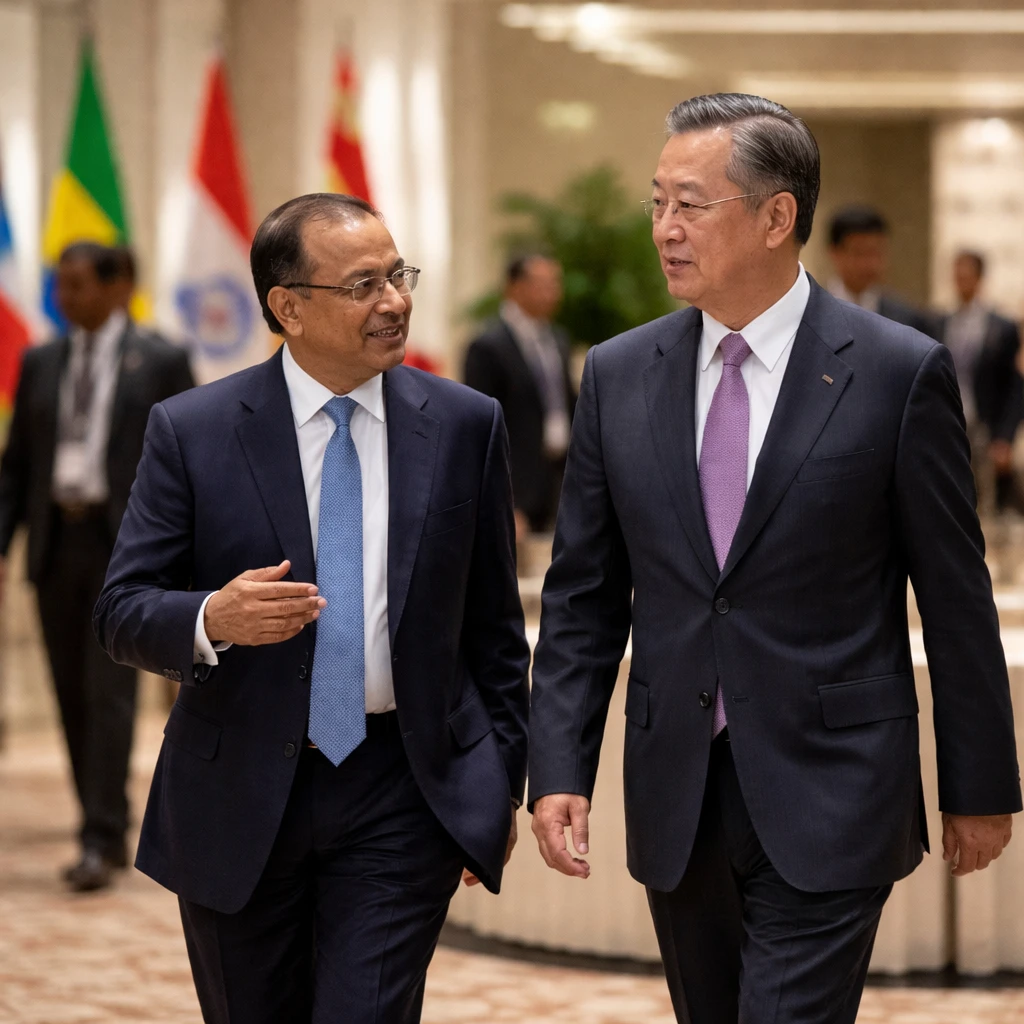
Indian National Security Adviser Ajit Doval and Chinese Foreign Minister Wang Yi met on Monday during a BRICS National Security Advisers' meeting convened in New Delhi, the Indian foreign ministry said.
India is serving as chair of the BRICS gathering, which runs in New Delhi on Monday and Tuesday, and hosted the bilateral exchange between the two senior officials as part of the larger multilateral meeting.
In an official statement, the foreign ministry described the conversations between Doval and Wang as "constructive and forward-looking." The statement said the two reviewed recent developments in bilateral relations and recorded progress toward a gradual normalization of ties.
The ministry also noted that relations between the two neighboring countries improved in 2024, marking an end to years of tension that began with a border clash in 2020.
What took place
The encounter between the Indian national security adviser and the Chinese foreign minister was held in the course of the BRICS meeting of national security advisers. Officials publicly characterized the discussion as constructive and forward-looking, and indicated that both sides took stock of recent bilateral developments.
Officials specifically noted progress toward gradual normalization without detailing specific agreements or steps taken during the meeting. The emphasis in the statement was on assessing recent trends in the bilateral relationship.
Context within BRICS
The meeting was set against the backdrop of India chairing the BRICS session. BRICS includes the founding members Brazil, Russia, India, China and South Africa, along with additional countries that joined later; the gathering of national security advisers provided the venue for the Doval-Wang discussion.
Limitations of the public record
The ministry's statement provides a concise account of the meeting's tone and topics, but it offers limited public detail on specific outcomes. It affirms an improvement in ties during 2024 and references the 2020 border clash as the starting point of earlier tensions, while stopping short of specifying next steps or timelines for normalization.
Given the information released, the meeting is presented as part of an ongoing process of engagement between the two governments rather than as a conclusive settlement of prior disputes.