
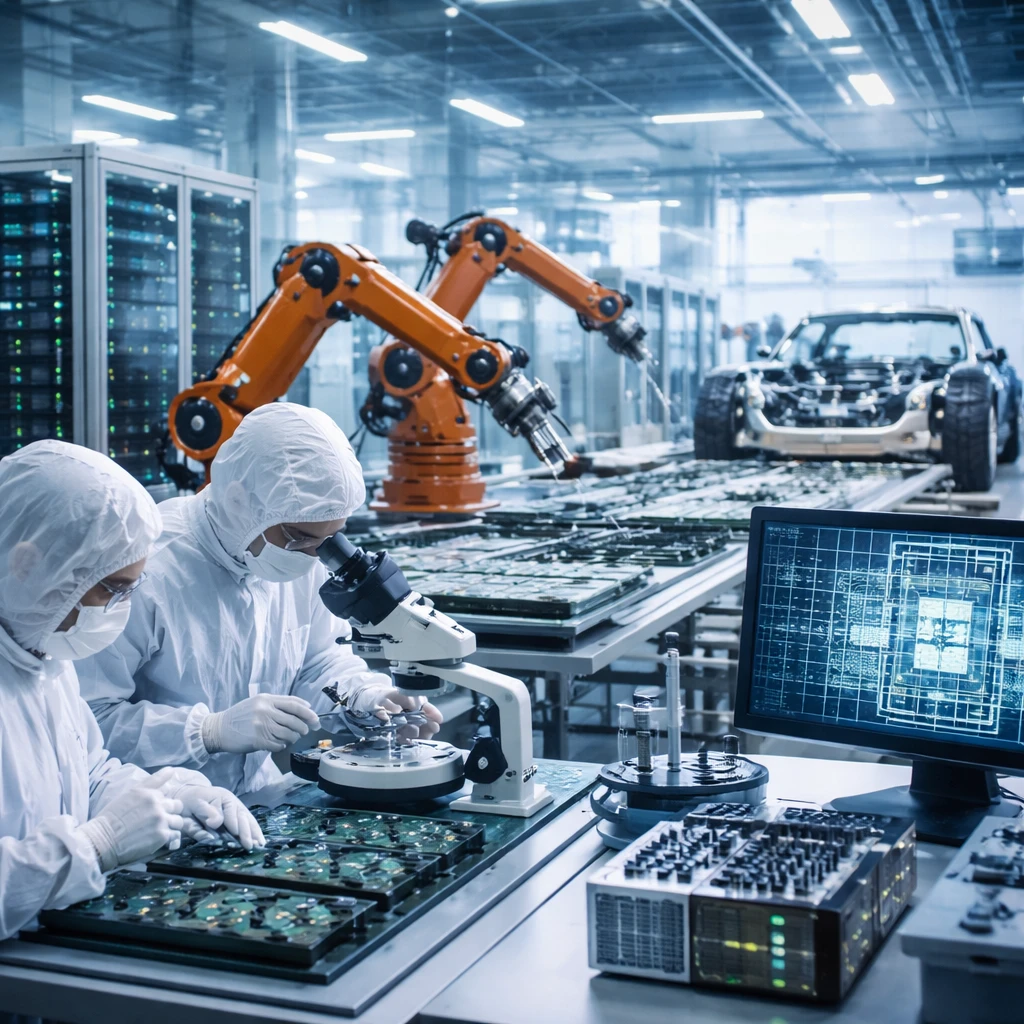
China’s economic performance in May presented two contrasting dynamics, Citi said in a research note, with an artificial intelligence-led manufacturing upswing distancing itself from a softening domestic economy.
The positive side of the ledger was centered on high-technology manufacturing. Output in high-tech sectors expanded at its fastest rate in five years, supporting both industrial production and exports, Citi noted. Specific areas of advance included chipmaking, robotics and new energy vehicles. Spending on telecom equipment and intellectual property accelerated as well, contributing to the technology-led momentum.
By contrast, domestic demand weakened. Retail sales slipped, marking the first decline since the pandemic and falling short of already muted expectations. Fixed-asset investment continued to slide, with the pace of decline intensifying to its weakest point in about a year. Against this backdrop, consumer price inflation held steady while producer prices firmed, a combination that Citi said heightens the risk of stagflation within the domestic economy. The bank emphasized that the movement in producer prices reflected factors beyond energy costs.
For the moment, Citi said the AI-related expansion has been the dominant force, propping up headline growth even as consumption and investment lag. The bank left its growth projections unchanged for the second quarter and for full-year 2026, arguing that the sharpest phase of slowdown may already be behind the economy as year-on-year comparisons become easier in the second half of the year.
On policy, Citi expects Beijing to favor targeted interventions rather than broad-based stimulus. The bank pointed to initiatives already underway intended to support the transition toward AI and to stabilize investment. It also flagged the potential for further selective measures if job-market stress intensifies over the summer.
Consumption and household income are likely to feature at the Communist Party's July Politburo meeting, Citi said. However, with headline growth holding up, the threshold for major fiscal stimulus remains high. The bank does not expect an outright increase in the budget deficit or a higher government bond issuance quota. Citi also said monetary policy was not the driving factor behind the policy response, though it maintained its view that a modest interest rate cut could occur later this year.
Citi characterized the current split as an economy where technology and trade are shouldering growth while households and private investment are being left behind. China has faced weakening consumer spending since the COVID-19 crisis, a trend that has been made worse by a prolonged downturn in the property market. Citi also identified persistent trade friction with the United States and a 2026 Middle East crisis as sources of heightened uncertainty. Finally, Beijing has set a softer economic growth target for 2026 compared with the prior year.