
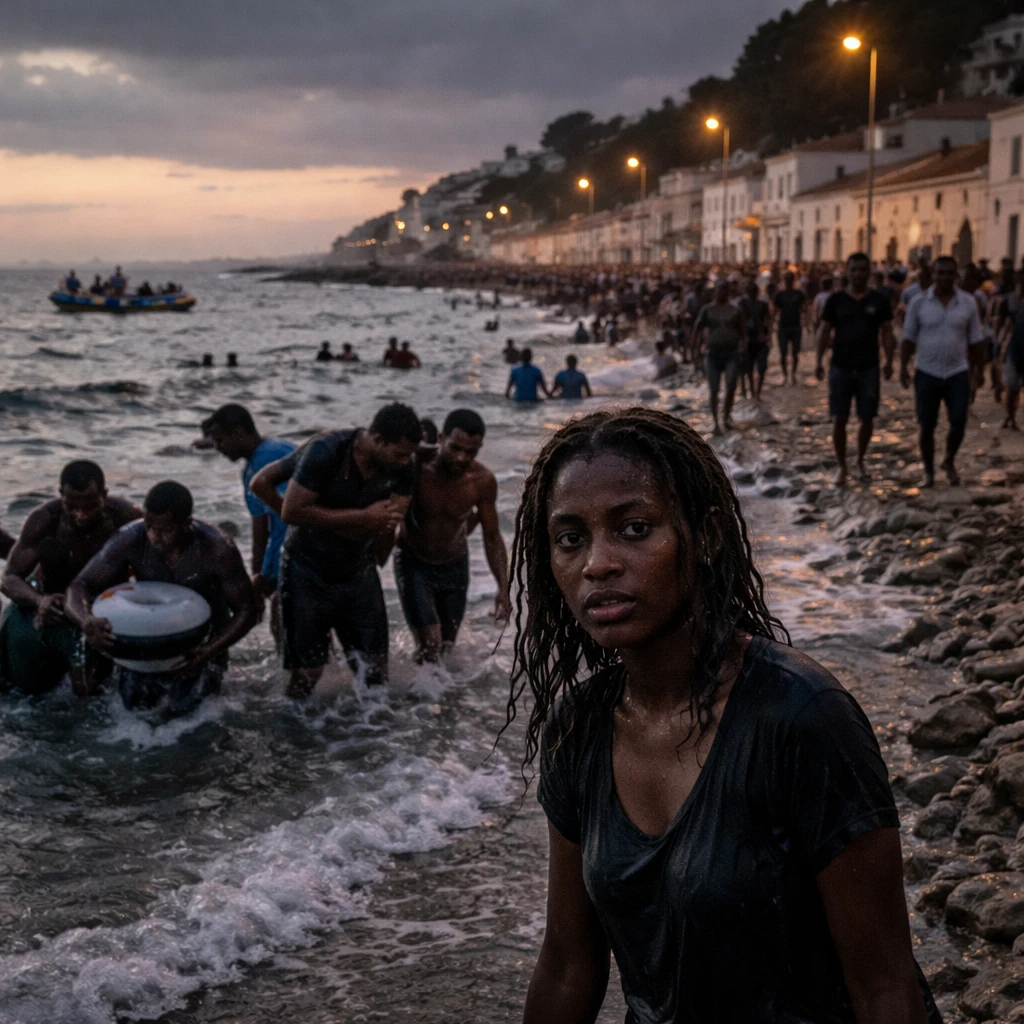
What started as a small number of arrivals at the Spanish North African enclave of Ceuta mushroomed into a dramatic mass movement after a series of viral online posts and misreadings of a legal decision. Initial scenes of smiling young people on Ceuta’s streets and a wave of social media content helped transform a trickle of migrants into tens of thousands who swam toward the enclave in a single surge, according to official tallies and interviews with migrants.
The consequence was deadly. More than 80 people either drowned or were crushed in a stampede, according to official counts. The sudden influx also produced chaotic scenes as Spain’s authorities coped with the unexpected arrival of such large numbers.
How misinformation and media coverage converged
A decision by Spain’s Supreme Court issued about three weeks prior to the surge played a key role in shaping expectations among would-be migrants. The court ruled that migrants intercepted at sea could not be immediately pushed back at the borders of Spain’s North African territories of Ceuta and Melilla. Legal experts noted the ruling does not prevent their summary return afterwards, but parts of the decision were widely misinterpreted.
As inaccurate readings of the ruling circulated, claims emerged that anyone who reached Ceuta - whether by sea or by land - would be immune from return to Morocco. That narrative spread rapidly through short-form videos and social media posts. In one deleted clip that was later reposted, a young Moroccan man filmed on a street in Germany is shown saying, "Never believe those who tell you that if you get into Ceuta, they will send you back. You will not be sent back."
In addition to court-related misreadings, posts on Meta platforms since July 7 falsely suggested that a regularisation programme for irregular migrants in Spain would end on July 30. One widely shared post attracted more than 28,000 likes. In fact, irregular migrants who had already been in Spain for at least five months by the end of 2025 could submit applications during an April-to-June window. The Spanish government received more than double the 500,000 registrations it had expected and did not extend the deadline. Despite this, messages alleging an imminent cutoff circulated again in the early hours of July 30.
Many of the videos and online groups that amplified calls to rush to Ceuta have since been removed; their original posting dates are not always clear. Authorities in Morocco have shown sensitivity to such online activity: in 2024, Moroccan prosecutors pursued scores of suspected online instigators connected to a foiled mass crossing.
Local reporting and images that unintentionally encouraged crossings
By July 23, roughly 100 people had reached Ceuta, according to coverage by a local outlet that linked those arrivals to the Supreme Court decision. That framing was later echoed by both Spanish and Moroccan officials, who accused criminal networks of exploiting misinformation on social media. Video footage broadcast online by the local outlet showed groups of young men in Ceuta smiling and flashing thumbs-up and V-signs. Migrants interviewed afterward said those images had the unintended effect of encouraging others to try the crossing.
A subsequent report by the same outlet on July 28 carried the caption "Ceuta can’t take it anymore" and included images of two grinning, waterlogged young women walking through the city after making the crossing. Three migrants told investigators that the clip was widely viewed in Morocco and helped spur further attempts.
Influencers, deceptive clips and rapid escalation
The momentum accelerated as social media influencers with sizable followings began posting clips of themselves making the swim, some outfitted with wetsuits and swim rings. Among those who decided to attempt the crossing after seeing such coverage was Mounim Belhaj, a dog groomer with 31,000 followers on Instagram. He said he was encouraged by reporting that migrants were being housed at Ceuta’s reception centre and that "Spanish media were showing good treatment of migrants arriving in Spain and that encouraged us a lot to go there."
Not all widely viewed footage showed actual crossings into Ceuta. One clip, watched millions of times, featured a young man swimming with a selfie stick toward what some posts identified as Ceuta; the video had in fact been shot earlier in a Moroccan Atlantic coastal city. Despite such inaccuracies, the next morning saw a massive increase in numbers: Spanish authorities reported that more than 70,000 people entered Ceuta irregularly.
Chat groups and calls to act fast
Private and public chat groups appear to have contributed to the speed and scale of the movement. A report by a Spanish security analyst identified two public WhatsApp groups, administered by Algerian phone numbers, with a combined membership of 3,700. Those groups reportedly provided route advice and urgent prompts such as, "Those who do not move today will regret it tomorrow." The analyst was unable to identify the administrators, and the groups have since been deleted; independent verification of their messages was not possible.
Aftermath: departures, remaining stranded and humanitarian strain
Within a short period, many of those who had reached Ceuta turned back, driven away by hunger and hostility. Authorities said the vast majority returned by the following evening. Nonetheless, thousands remain stranded in and around Ceuta. Those most vulnerable include sub-Saharan Africans and unaccompanied minors, categories that cannot be deported immediately under existing rules.
Belhaj, reflecting on his decision after returning, said, "We made a mistake in going there. There was only hunger." The episode highlights how images, mixed messages about legal rights and rapid online contagion can combine to produce sudden and dangerous mass movements.
The incident underlines the intersection of media representation, social platforms and migration flows, and the difficulties authorities face in managing both the physical and informational dimensions of sudden crossings. Much of the online content that spurred the surge has been deleted, but investigators and officials continue to examine how the cascade of posts and messages translated into real-world movement with tragic consequences.