
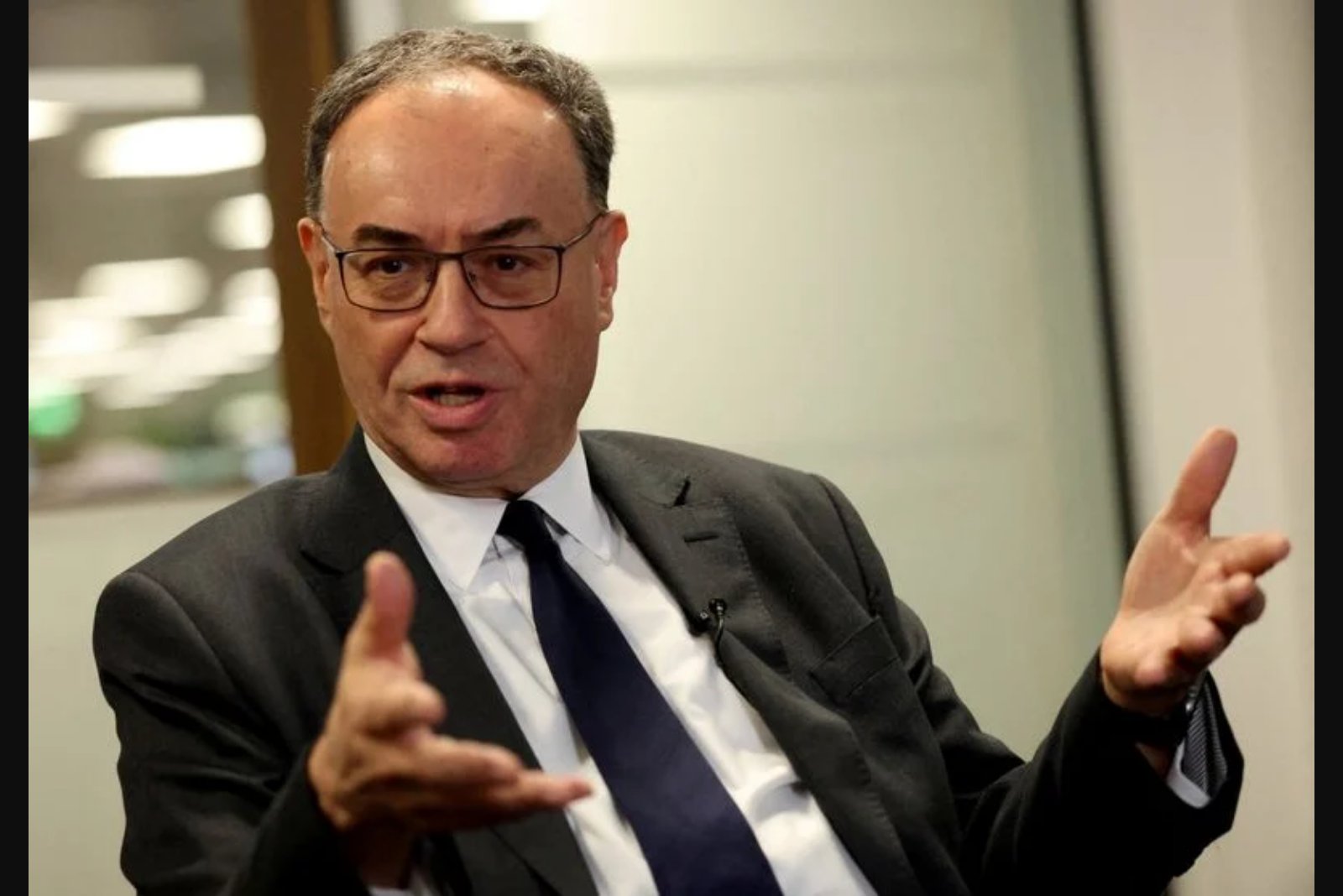
The Bank of England's Monetary Policy Committee (MPC) left the Bank Rate at 3.75% after a 7-2 vote at its June meeting, according to the minutes released. Committee members laid out differing views on the outlook for rates and the risks to inflation, particularly from recent movements in energy markets.
Majority view - maintain Bank Rate at 3.75%
Governor Andrew Bailey, who voted to maintain the rate, noted a notable drop in energy prices "in recent days, reflecting progress on talks involving U.S. and Iran. But the situation remains unpredictable, and there is clearly a risk that energy prices remain elevated for an extended duration." He added that he was "content at the present time with holding, while accepting that risks to inflation and interest rates are on the upside, as reflected in the upward slope in the sterling yield curve, which appears to be accounted for more by risk premia than expected rates." The governor said he would "respond promptly to any signals that an extended period of elevated energy prices could be leading to stronger possible second-round effects."
Deputy Governor Sarah Breeden, also in the maintain camp, said: "I remain committed to acting early and decisively should material second-round effects become likely."
External member Swati Dhingra, who voted to keep Bank Rate unchanged, commented: "If the situation (on price pressures) were to worsen, this may warrant some further tightening. But I do not see a compelling case to increase Bank Rate pre-emptively without new evidence of more intense first-round shocks."
Deputy Governor Clare Lombardelli warned that "were inflation signals to indicate inflation would persist above target, this would require policy to respond more forcefully to inflation pressures." She supported maintaining the current stance at the meeting.
External MPC member Catherine Mann explained her approach to timing: "Why wait (to hike rates)? Research shows that a forceful Bank Rate decision can have a quick effect on inflation and inflation expectations. So I have time to continue to evaluate measures of inflation expectations." She voted to hold while continuing to monitor data.
Deputy Governor Dave Ramsden said he continued to place "about equal weight on Scenarios A and B materialising after the summer, but even less weight than before on Scenario C." He added that "holding Bank Rate at this meeting keeps options open." Ramsden supported the pause.
External member Alan Taylor argued that, "Absent worse news, I cannot see a case for tightening now, and an active hold is reasonable. If the conflict resolution holds, and risks diminish, lower rates could be preferred." He voted to maintain Bank Rate at 3.75%.
Minority view - vote to raise Bank Rate to 4%
Two members dissented in favour of a 25 basis point increase to 4%. External MPC member Megan Greene said: "A proactive hike now in Bank Rate should help anchor inflation expectations."
Chief Economist Hugh Pill also voted for a rise, arguing that "(A rate hike) would establish a stance of monetary policy that is well-placed to address the significant uncertainties the MPC faces."
Summary of the minutes
The minutes show a committee divided between preserving flexibility in the face of uncertain energy price dynamics and a minority that favours a pre-emptive tightening to reinforce inflation expectations. Several members highlighted the potential for energy-driven shocks to have second-round effects on inflation and said they would act if evidence of those effects emerged.
What was decided
- Bank Rate was left unchanged at 3.75%.
- The MPC vote split 7-2 in favour of holding.
- Majority members emphasised optionality given uncertain energy price developments and potential second-round inflation effects.
- Two members preferred a 25 basis point increase to 4% to more strongly anchor inflation expectations.