
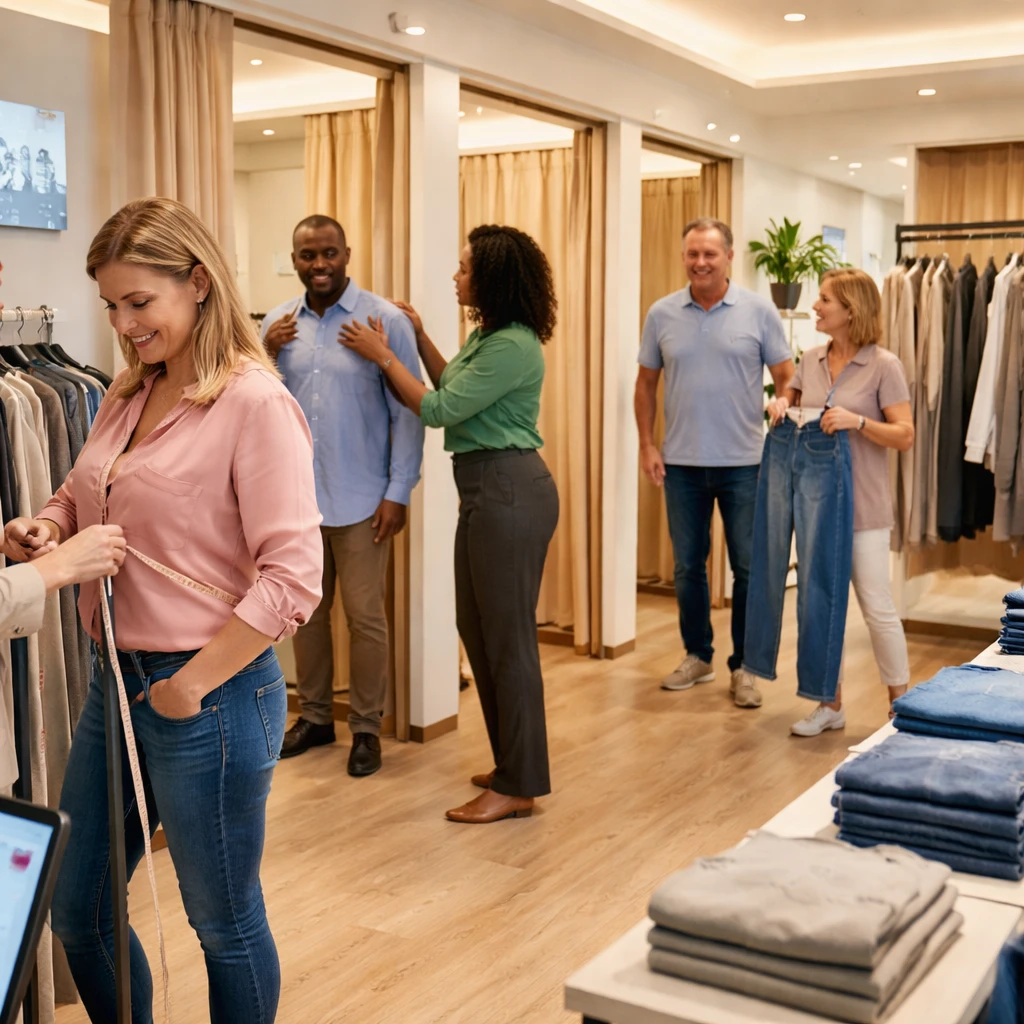
Nora Nye, 58, who has shed 80 pounds while taking the weight-loss drug Mounjaro, found a familiar retail ritual unexpectedly difficult: shopping in a department store. After losing weight for the first time in more than 30 years, the Denver-based bankruptcy lawyer walked into a Macy’s and felt overwhelmed by the task of finding clothing that fits her new size.
"Retailers are going to have to be ready for an influx of people getting into those sizes, but also needing help with it because we just don’t know where to go," Nye said. She began Mounjaro 19 months ago following a diabetes diagnosis.
Nationwide, roughly 11% of Americans are taking GLP-1 class weight-loss medications, according to Gallup. That shift in body size is translating into changed shopping behavior: many users say they prefer trying garments on in person to determine which styles and fits work for their evolving shapes.
That preference is borne out by a recent survey of 500 people conducted by ReturnPro, a company that helps retailers manage returns. The survey found that more than two-thirds of consumers using GLP-1 medications reported that sizing changes have made them more likely to shop in-store. The result has retailers reassessing how best to configure their physical locations to serve customers who are actively changing sizes.
Retailers weigh in on store adjustments
Analysts and industry leaders say the return of dressing-room traffic could slow the migration toward a purely online model for apparel commerce. "It has the potential to at least slow the flight to purely online," said Don Johnson, a consumer strategist at EY-Parthenon. "You have to be more thoughtful about the in-store experience."
Ali Furman, PwC’s consumer markets industry leader, said department stores, discount chains and boutiques are evaluating the ranges of sizes they stock, the layout and amenities of dressing rooms, and the styling services offered to shoppers. Furman predicted that many of those in-store investments would be implemented within the next year.
Some retailers are already seeing results. Discount chain Ross Stores reported a 17% increase in first-quarter comparable-store sales; CEO Jim Conroy in May attributed the gain to greater foot traffic and an "improved in‑store experience." Ross did not explicitly link the increase to weight-loss drugs and did not respond to a request for comment. Macy’s declined to comment.
Personalized service and technology
Small operators and independent sellers say shoppers undergoing weight loss often need a higher level of service. Amber Volkin, 43, who sells clothing through online marketplace Whatnot and at her home in Austin, Texas, began offering private styling appointments to assist customers in different stages of weight loss. Volkin, who spent 25 years in retail and is also on GLP-1 medication, said many customers lack clear guidance on fit from traditional stores.
"I had credibility, and I think that’s what people don’t have in retail stores right now," Volkin said. "If you want to bring people back to stores and give them a reason to pay a higher price for something, then you need to give them the service that goes with it." She estimates that about three-quarters of the hundreds who have shopped with her over the past two years mentioned GLP-1 weight loss.
Retailers are experimenting with technology to address inconsistent sizing. Victoria’s Secret has incorporated artificial intelligence into some fitting rooms to help shoppers request different sizes more efficiently. The lingerie retailer declined to comment.
Ami DeWille, who leads marketing at ReturnPro, said meeting the needs of these shoppers will require more personalized service in stores. "It could be AI, it could be a person who is really good at sizing," she said.
Spending behavior as weight stabilizes
Evidence from the ReturnPro survey indicates that once GLP-1 users reach a more stable weight, they are likelier to purchase higher-priced items in person. Among premium spenders in the survey, 91% said they are more likely to shop in-store after experiencing sizing changes, compared with 69% of all GLP-1 users.
Wendy Fossum and John White, both 41, provide individual examples of this pattern. The couple, who live in the Minneapolis area, lost 60 and 120 pounds respectively while taking weight-loss medications. They are searching for affordable clothing locally as they adjust to new sizes. Fossum said that once her weight stabilizes she plans to shop more at Macy’s and at local boutiques to rebuild her wardrobe. White, whose weight has already settled, said he is planning to buy a new suit in-store for the couple’s upcoming anniversary trip to Las Vegas. "It opens a lot of opportunities for where I can get my clothes," he said.
Specialty categories notice impact
Specialty retailers are reporting altered customer behavior as well. Kelly Cook, CEO of wedding fashion company David’s Bridal, said that over the last six months shoppers have been trying on twice as many dresses on average, sometimes sampling as many as 10 styles, a change she attributes to the influence of weight-loss medications on body size and fit perceptions.
For retailers, that means rethinking inventory mixes, staffing and the physical configuration of stores to provide fitting guidance and flexibility for returns and exchanges. The shift has implications for department stores, discount chains, specialty apparel retailers and the broader consumer retail sector as these businesses weigh investments in store experience and service models.
Conclusion
As a notable portion of the population experiences weight shifts tied to GLP-1 medications, shopping behavior is adapting: shoppers who have changed sizes are increasingly turning to in-person fitting and higher-touch retail services. Retailers and technology providers are testing approaches ranging from private styling appointments to AI-enhanced fitting rooms to meet demand, while some chains report stronger in-store results. How broadly and quickly these operational changes are adopted will shape the in-store retail landscape in the coming months.