
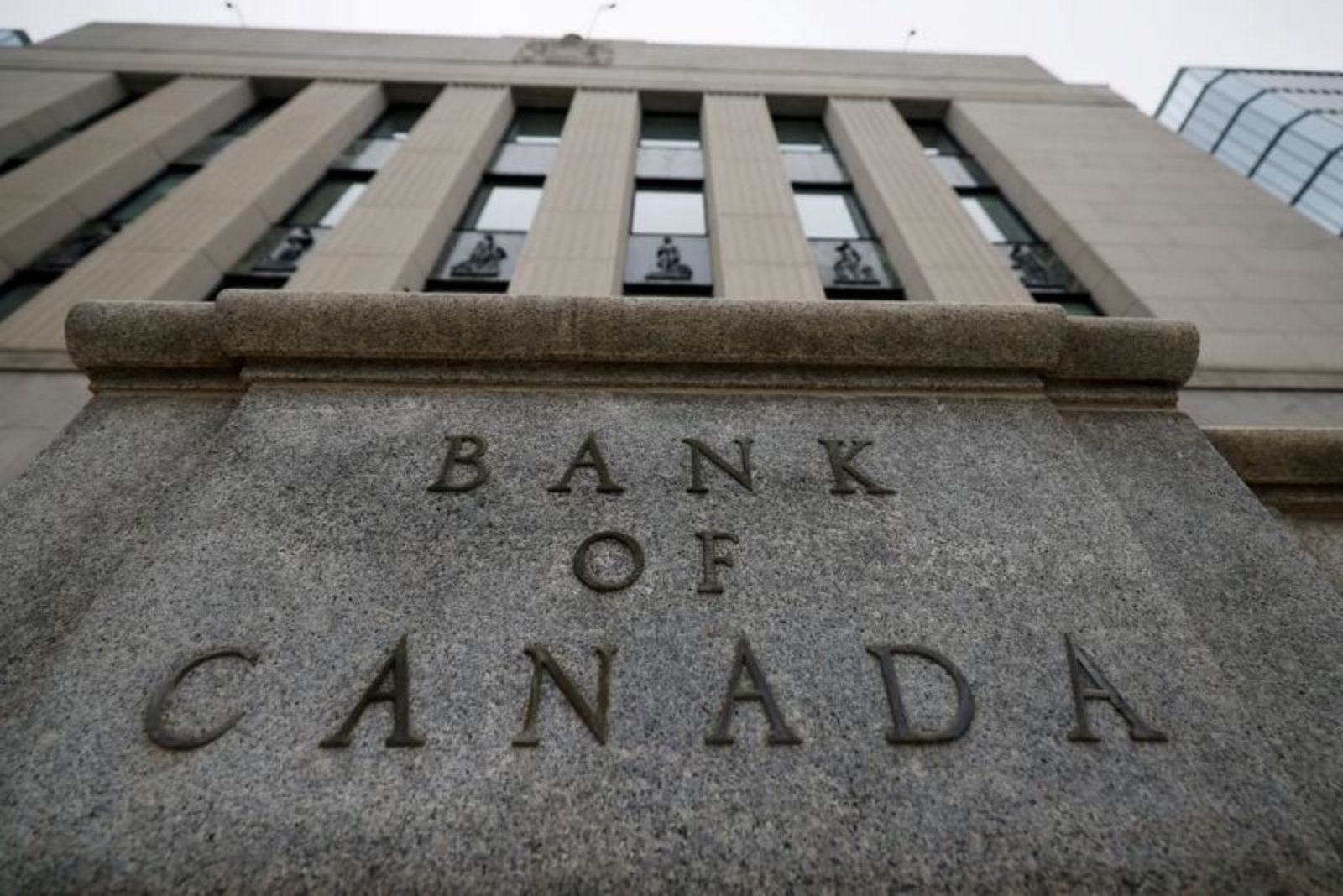
The Bank of Canada is expected to keep its overnight rate at 2.25% when it meets on July 15 and to maintain that stance well into next year, according to a July 7-10 poll of economists. The consensus view reflects an assessment that price pressures in Canada are largely contained and that the economy is on a gradual path to recovery.
Headline inflation climbed to 3.2% in May, moving above the central bank’s 1% to 3% target range for the first time since December 2023. Despite that breach, the poll indicates forecasters expect inflation to ease in the months ahead, reducing the immediacy of a policy response compared with what other major economies might face.
Policy history noted in the poll shows the Bank of Canada last cut its policy rate in October 2025 to support growth after the economy was hit by higher U.S. tariffs. Since then, higher oil prices have helped lift export revenues and the country has moved out of a technical recession. The labour market is also showing signs of recovery, factors that poll respondents said lessen the need for a near-term change in the stance of monetary policy.
All 36 economists surveyed expected the BoC to leave the overnight rate unchanged at 2.25% at the July meeting. Looking further ahead, a majority of respondents - 19 of 30 - predicted that borrowing costs would remain at current levels through at least July 2027.
“There’s no urgency to cut interest rates given signs that growth has resumed in the spring, and no need to seriously talk about hiking rates given the degree of economic slack and the stability in core inflation measures,” said Avery Shenfeld, chief economist at CIBC Capital Markets.
Poll medians showed the next policy move would likely be a hike, but not until the second half of next year. Economists laid out conditions that could prompt a rate increase or a cut. “For a hike, there will have to be more of energy price increases passing through in the economy or a de-anchoring of inflation expectations. An evolution of trade policy to the downside, broader economic contraction or higher unemployment rates could trigger a cut,” said Adam Schickling, a senior economist at Vanguard.
On inflation trajectories, the poll median put average inflation at 2.6% in 2026, with core inflation at 2.1%. Those readings suggest Canada may be better positioned than some peers to absorb future shocks without immediate policy tightening.
Economic growth expectations in the poll were modestly optimistic. Growth was forecast to average 1.8% in 2027, rising from an estimated 0.7% for the current year, supported in part by stronger export revenues.
The poll also canvassed views on trade policy risks. The U.S. administration last week declined to extend the U.S.-Mexico-Canada Agreement (USMCA), known in Canada as CUSMA. The agreement remains in place for another 10 years with annual reviews before expiry unless the three countries agree to renew it with changes. Among 17 economists who answered an additional question on the issue, all but one judged the likelihood of the U.S. withdrawing from the USMCA to be low.
“From an economic rationale perspective, there’s a strong argument to keep USMCA from the perspective of all parties involved. The deal is beneficial across the Canada-U.S. border and the U.S.-Mexico border,” said Nathan Janzen, assistant chief economist at the Royal Bank of Canada.
Labour market projections from the poll showed the unemployment rate averaging around the current level of 6.6% in 2026, consistent with the view that slack remains but is not deteriorating sharply.
Summary
A July poll of economists expects the Bank of Canada to keep its overnight rate at 2.25% at the July 15 meeting and to maintain that level into next year. Although headline inflation briefly rose above the BoC target range in May, forecasts point to a slowdown in price pressures. Economic recovery driven by higher oil revenues and signs of labour market improvement have reduced the urgency for rate adjustments.
Key points
- All 36 economists in the July 7-10 poll expected the BoC to hold the overnight rate at 2.25% at the July meeting.
- Inflation rose to 3.2% in May but poll medians project average inflation of 2.6% in 2026 and core inflation at 2.1%.
- Economic growth is expected to pick up to 1.8% in 2027 from 0.7% this year, supported by higher oil-driven export revenues; the unemployment rate is seen averaging about 6.6% in 2026.
Risks and uncertainties
- Energy price volatility - a sustained increase in energy prices passing through the economy could force the BoC to consider hiking rates, affecting energy-intensive industries and inflation-sensitive assets.
- Trade policy shifts - deterioration in trade policy or an adverse evolution of trade relations could slow growth and pressure export-dependent sectors.
- Labour market weakening - a broader economic contraction or higher unemployment rates could prompt policymakers to cut rates, with implications for consumer-facing sectors and credit markets.