
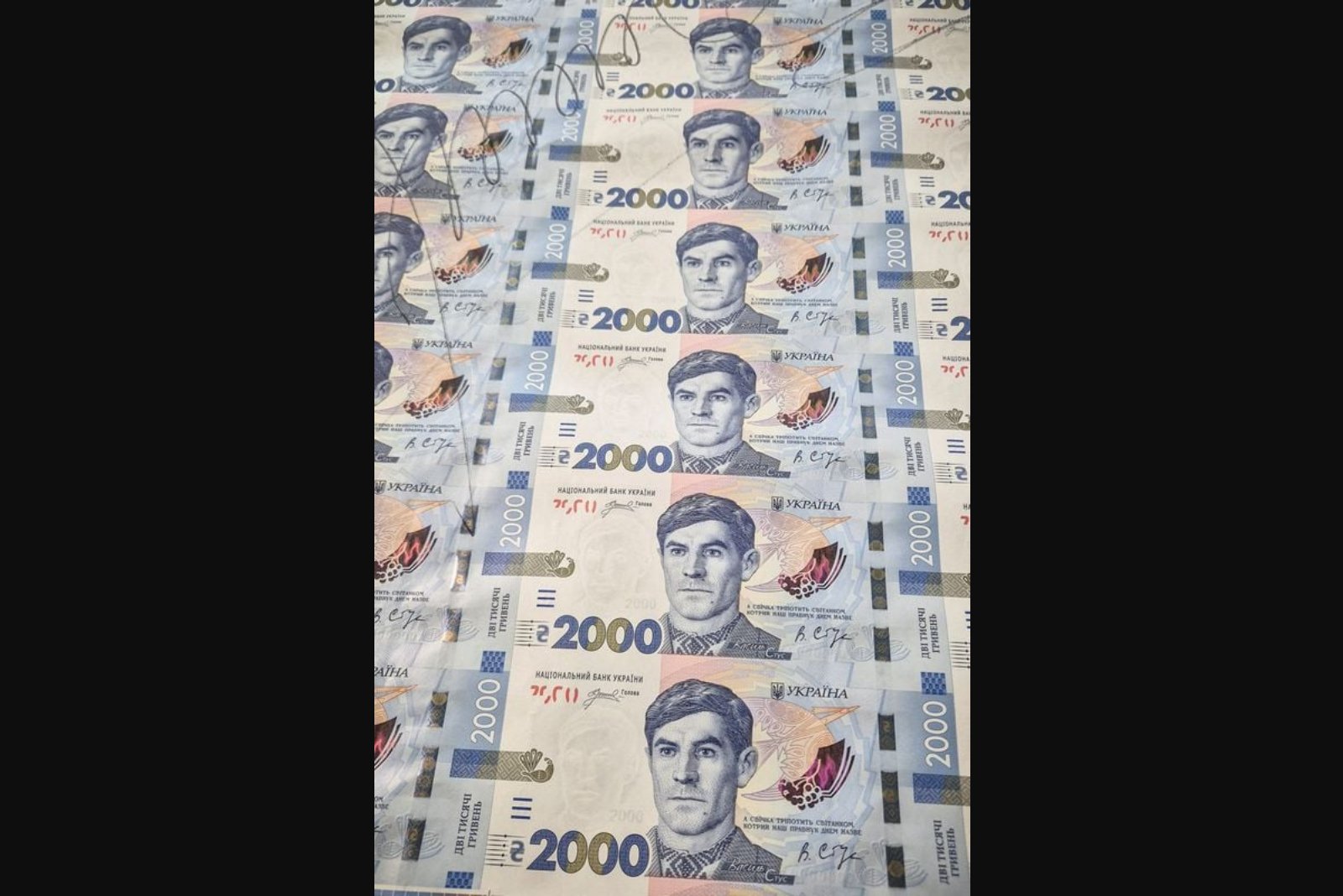
Ukraine's central bank announced on July 10 that it will issue a new 2,000-hryvnia banknote, the highest denomination in the country's currency series, to help facilitate cash transactions as wartime conditions raise inflation and interrupt banking and electronic payment systems.
The blue note, valued at roughly $45, carries a portrait of Vasyl Stus, a Soviet-era Ukrainian poet and dissident. Central Bank Governor Andriy Pyshnyi said the banknote will be put into circulation on September 4.
Unveiling the design inside the central bank's operational hall within heavily guarded government quarters, Pyshnyi framed the decision as a response to evolving economic realities. "The economy changes. Income levels, prices, the volume of cash in circulation, and people's payment behaviour all evolve," he said.
Pyshnyi stressed that resilience in the financial system requires both modern cashless infrastructure and reliable public access to cash. "The war reminds us every day that the financial system should be not only modern but also resilient. Resilience means not only a functioning cashless infrastructure, but also people's access to cash," he added.
The conflict with Russia, now in its fifth year, has caused extensive damage to Ukraine's economy, officials say. Millions have fled areas of combat, cities and critical infrastructure have been bombed, and exports, supply chains and logistics have been disrupted. Those wartime strains, officials say, have amplified the demand for cash even though most commercial transactions in Ukraine remain cashless.
Access to physical currency is particularly important in frontline regions where electronic payment systems and banking services are more likely to be impaired. The central bank reported that the stock of cash in circulation rose to 970 billion hryvnias at the start of July 2026, compared with about 390 billion hryvnias in 2019, the year the 1,000-hryvnia note was introduced.
"The structure of cash in circulation has changed. 1,000-hryvnia banknotes now account for more than 55% of the total value of all banknotes in circulation," Pyshnyi said, noting that the shift in note composition pointed to the need for a higher denomination.
Officials expect the 2,000-hryvnia bill to help reduce logistics costs and improve the efficiency of cash movement. Pyshnyi reiterated the central bank's commitment to keeping inflation under control while adapting the currency supply to current conditions.
The choice of Vasyl Stus for the note's portrait was highlighted by parliamentary speaker Ruslan Stefanchuk, who tied the image to broader themes of national identity. "This banknote is timely today as it is now when Ukraine is defending its identity," Stefanchuk said. The central bank also noted Stus's history of Soviet detention for his activism and defence of Ukraine's national culture.
By combining a higher-value note with continued emphasis on monetary stability, authorities aim to balance the logistical realities of increased cash use with their policy objective of managing inflation. The new 2,000-hryvnia note will become the largest denomination in circulation when it is released on September 4.