
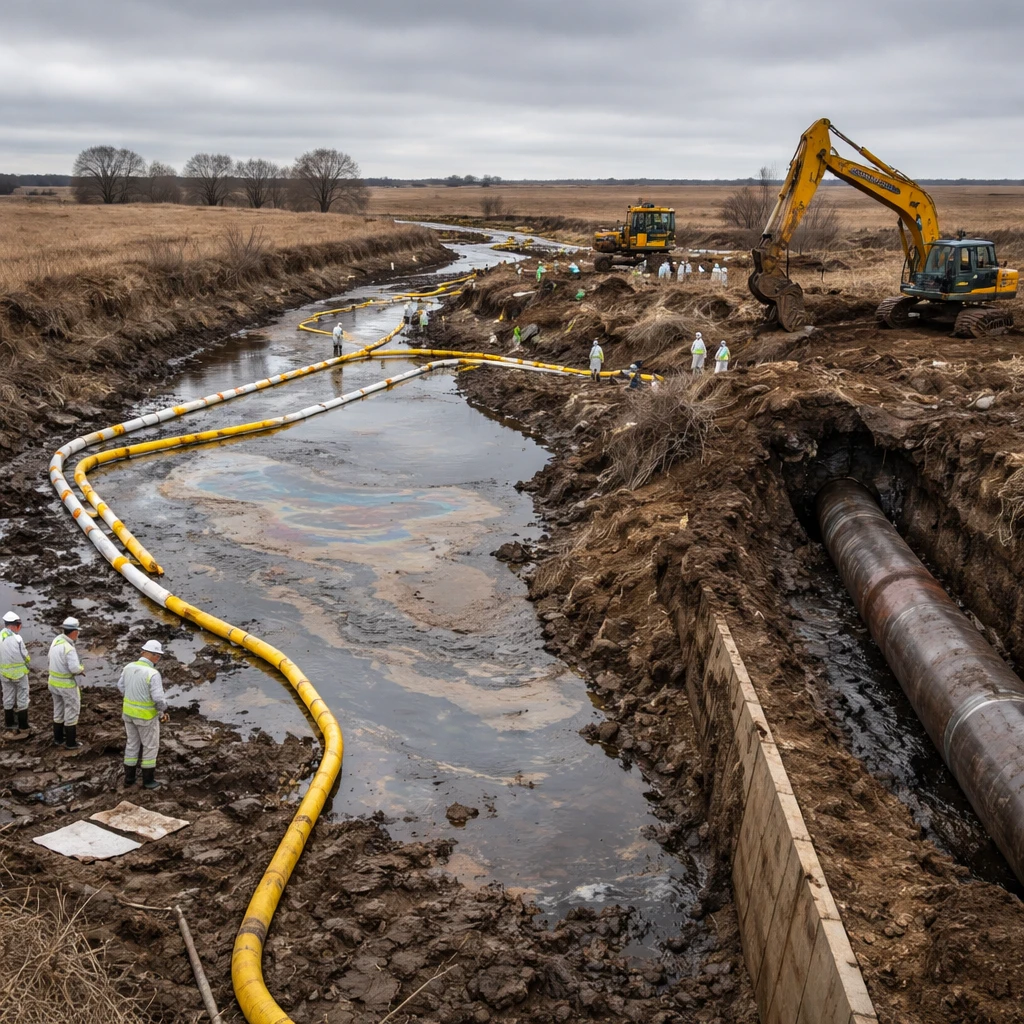
The U.S. Justice Department announced on Friday that it has filed a proposed settlement with South Bow, the Canadian company that owns and operates the Keystone oil pipeline, to resolve alleged violations of the Clean Water Act tied to a December 2022 rupture in Washington County, Kansas.
Keystone transports Canadian crude from Alberta through the U.S. Midwest and onward to the Gulf Coast, and the pipeline is described as a core component of Canada’s oil export infrastructure. In December 2022, the pipeline released roughly 14,000 barrels of crude into a creek in Washington County, marking the largest U.S. onshore oil spill in nine years.
A subsequent investigation determined the pipeline failed because of a crack in a weld. The probe concluded that the crack progressed as a result of pressure and temperature "fatigue," leading to the rupture.
Under the terms of the proposed settlement filed by the Justice Department, South Bow has agreed to pay a civil penalty of more than $26 million to address the Clean Water Act violations. In addition, the company committed to undertake work intended to prevent future similar discharges; South Bow estimates that work will cost about $40 million.
The settlement also includes a contribution from South Bow of more than $3 million to Kansas for natural resource restoration projects to resolve violations of Kansas state laws, according to the Justice Department filing.
From an operational perspective, the agreement couples a financial penalty with mandated remedial actions. The Justice Department filing frames those elements as a combined response intended to both penalize past violations and reduce the likelihood of recurrence. The proposed financial and remediation obligations are specified in the filing but do not, by themselves, guarantee future outcomes beyond the work the company has agreed to perform.
As filed, the settlement addresses federal and state law violations tied directly to the December 2022 incident and the investigation’s finding that a weld crack worsened due to pressure and temperature fatigue. The filing sets quantified remediation and penalty amounts but does not elaborate further on implementation timelines beyond the commitments described.