
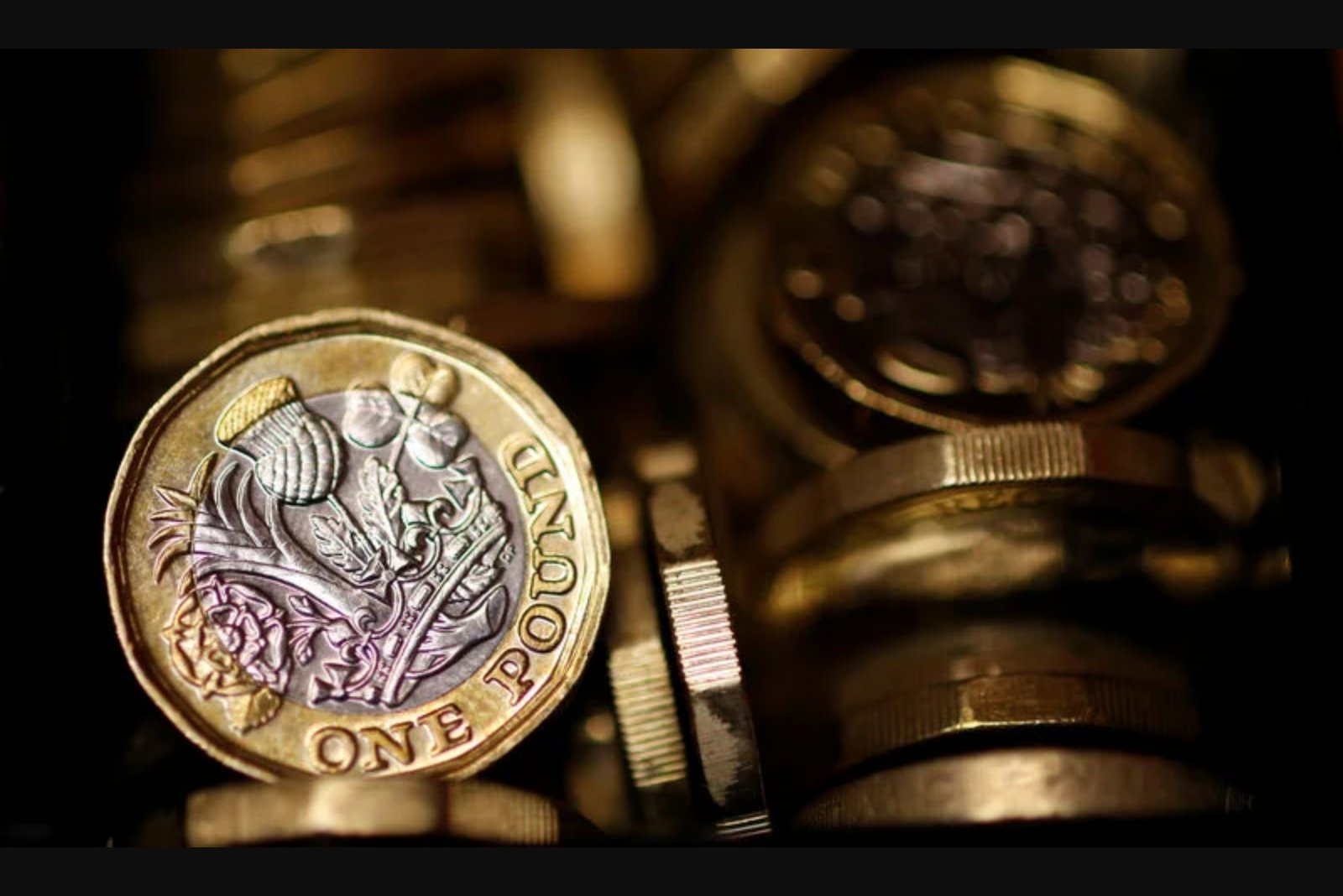
The British pound has performed better than many market participants anticipated so far this year, and Bank of America attributes a sizeable portion of that resilience to a notable pickup in foreign investment activity targeted at some of the U.K.’s most productive industries.
Strategist Kamal Sharma at Bank of America argues that the persistent balance of payments (BoP) deficit - long viewed as a structural headwind for sterling - is being partially offset by a sharp acceleration in inward mergers and acquisitions. Those transactions, Sharma says, have been clustering in areas such as artificial intelligence, biotechnology and financial services.
"Whilst this may not immediately translate into a healthier BoP position, it perhaps provides a reason why GBP has been resilient against the backdrop of ongoing political uncertainty," Sharma wrote.
BofA’s analysis shows a pronounced increase in net U.K. M&A inflows on a rolling 12-month basis since the start of 2024. The bank highlights that the majority of acquirers in this wave have come from North America and Europe. To gauge actual sterling demand, BofA focused on deals with a meaningful cash component and used that attribute as a proxy for genuine currency-driven buying.
Beyond headline volumes, the composition of the inflows appears important. Citing data from EY’s latest FDI Attractiveness Survey, BofA notes the U.K. captures roughly 25% of European financial services foreign direct investment and remains Europe’s largest hub for digital technology investment. Sharma draws a distinction between the U.K. and other European markets, saying: "The conclusions from the above is that the UK is enjoying structurally better quality FDI inflows than Europe, where 'old industries' continue to dominate."
According to BofA, the apparent shift toward higher productivity and more capital-intensive FDI should be treated as a medium-term positive for sterling valuation trends. The bank cautions, however, that these developments may not be immediately visible in official BoP statistics given the broader cyclical softness in global capital expenditure.
That caveat reflects the differing macro treatments and timing of various capital flows. Historically, one-off M&A transactions have tended to produce temporary moves in the currency that later mean-revert. BofA contrasts those episodic effects with greenfield investment and research-and-development commitments, which the bank regards as more durable.
"These flows are stickier, less reversible than portfolio/M&A flows," Sharma wrote, adding they should "support the currency over the medium term."
Market price action this year has shown the pound holding up despite continued debate about the government’s fiscal position. BofA highlights that EUR/GBP - commonly used by market participants as a barometer of U.K. political and fiscal risk - has moved lower since January even as uncertainty around public finances persists. That pattern, the strategist contends, suggests capital flows into the U.K. have been an underappreciated offset to concerns over the country’s fiscal backdrop.
For investors and analysts monitoring currency dynamics, BofA’s work underscores the need to consider not just headline fiscal metrics, but also the quality and permanence of cross-border capital flows into productive parts of the economy. While the balance of payments remains a structural metric worth monitoring, the evolving mix of inflows - from cash-heavy M&A to sticky greenfield projects and R&D - could alter medium-term sterling fundamentals if the trends persist.
Note: The analysis above reflects Bank of America’s conclusions as reported by its strategist and cites the referenced FDI survey as used by the bank.