
China's recent decision to eliminate most tariffs on goods from 53 African nations has coincided with a sharp surge in trade with the continent and is expected to lift the use of the Chinese yuan in cross-border settlements. Customs figures show China-Africa trade climbed by nearly 18% last year, and officials and bankers say the tariff change, announced in May, is already increasing cargo flows into Chinese ports and boosting demand to settle in yuan rather than dollars.
From Nigerian cattle bone pellets to Kenyan avocado oil and South African apples, Chinese importers are receiving a wider range of African shipments following the tariff relaxation, and some African sellers and banks are converting those flows into yuan-denominated transactions.
Policy and market drivers
Beijing has framed the tariff removals as a measure to support African exports amid what its commerce ministry described as challenges posed by unilateralism and protectionism. A ministry spokesman, He Yadong, said China is leveraging the advantages of its large market to assist African nations.
International Monetary Fund research, cited by bankers and officials, indicates that the use of the yuan tends to increase alongside greater trade exposure to China. The Chinese government also unveiled additional measures to promote the international use of the yuan at a recent policy announcement.
Payment systems and bank activity
Bankers point out that the expansion of yuan settlements reflects rising trade volumes rather than an immediate challenge to the dominance of the U.S. dollar. "Yuan transactions are growing," said Birju Sanghrajka, chief executive officer of Standard Chartered Kenya, while noting he sees little sign of the yuan unseating the dollar. "We see it as complementary."
Standard Chartered Kenya has started issuing letters of credit denominated in yuan, enabling Kenyan clients to avoid conversion through the dollar and potentially secure import discounts by eliminating extra currency conversion costs.
Standard Bank of South Africa became the first African commercial bank to connect to China’s Cross-Border Interbank Payment System (CIPS) in November, and processed $500 million via that channel in the first four months after connection. "The transactions we have seen have been primarily driven by import and export activities between China and Africa," said Ives Yang, head of sales at Standard Bank CIB’s transactional banking division. He added the bank is working on connecting CIPS to more countries.
The African Export-Import Bank signed a deal to link to CIPS last year, and countries and banks are experimenting with settlement products that pair yuan and local African currencies. Togo-based Ecobank, which operates in 34 African countries, is collaborating with Bank of China to launch such a product within the year, according to bank executives.
Commercial impact on exporters and borrowers
Corporate and small-business exporters say settling in yuan can reduce foreign exchange risk and borrowing costs. Chinese national Qu Ming, owner of the Kenya-based processor Sanmark Limited, commented that a shift away from the dollar to yuan payments would be beneficial for his avocado oil business because of exchange-rate effects, and could also lower borrowing costs if yuan interest rates remain cheaper.
Jeremy Awori, chief executive of Ecobank, described China as building payment and settlement rails that could make transfers almost instantaneous, an advance likely to be welcomed by businesses and investors concerned with timeliness and currency risk.
China’s role as a major bilateral creditor to several African borrowers is another factor reinforcing yuan adoption. The African Export-Import Bank says China now represents 20% of Africa’s external trade, up from 5% two decades ago. Some governments are already moving to accept yuan for financial flows tied to Chinese activity; Kenya converted three Chinese railway construction loans from dollars into yuan last year, reducing interest costs by about $215 million a year, according to officials cited by bankers. Separately, Zambia said in late 2025 it would start accepting mining royalties and tax payments from Chinese firms in yuan to boost foreign reserves and assist in servicing debt owed to China.
Trade shifts visible in agricultural exports
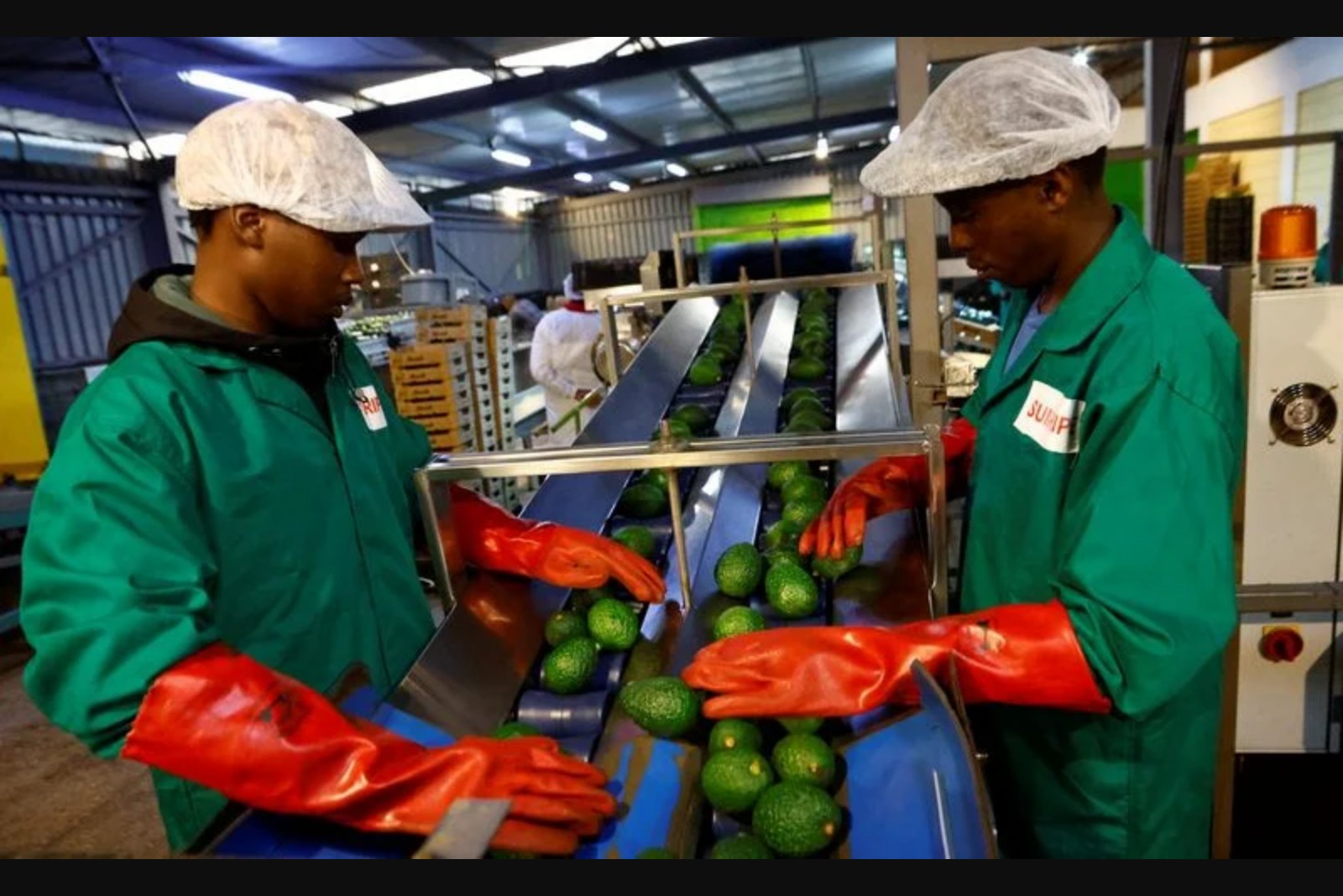
Growth in yuan-denominated imports and exports across China was reflected in April data showing a 14% year-on-year jump to 4.38 trillion yuan ($647 billion), although Chinese officials did not provide a breakdown specifically for Africa. The trend is nevertheless apparent in Kenya’s avocado trade: weekly shipments to China increased from around 10-20 containers in 2022 to about 200, and industry projections cited by exporters point to volumes reaching roughly 1,000 containers by 2030. That would put China on par with long-standing top destination Europe for Kenyan avocado exports.
At his packing facility near Nairobi, Sunripe managing director Thiku Shah said he expects China could overtake Europe as Kenya’s top avocado market sometime between 2030 and 2035. He added that if invoicing in yuan becomes widespread and banks accept yuan in settlement while enabling exporters to find buyers for the currency, the arrangement would be ideal for his business.
Political and market considerations
Some observers have warned that moves to broaden yuan settlement are tied to broader efforts by China and partners, including Russia, to develop payment channels that can operate outside the U.S. dollar. That push has drawn explicit warnings from U.S. political leadership about the risks of abandoning the dollar. Muda Yusuf, chief executive of Nigeria’s Centre for the Promotion of Private Enterprise, said reducing the dollar’s dominance is an issue being discussed globally and noted that China is actively promoting yuan settlement through trade and credit links.
Despite these developments, bankers interviewed in Africa stress that current yuan usage appears driven by trade flows and cost considerations, and that the dollar remains the primary currency for many transactions. Reliable, continent-wide statistics on the use of the yuan remain scarce, which limits precision in assessing how broadly and how quickly currency substitution is occurring.
Market indicators and closing details
Standard Bank processed $500 million in the first four months after connecting to CIPS, and Chinese yuan trade measures have reportedly risen in recent months. Kenyan exporters and some African banks are rolling out yuan-supported products and services to facilitate settlement directly in the Chinese currency.
Financial promotions and product offerings tied to bank equities and trading strategies are being marketed separately to investors, though those are distinct from the trade and payment developments described above.
Currency conversion used in reporting: $1 = 6.7655 Chinese yuan renminbi.