
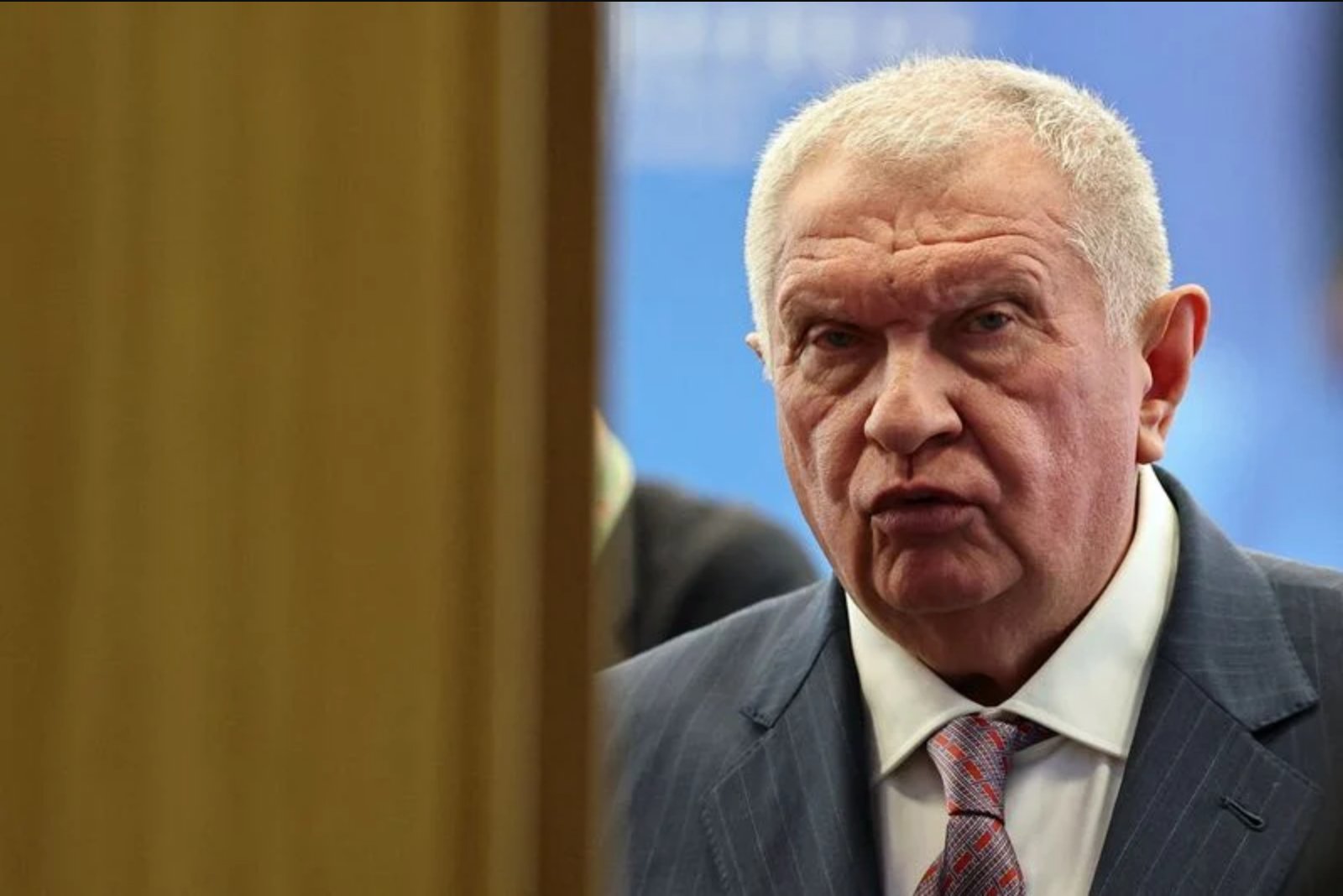
ST. PETERSBURG, Russia, June 6 - Igor Sechin, chief executive of Rosneft, told delegates at the St. Petersburg International Economic Forum that the closure of the Strait of Hormuz produced clear winners and broader strategic risks for global energy markets.
Sechin, described as a close ally of President Vladimir Putin and a leading figure in Russia’s energy industry, said U.S. energy companies were the principal beneficiaries of the strait’s closure. He framed the measures as an effort to "reshape global energy market regulations to benefit the United States," while cautioning that the strategic risks of such actions had been underestimated.
"The closure of the Strait of Hormuz is an attempt to reshape global energy market regulations to benefit the United States. The measures taken to block the strait were aimed at Iran, but backfired on the entire world. The strategic risks were underestimated," Sechin said. He added: "The main beneficiaries, of course, were American companies, which gained non-competitive advantages and the ability to secure high-cost supplies."
Sechin also warned of longer-term demand implications. "Continued tension in the Strait of Hormuz for a long time undermines the long-term demand for oil. It may also trigger another surge of interest in alternative energy," he said.
In Sechin’s remarks, he referenced a recent escalation in the region. According to the account provided at the forum, Iran blockaded the Strait - the primary shipping lane for roughly one fifth of global oil supplies and for other goods including fertilisers - after the United States and Israel attacked Iran and killed Supreme Leader Ayatollah Ali Khamenei in February. The U.S. has blockaded Iranian ports, the forum remarks noted.
Sechin placed those developments in a broader strategic context, warning that other major maritime routes could face similar risks. He listed the Malacca, Bab El Mandeb and Gibraltar straits as additional corridors that "could also be under the risk of disruption."
Turning to market implications, Sechin offered a trajectory for oil prices assuming the Strait reopens in the near term. He said that if the Strait opens soon, "then the oil price will be at $95 to $96 per barrel by the end of the year, and in a year it will drop to $80 to $85, and by the second half of 2027 there will be a return to market fundamentals."
Sechin also commented on the distribution of global oil production, noting that the United States is the world’s biggest oil producer, followed by Saudi Arabia and Russia. He highlighted recent fiscal effects in Russia: oil and gas tax revenue, which accounts for about one fifth of total budget income, rose by 32.4% year-on-year in May to 678.9 billion roubles ($9.3 billion), a boost he attributed to a global oil price rally fuelled by the Middle East war.
On international trade policy, Sechin acknowledged a U.S. decision to extend a sanctions waiver permitting purchases of Russian seaborne oil to assist "energy-vulnerable" countries affected by the Iran war.
He singled out China as being well prepared for the crisis, crediting what he described as a "well-thought-out state policy." At the same time, Sechin emphasised the need to anticipate further systemic pressures on resources and markets.
In a speech titled "The beginning of the end or the end of the beginning: what is left at the bottom of Pandora’s box?", Sechin warned that multiple risks were compounding. He cited the militarisation of major powers, what he called the biggest financial market bubble since the 19th century, and looming deficits in electricity, food and water.
"At the bottom of the box, we will inevitably find a global shortage of electricity, food shortages, copper and other metals, and water shortages," he said.
Sechin criticised the current effectiveness of the OPEC+ alliance, arguing that it has "lost some of its potential" following the United Arab Emirates’ departure, and the earlier exits of Qatar and other countries. He said the alliance’s production had fallen from 58 to 37 million barrels per day over the past 10 years.
He noted that most major OPEC+ members had increased production since the agreement was signed in 2016, but contrasted that with developments in Russia. "In Russia, oil production fell by 1.5 million barrels per day. This is a 15% decline that will need to be offset by necessary investments of at least 10 trillion rubles. We expect that investment cooperation between the alliance’s member countries and our country will also expand," Sechin said.
Sechin’s comments linked near-term geopolitical disruptions to broader structural questions about energy security, investment needs and the potential acceleration of alternative energy interest if tensions persist. He articulated a view of shared vulnerability across maritime chokepoints and called for expanded investment to address production shortfalls identified in Russia.
His remarks at the forum combined near-term price projections with warnings about supply-chain fragilities and resource shortages, presenting a picture of an energy landscape under strain as a result of both geopolitical conflict and shifts within producer alliances.