
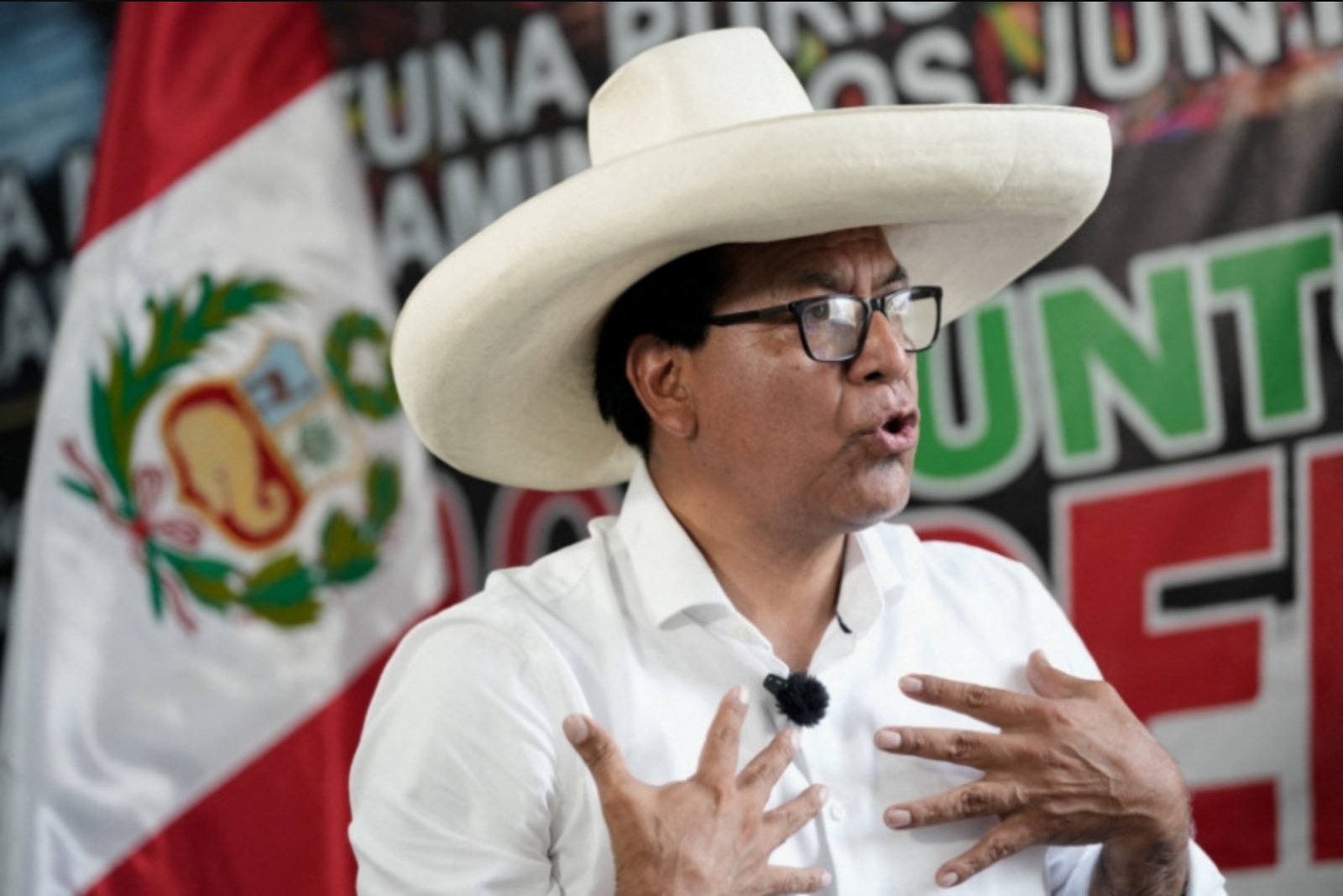
Roberto Sanchez, a 57-year-old left-wing congressman who served as a cabinet minister in the short-lived government of Pedro Castillo, will face Keiko Fujimori in Peru's presidential runoff on June 7. Sanchez advanced after an April general election in which he received 12.03% of the vote, finishing narrowly ahead of the third-placed candidate by roughly 21,000 votes. Fujimori led the first round with 17.18% of ballots cast.
Emerging as a surprise contender from a crowded field, Sanchez is running under the Together for Peru banner and has centered his campaign on what he describes as a fundamental remake of the Peruvian state. At the core of his platform is a commitment to convene a constituent assembly to draft a new constitution - a replacement for the current charter adopted in the 1990s under the late President Alberto Fujimori, who is the father of his runoff opponent.
Platform and policy priorities
Sanchez argues that Peru's existing political and legal framework has failed to deliver equality and has excluded rural and Indigenous communities from meaningful participation. He calls for a "plurinational" state and says a new social contract is needed to recognize what he terms "the true face of Peru." Sanchez has sought to mobilize disaffected rural voters, particularly those in the Andean and Amazonian regions, and to appeal to Quechua, Aymara and Amazonian constituencies he says have been historically marginalized.
Key economic measures on Sanchez's agenda include greater state oversight of natural resource extraction, a review of mining and gas contracts, taxes on windfall profits and a wealth tax targeting higher earners. He frames these proposals as a necessary rebalancing in favor of communities that host extraction activities, stressing they do not amount to expropriation. "We are not talking about expropriating anyone's property," he said. "We are demanding justice for a people that remain poor despite living atop enormous wealth." He has pointed to persistent poverty in mining towns despite three decades of mineral activity: "Thirty years of mining and the mining towns are still the poorest in our country."
Investor concerns and political constraints
Sanchez's stated plans for more assertive oversight of mining and gas operations, and for new taxes on extraordinary profits, have unsettled investors in Peru, one of the world's major producers of copper and other metals. The proposals come at a time when private sector confidence in the extractive sector is a key market concern.
Any implementation of Sanchez's agenda would face significant hurdles in the legislature. Following the April election, right-wing parties hold a majority in both chambers of Congress, creating a political environment that could stymie sweeping constitutional or statutory changes originating from the executive branch.
Relationship with Pedro Castillo
Sanchez served as a minister of foreign trade under Pedro Castillo and maintains close ties to the former president, who was removed from office in 2022 and is now jailed facing charges of rebellion and conspiracy against the state. Castillo has formally endorsed Sanchez from detention. Sanchez has said he would not return power to Castillo if elected, but has pledged to seek Castillo's release and to pursue justice for those who died in protests that followed Castillo's removal.
Observers and market participants have cited Sanchez's association with Castillo as an added element of uncertainty given Castillo's tumultuous tenure and subsequent legal troubles.
Personal background and social positions
Raised in an Indigenous family from Peru's south, Sanchez describes a modest upbringing and traces his entry into public life to church-based social work; he once aspired to become a priest. He speaks of his Catholic faith while taking socially specific positions: he supports abortion only in cases of rape or when the mother's life is at risk, and has expressed opposition to discrimination based on sexual orientation, race or religion.
During campaign appearances he has emphasized technology transfer, industrialization and environmental protections as elements of his economic approach, insisting that Peru should remain open to international partners "but on 'just' terms."
Security, corruption and judicial reform
Sanchez's platform extends to public security and the justice system. He has called for tougher measures against corruption, including more stringent penalties, lifetime bans from public office for some offenders, and a broad overhaul of judicial institutions. On security, he has proposed deploying the armed forces in support of police operations to counter rising organized crime, linking insecurity, corruption and violent crime as parts of a single problem that requires a "total" response: "Murder, insecurity and corruption are one single problem," he said. "And the fight must be total."
Legal issues facing Sanchez
Sanchez himself is the subject of allegations from a Peruvian prosecutor who has accused him of making false statements in administrative proceedings and of falsifying information tied to campaign contributions. His lawyer has rejected the accusations. Local media reports indicate a judge was scheduled to decide on May 27 whether the case will proceed to trial.
Outlook
Sanchez's ascent to the runoff represents a notable shift in Peru's electoral dynamics, bringing questions of constitutional change, resource governance and redistribution to the center of the presidential contest. His proposals have prompted concern among investors in the mining and extractive sectors, even as he faces the practical barriers of a right-leaning Congress and ongoing legal uncertainty. The June 7 runoff is shaping up as a closely fought race.