
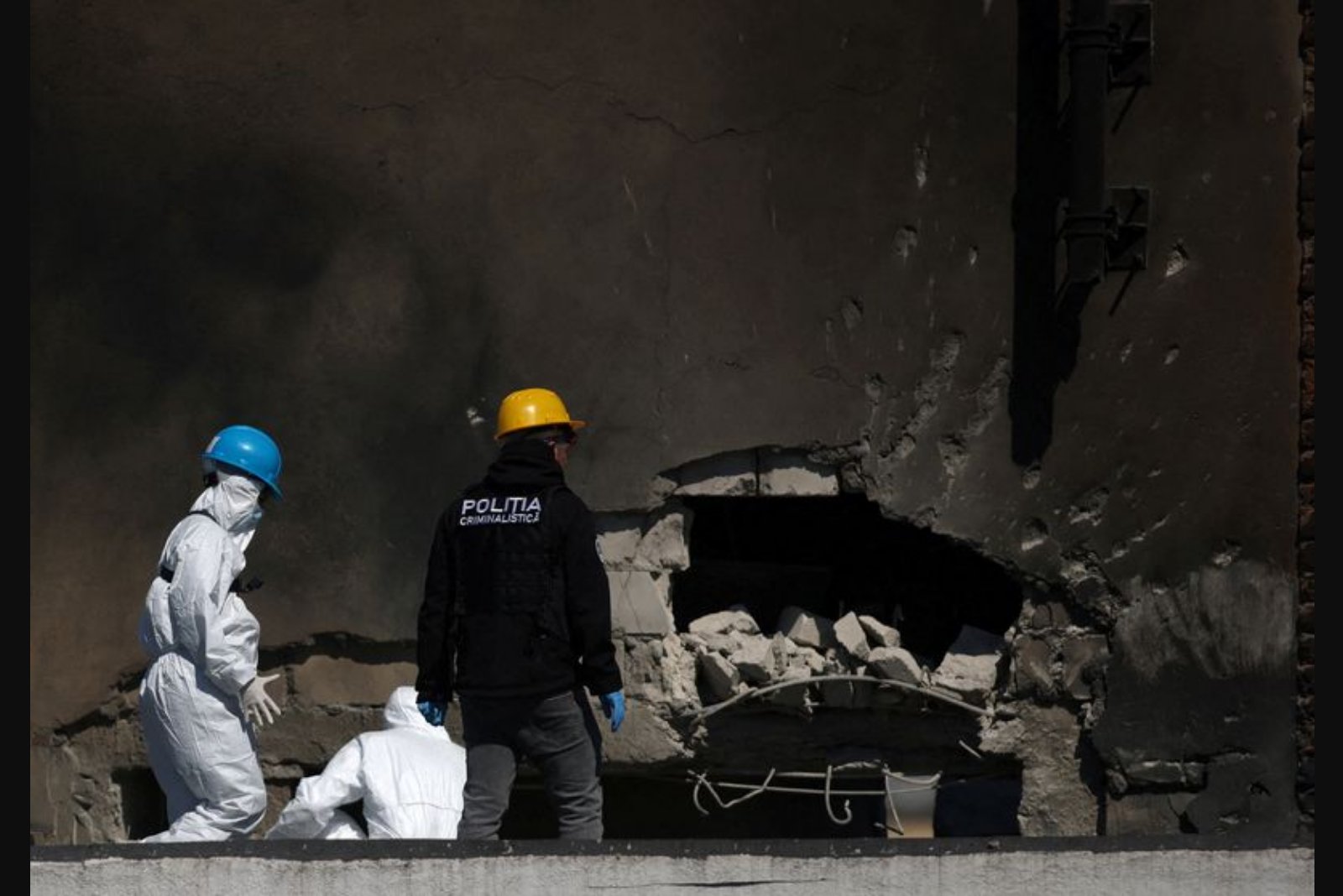
Summary: Russian President Vladimir Putin on Friday said that it is too early to confirm the nationality of a drone that crashed into an apartment building in Romania, and proposed that Romania provide information and debris so Moscow can investigate. NATO responded by accusing Russia of reckless behaviour and reiterated a pledge to defend allied territory after Romania said a Russian drone had crashed during an attack on neighbouring Ukraine.
Speaking at a news conference in Astana, Kazakhstan, Putin questioned public assertions that the aircraft was Russian. "Who in Romania says that this is a Russian drone?" he asked reporters, saying he had only just learned of the incident after a day of talks.
"No one can say what the origin of this or that drone is until an examination has been carried out,"
Putin pointed to previous incidents in which he said Ukrainian drones were detected in Finland, Poland and the Baltic countries. He characterised initial reactions in those cases - and now in Romania - as immediate assumptions that Russia was responsible, saying that subsequent investigations showed the incidents did not involve Russian drones.
"The first reaction was exactly the same as it is now in Romania: The Russians are coming,"
"Then, after a short time, it turned out that it had nothing to do with Russian drones."
The Russian president also responded to comments made by European Commission President Ursula von der Leyen, who said Russia had crossed another line with the incident. Putin noted that von der Leyen had not personally examined any drone fragments, and suggested Romania make available information and potential debris so that Moscow could carry out its own forensic review.
NATO described Moscow's actions as reckless and pledged to "defend every inch of Allied territory" after Romania reported that a Russian drone had struck an apartment block during an attack on neighbouring Ukraine. The origin of the drone, however, remained unresolved pending technical examination, according to Putin's remarks.
Context and next steps: The primary unresolved issue is the drone's origin, which Putin said requires physical examination. He urged information sharing between Romania and Russia to facilitate a joint or parallel inquiry. NATO's statement signalled heightened alliance concern and a commitment to territorial defence, while European leaders have raised accusations that Moscow crossed a line, an allegation Putin challenged on the basis that debris has not been independently reviewed by those making the claim.