
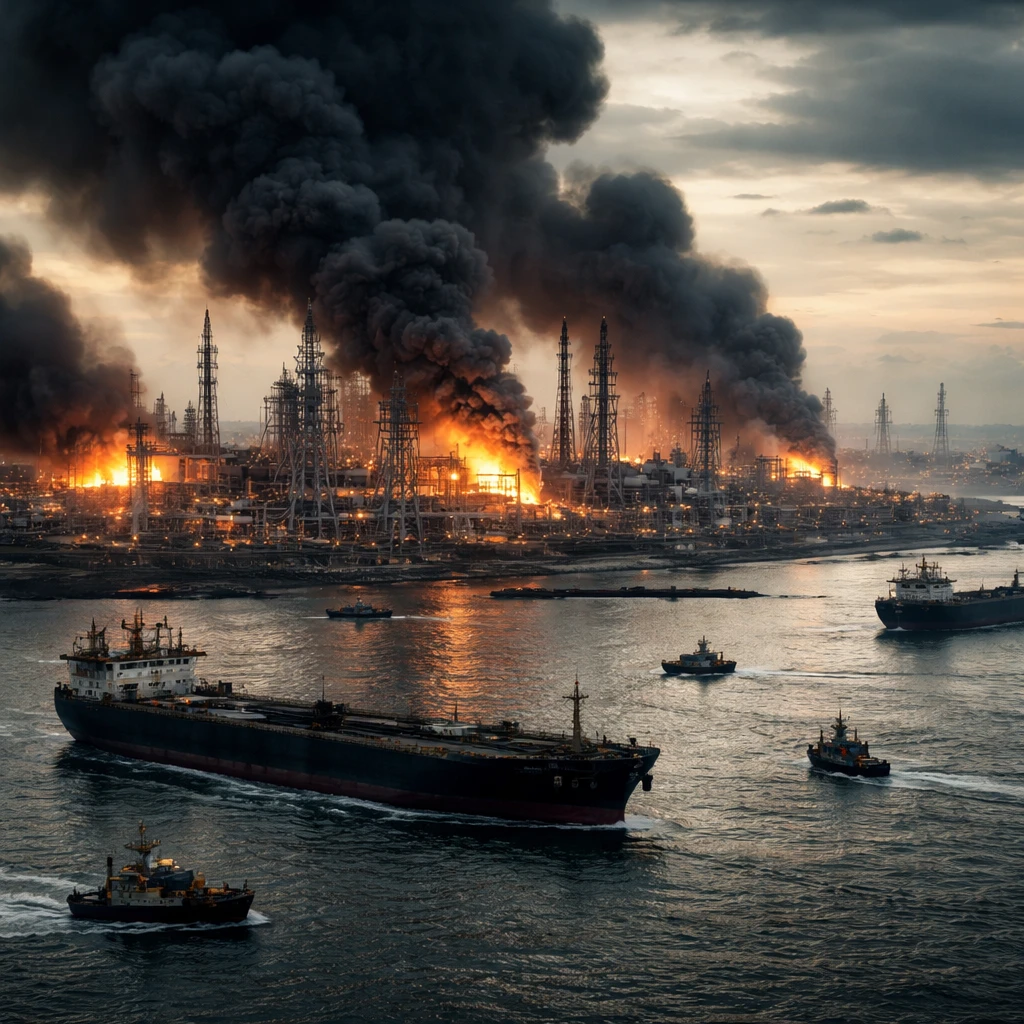
Oil prices climbed sharply on Monday after Israeli forces struck a petrochemical installation in southwestern Iran and additional military sites, a response to recent Iranian missile attacks toward Israel. The moves have unsettled hopes for a negotiated de-escalation and reversed late-week declines that had reflected hopes of calming tensions.
As of 02:16 ET (06:16 GMT), Brent futures for August delivery were up 4.7% at $97.44 per barrel, while West Texas Intermediate (WTI) crude futures gained 4.5% to reach $94.62 per barrel. Both contracts had closed the prior week with modest gains amid renewed hostilities in the Middle East that undermined optimism about a truce.
The strikes reported by Israeli authorities included targets in western and central Iran and a petrochemical complex near Mahshahr. Observers described the attack on the petrochemical facility as among the more significant assaults on Iranian energy-linked infrastructure since a ceasefire was established in April.
Those operations followed Iranian launches of multiple missile rounds at Israeli targets, which Tehran said were in retaliation for Israeli strikes on the outskirts of Beirut. Media reports indicated that U.S. President Donald Trump urged Israeli Prime Minister Benjamin Netanyahu not to retaliate against Iran's missile attack, according to reports.
The escalation has introduced fresh uncertainty around a fragile ceasefire extension between Israel and Lebanon that was brokered by the United States and took effect last week. Market participants noted that the new military exchanges have heightened concern about possible disruptions to exports transiting the Strait of Hormuz - a strategic shipping lane that handles roughly one-fifth of global oil consumption.
Oil markets had moved lower late last week as hopes of de-escalation gained traction, with Brent settling near $93 and WTI around $90 on Friday. Those price gains were reversed once the latest strikes were reported, prompting rapid repositioning among short-term traders and some longer-dated physical market participants.
On the supply side, OPEC+ agreed to raise oil output quotas for July by 188,000 barrels per day, a continuation of its gradual rollback of voluntary production cuts. However, exporters noted that an ongoing blockage of Gulf exports has prevented most producers from actually implementing the additional output, leaving a gap between quota changes and deliverable volumes.
For traders, refiners and shipping firms, the immediate focus is on the potential for further escalation and any impact on crude flows through the Persian Gulf. At present, the situation remains fluid - the strikes and counterstrikes have already altered short-term price dynamics, but longer-term outcomes depend on whether the recent exchanges widen or are contained.
Key points
- Oil futures jumped nearly 5% after Israeli strikes on a petrochemical facility near Mahshahr and other Iranian military targets.
- Brent rose to $97.44 per barrel and WTI to $94.62 as of 02:16 ET (06:16 GMT); both contracts had ended last week with modest gains.
- Sectors most affected include energy markets (crude producers and refiners) and shipping/logistics firms reliant on Strait of Hormuz transits.
Risks and uncertainties
- Potential disruption to oil flows through the Strait of Hormuz, which handles roughly one-fifth of global oil consumption - a key risk for energy and shipping sectors.
- Fragility of the recently extended U.S.-brokered ceasefire between Israel and Lebanon, raising geopolitical and market volatility risks for regional trade and financial markets.
- OPEC+ production quota increases for July may not translate to added supply because a Persian Gulf export blockage has prevented most producers from implementing the extra output - an operational risk to global supply forecasts.