
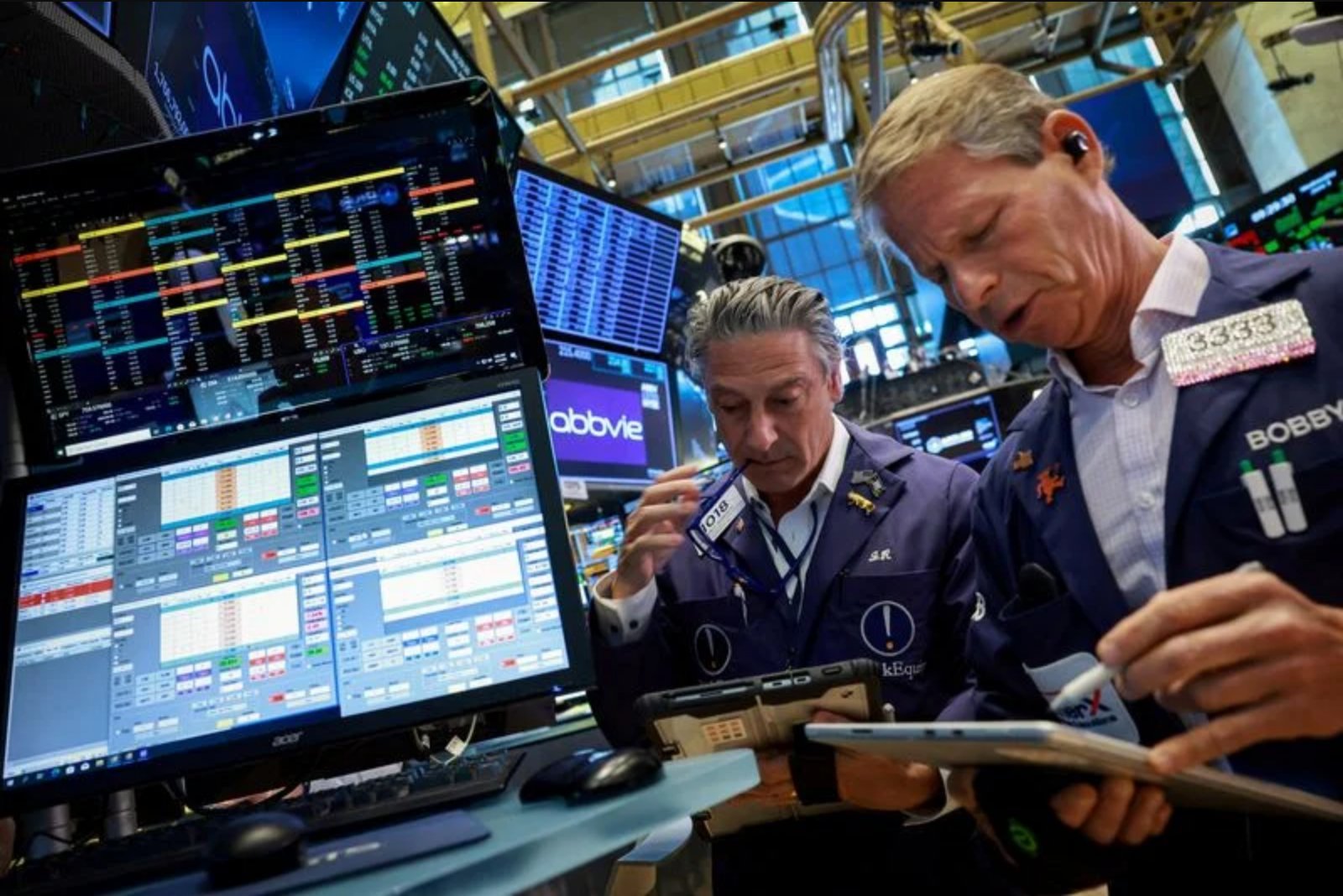
U.S. and global equity markets displayed a narrowly focused recovery on Monday, with gains concentrated in technology megacaps at the forefront of the artificial intelligence surge. Despite the uptick among those large-cap tech names, the broader market showed persistent weakness - about 60% of the S&P 500 finished the trading day in negative territory.
One of the larger individual movers on Monday was chipmaker Marvell Technology, whose stock rose 9% after being added to the S&P 500 index. That move illustrates how index flows and the AI investment theme continue to elevate certain technology and semiconductor names even as market breadth remains thin.
AI issuance and IPO calendar
The near-term market backdrop is being shaped by an unprecedented pipeline of technology-related public offerings. SpaceX is scheduled to list at the end of the week and is planning an initial equity sale that would raise $75 billion at a targeted valuation of $1.75 trillion, placing it among the top 10 most valuable U.S.-listed companies by that metric. At launch, only 7% of SpaceX’s listed shares will be freely tradable, with the initial listing date noted as June 12.
SpaceX’s offering has been reported to be two times oversubscribed, and as much as 30% of the sale - equivalent to $22.5 billion at the targeted raise - has been earmarked for retail investors. Index inclusion remains a contested matter: S&P Global elected not to make a fast-track change to its index criteria that could have enabled SpaceX to join the S&P 500 quickly, citing the existing rule that requires profitability for rapid inclusion. By contrast, MSCI confirmed it will continue to apply its existing rules for early inclusion into its Global Standard Indexes, a position that likely paves the way for SpaceX to be added to those indexes.
Concurrently, other major private AI-related players are moving toward public listings. OpenAI disclosed that it confidentially filed for an initial public offering, and Anthropic is also slated to go public this summer. Together, these transactions mean the market will be absorbing a significant volume of new issuance tied to the AI theme.
Trade flows and chip demand
China’s May trade figures underscored the strength of global demand for semiconductors and tech equipment. Export growth in May jumped almost 20% year-on-year, a performance widely attributed to booming orders for memory chips and related technology gear, and to the sharp rise in the prices of memory chips. That demand dynamic has supported the case for semiconductor stocks but also highlights a potential inflationary ripple.
The rapid appreciation in chip prices and related supply-chain pressures feed into broader inflation metrics, complicating the policy challenge faced by the Federal Reserve and other central banks. Market participants are weighing the durability of price pressures emanating from technology supply chains as they assess monetary policy paths.
Central bank expectations and geopolitical developments
Monetary policy expectations have remained central to market sentiment. An interest rate increase from the European Central Bank is widely expected this week, and the Bank of Japan is also anticipated to move toward a similar policy stance within the month. Those anticipated tightening actions are being watched closely for their impact on risk assets and bond markets.
Geopolitical developments also had a short-term market effect. Iran and Israel both signalled that a recent round of missile exchanges had been halted for the moment. That de-escalation helped oil prices retreat from intraday gains that reached as high as 5% earlier in the session, and it reduced some of the upward pressure on market-implied odds of additional Fed rate tightening. The combination of easing oil-related geopolitical concerns and the concentration of buying in AI-linked megacaps helped explain Monday’s cautious equity rebound.
Market moves and the near-term calendar
Following Monday’s action, Asian equities rallied and U.S. futures moved slightly higher ahead of the opening on Tuesday, while oil prices continued to slip. The data calendar in the near term leans toward housing-sector releases, with U.S. consumer price data for May scheduled for release on Wednesday. Corporate earnings milestones include Oracle reporting after the U.S. market close on Wednesday.
Items on the immediate events list include the U.S. April trade balance, May existing home sales, and a U.S. 3-year note auction. These inputs will be watched for clues on growth, inflation and funding conditions as investors position around the wave of IPO activity and evolving central bank signals.
Bottom line
Markets are navigating a mix of concentrated buying in AI-related large-cap technology stocks, robust semiconductor demand reflected in Chinese export strength, and a crowded IPO calendar that includes major offerings likely to test index inclusion rules. These forces are unfolding alongside central bank policy expectations and episodic geopolitical developments that together are contributing to a market environment marked by selective strength within broader fragility.