
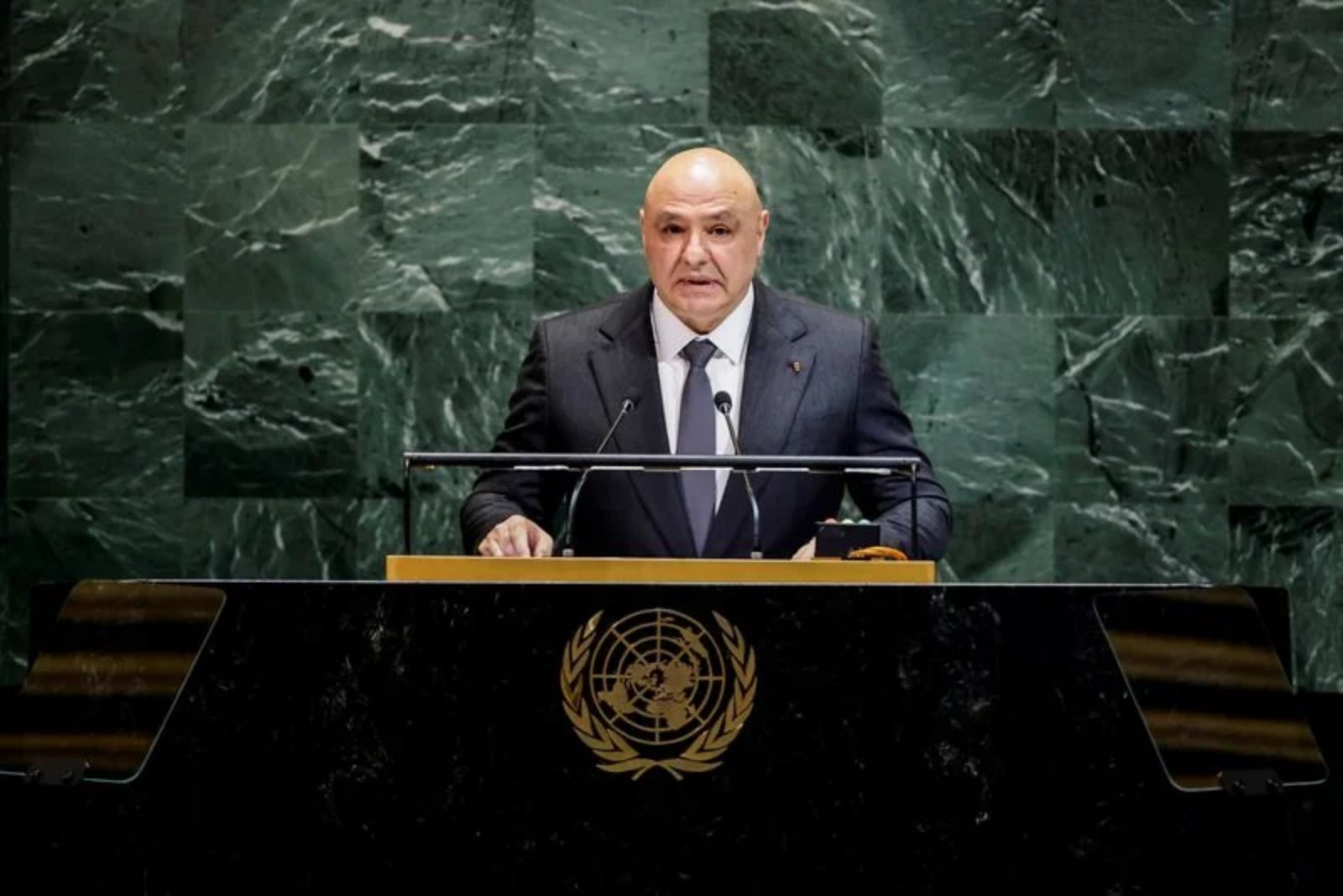
BEIRUT, June 5 - Lebanese President Joseph Aoun publicly accused Iran on Friday of leveraging Lebanon in its negotiations with the United States, saying ordinary Lebanese were suffering as a result and expressing frustration with the ongoing conflict between Hezbollah and Israel.
In an interview with CNN, excerpts of which were published on the broadcaster's website, Aoun said "the people of Lebanon are paying the price ... for the" interests of Iran and that they were "fed up" with the war between Israel and Hezbollah. He added: "They are using Lebanon as a bargaining chip in their negotiation with the United States. It's unacceptable."
"the people of Lebanon are paying the price ... for the"
The comments represent some of Aoun's strongest public criticism of both Tehran and its Lebanese ally Hezbollah since the current round of hostilities began. Hezbollah, a Shi'ite Muslim movement founded by Iran's Revolutionary Guards in 1982, initiated the latest confrontation more than three months ago when it opened fire in solidarity with Tehran as Iran came under what the interview described as a U.S.-Israeli attack.
Aoun, a former commander of the Lebanese military who occupies the presidency under Lebanon's sectarian power-sharing arrangement as a Maronite Christian, has advocated for the peaceful disarmament of Hezbollah since his election by parliament last year. Early in the conflict he also urged direct, face-to-face talks with Israel, positions that have set him at odds with Hezbollah's leadership.
The president said Iran had conditioned any wider peace agreement with Washington on a ceasefire in Lebanon. That framing was reiterated amid news that Hezbollah rejected a ceasefire plan negotiated between Lebanese and Israeli government officials during U.S.-mediated talks in Washington.
The proposed deal would have been contingent on Hezbollah stopping its attacks and withdrawing fighters from southern Lebanon. In a written statement on Thursday, Hezbollah leader Naim Qassem said the Washington agreement was rejected by "broad segments of the Lebanese people." Addressing Qassem directly, Aoun retorted: "The Lebanese people are not your people."
Lebanese authorities report that Israeli attacks have killed thousands of people in Lebanon since March and have displaced some 1.2 million residents. Israeli forces have also occupied a swathe of southern Lebanon.
Context and implications
- President Aoun's remarks underline deep divisions within Lebanon's political and confessional landscape during the conflict.
- The rejection of the Washington-mediated ceasefire by Hezbollah maintains the prospect of continued hostilities and potential further humanitarian impact.
- Official figures cited by Lebanese authorities point to substantial casualties and large-scale displacement within Lebanon since March.