
Overview
A recent investigation by the environmental organization Greenpeace has found that substantial quantities of gold continue to be taken illegally from Brazil's Amazon rainforest despite high-level government commitments to halt the practice. The group's analysis points to a laundering mechanism that relies on mining permits issued for forest areas that show no on-the-ground activity.
Findings from the Greenpeace analysis
Greenpeace examined 187 forest areas in the Amazon that had active gold mining permits issued by Brazil's National Mining Agency (ANM) and located near Indigenous territories and protected zones. Of those licensed areas, 98 showed no observable signs of mining activity, yet permits from these locations - described by advocates as "ghost permits" - were used to underpin the sale of 26.8 metric tons of gold between 2018 and March 2026. Greenpeace estimates the value of that gold at roughly $3.88 billion.
The study notes that as global gold prices rose to record levels amid intense geopolitical instability, miners adjusted methods to obscure the origins of illegally produced gold, making use of paperwork from inactive permitted sites to legitimize sales.
Independent verification from aerial inspection
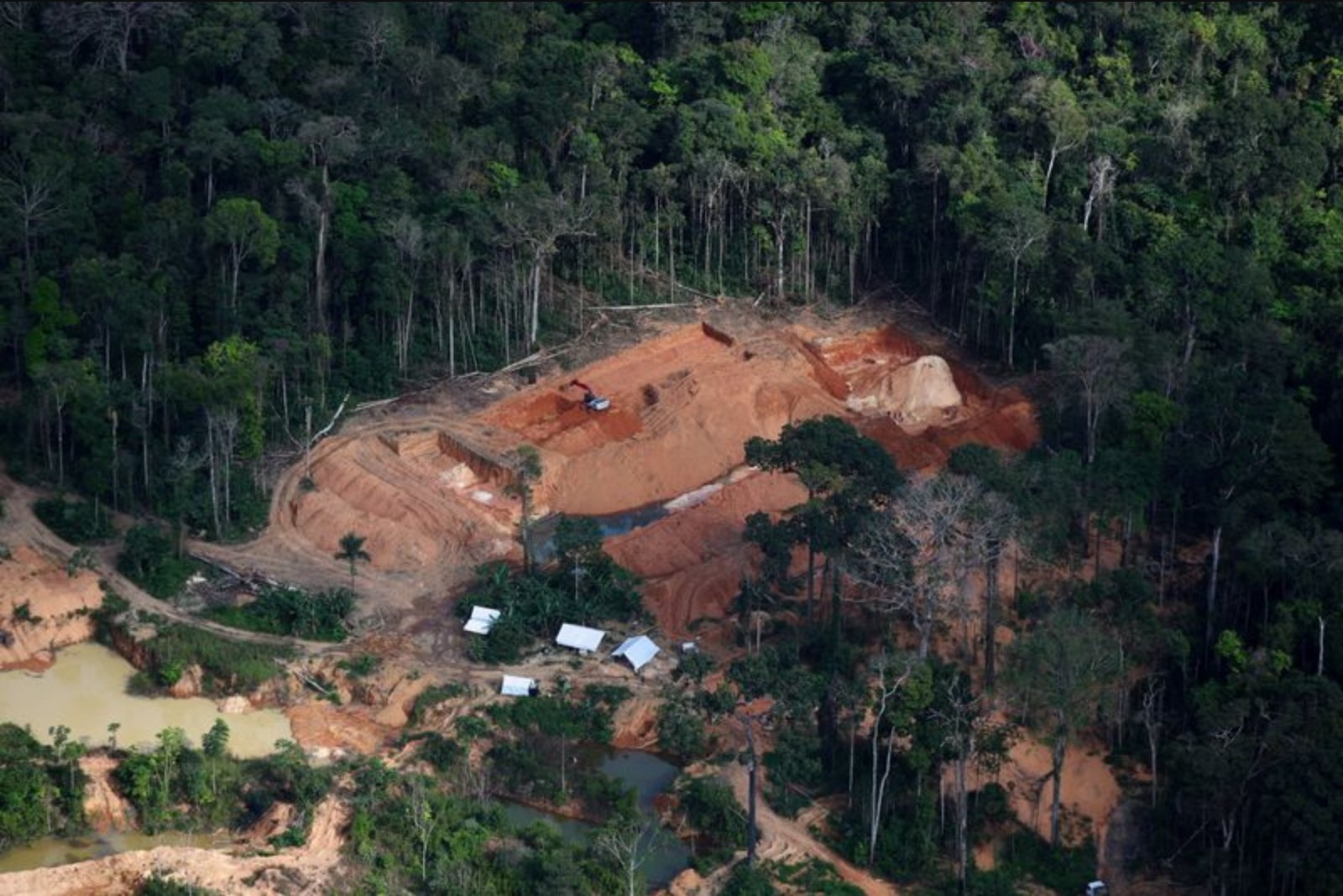
Journalists conducted aerial flyovers of two of the areas included in Greenpeace's dataset and found no visible mining operations in either permitted location, despite administrative records indicating the potential for substantial surface mining output. In contrast, a large, active illegal mining operation was seen in a protected area just six minutes away by air from one of the permitted but inactive sites.
Unclear provenance and impact on Indigenous lands
It remains unclear exactly where all of the gold tied to the ghost permits originated. Researchers and investigators cited in the study believe a significant share likely comes from protected areas and Indigenous territories, including parts of the Kayapo people's land in the state of Para. Kayapo chief Megaron Txucarramae told Greenpeace he is frustrated with what he described as government inaction, saying: "I don't know what else is needed to solve illegal mining on Indigenous land. It destroys the land, pollutes the rivers, and Indigenous people, without realizing it, end up eating poisoned fish."
Government and watchdog responses
The ANM said it is monitoring the permits flagged by Greenpeace for any irregularities and highlighted the logistical and oversight difficulties posed by the sheer number of permits issued across the Amazon region. The agency noted the region's vastness presents "large-scale logistical and oversight challenges."
Greenpeace Brasil spokesperson Danicley Aguiar warned that the presence of a mechanism to launder gold through mining permits creates incentives for further expansion of illegal activity, saying: "As long as it is possible to launder gold using mining permits, there will be an expansion of the activity in the Amazon."
Contextual enforcement action
Authorities have made notable seizures: last year, Brazil's Federal Police confiscated a record 447 kilograms (985 pounds) of illegally mined gold. Nonetheless, the Greenpeace findings suggest that enforcement actions and presidential pledges to eradicate illegal gold mining from Indigenous lands and protected areas - commitments made after the president took office in 2023 - have not eliminated the underlying problems of permit misuse and the laundering of illicitly mined gold.