
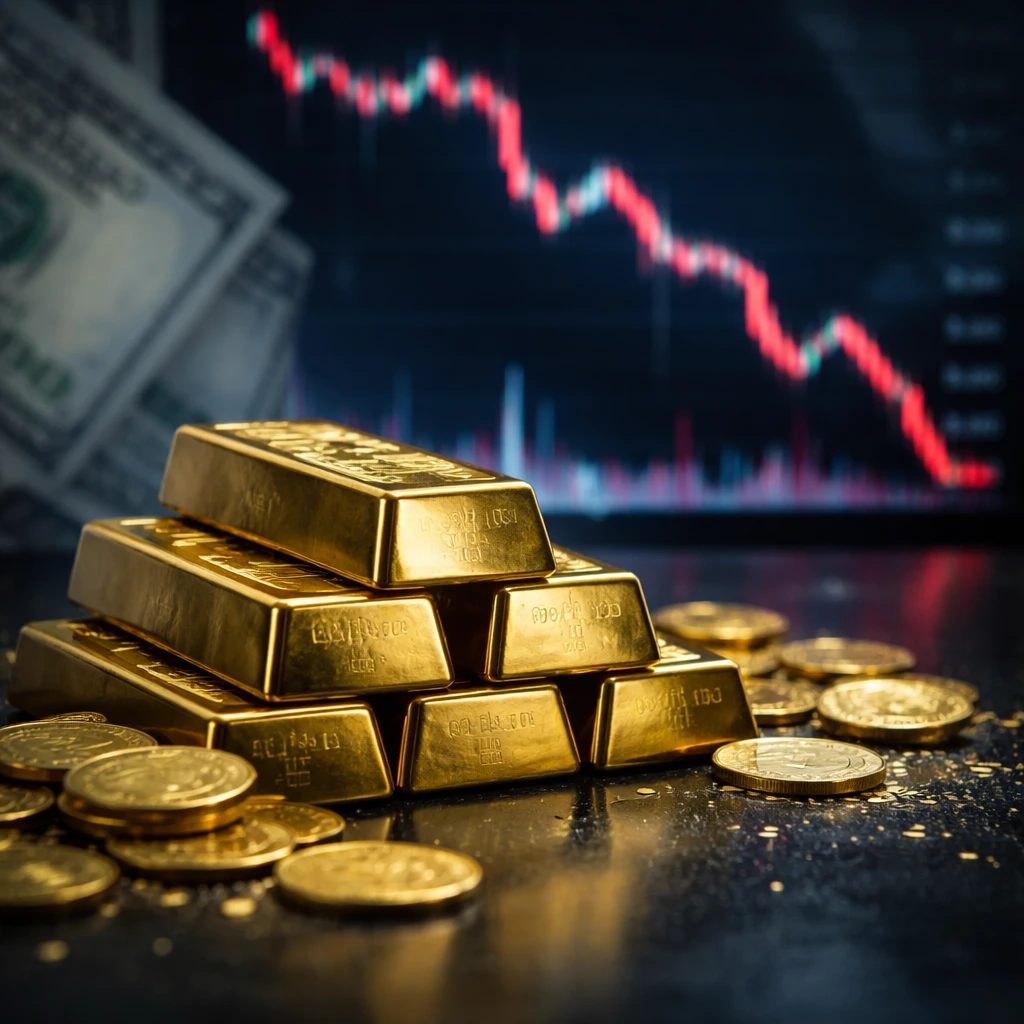
Gold is enduring a severe selloff, on course for its largest quarterly fall since April 2013 after losing about 24% from a late-January peak near $5,589 per ounce. The August Gold Futures contract was trading at $4,031.70 as of today, reflecting the scale of the retreat.
What is driving the decline
Market participants point to two dominant forces. First, the U.S. dollar has strengthened, with Dollar Index futures hovering close to a 13-month high as investors reassess Federal Reserve policy in response to persistent inflation pressures tied to the Middle East conflict. Second, traders have increased the odds of further U.S. rate hikes, pushing up real rates and making an asset that pays no yield relatively less attractive.
Gold has now lost more than 6% so far this year. The metal briefly traded below the psychologically important $4,000 per ounce threshold for the first time since November 2025 on June 24, underscoring how sharply sentiment has shifted.
Options and market positioning
Options markets are signalling particular concern. For the first time since 2016, gold's put/call skew has moved into positive territory, meaning market participants are paying more for downside protection than for upside exposure. That shift in option pricing indicates a heightened appetite for protection against further declines.
Goldman Sachs commodity co-head Samantha Dart highlighted the change as an important indicator of sentiment, noting that tail-risk pricing has rotated away from upside energy calls and toward gold puts. Nonetheless, Dart stopped short of declaring a long-term bearish case for the metal. In a note dated June 29 she wrote, "Gold is not done." Goldman maintains a structural and cyclical view that supports further gains over time and cited emerging-market central bank diversification as a key underpinning of its $4,900 per ounce end-2026 forecast, which implies roughly a 21% recovery from current levels.
Institutional demand and reserve management
A separate institutional data point shows nuance beneath the near-term price action. An OMFIF survey of 90 central banks, public pension funds and sovereign wealth funds, published June 30, found that for the first time more central banks intend to reduce dollar allocations rather than increase them over the coming decade. The survey also reported that a net 30% of respondents plan to expand gold holdings in the next one to two years.
OMFIF senior economist Yara Aziz commented on that finding, saying that the assumption public investors can wait for market normalisation looks increasingly unrealistic. That gradual but structural shift in reserve strategy is one of the factors Goldman points to in projecting longer-term support for gold.
Portfolio utility and changing correlations
Gold's role as a portfolio hedge has also been under pressure. At the start of the Middle East conflict, gold and other commodities exhibited negative correlation with the S&P 500, offering diversification benefits. Since then that relationship has reversed, turning positive and, in Goldman's view, diminishing gold's hedging value while leaving the metal more exposed to dollar-led selling.
Macro calendar and near-term risks
With the quarter ending on Tuesday, traders are focused on a busy slate of U.S. economic releases that could either reinforce or ease the hawkish rate narrative. ADP's Nonfarm Employment Change for June is due July 1 with a consensus forecast of 118,000 jobs. The primary June Nonfarm Payrolls report follows on July 2, where analysts are looking for 114,000 new jobs and an unemployment rate of 4.3%.
A stronger-than-expected payrolls outcome would likely cement dollar strength and push the pricing of rate hikes higher, extending gold's quarterly decline into the third quarter. Near term, the metal faces a difficult balancing act: structurally supported by patient, incremental buying from central banks, but cyclically vulnerable to any hawkish U.S. data point that boosts the dollar and real rates.
Outlook and positioning
For now, options skew, a firmer dollar, and heightened rate-hike expectations are combining to keep selling pressure on gold. At the same time, institutional demand dynamics and central bank reserve strategy suggest there remains structural support underneath the market, even if that support is unfolding slowly and has not prevented the current drawdown.