
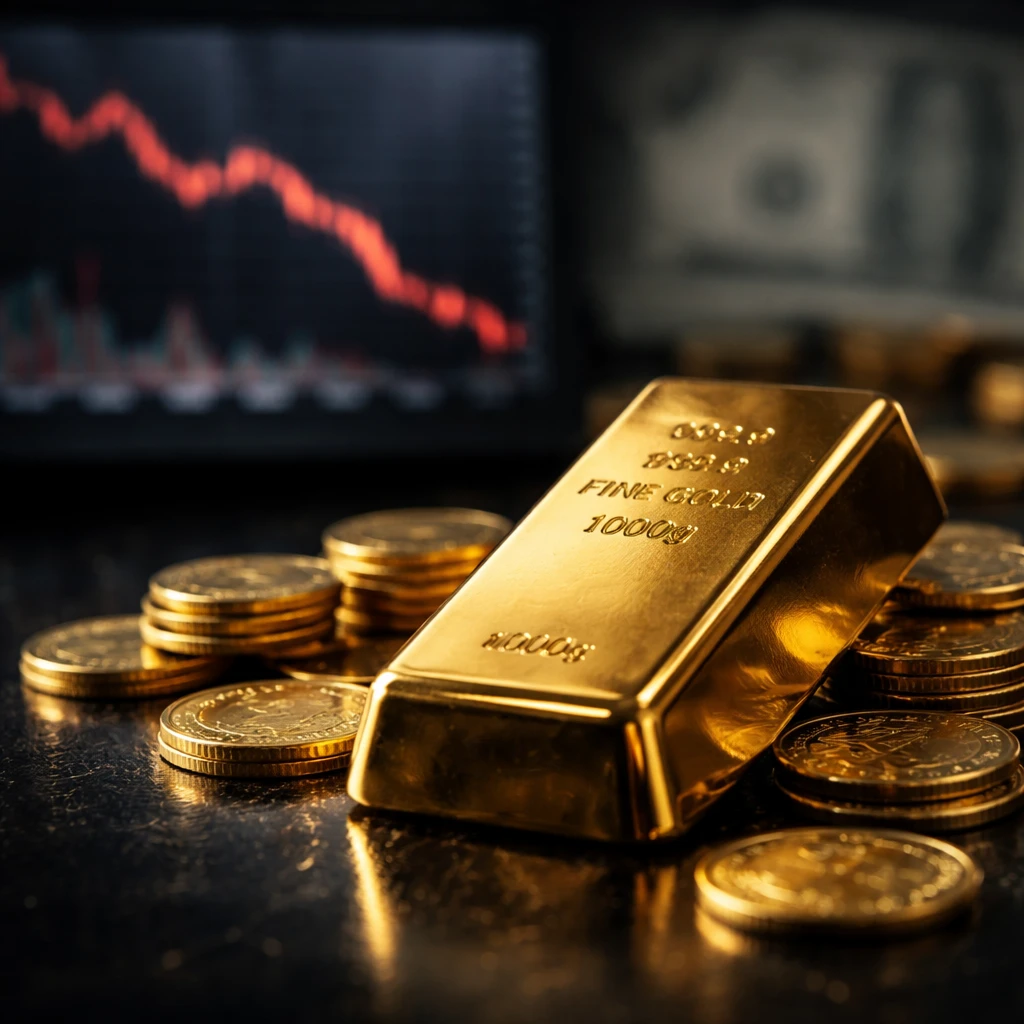
Gold retreated sharply on Tuesday, sinking to annual lows as investor concern over persistent inflation and the prospect of higher interest rates weighed on the precious metal.
By 21:47 ET (01:47 GMT), spot gold had declined 1.3% to $3,965.51 an ounce, while gold futures were down 1.5% at $3,975.92 per ounce. The spot price was at its weakest point since early November, and the metal was on track for a fourth consecutive month of losses.
June has been particularly punitive for bullion: spot gold was down 12.8% for the month, marking its worst monthly performance since 2008.
Market momentum has been driven in part by a firmer U.S. dollar and growing conviction that the U.S. Federal Reserve will raise interest rates at least once this year. The Fed’s June policy meeting took on a noticeably hawkish tone, with several policymakers seen as favoring an additional rate hike. Expectations of higher rates push up the opportunity cost of holding non-yielding assets such as gold, putting further pressure on the market.
Concerns that inflation will remain elevated have been amplified by two main forces cited by traders: energy prices and disruptions tied to the rapid expansion of artificial intelligence. Higher energy costs have been a factor supporting sticky inflation expectations, while AI-driven demand for semiconductors has tightened chip supplies and translated into higher component costs for device makers.
While energy prices eased in recent weeks following a U.S.-Iran peace deal, market participants remained cautious about geopolitical uncertainty in the Middle East, particularly after a flare-up in military tensions over the weekend. That uncertainty has contributed to volatile sentiment for inflation and risk assets alike.
Appetite for goods related to AI also played a role in reshaping inflation expectations. Apple Inc. raised prices on several devices last week, citing higher chip costs, a move that followed similar price increases from other electronics manufacturers as AI-related demand snapped up global chip supplies. Those price adjustments have reinforced expectations that inflation could stay elevated this year, strengthening the case for additional Fed tightening in the eyes of many investors.
Other precious metals fell alongside gold on Tuesday and have experienced steep monthly drops. Spot silver slid 2% to $57.1090 per ounce and was down 24.2% in June. Spot platinum fell 1.3% to $1,563.25 per ounce and was down nearly 19% over the month.
Overall, the combination of a stronger dollar, renewed expectations for higher U.S. interest rates and concerns about persistent inflation tied to energy and AI-related supply constraints has driven significant losses in gold and other non-yielding precious metals this month.