
Introduction
The World Cup’s next edition opens with an expanded format that promises broader participation and far-reaching global attention. That expansion, however, comes with a markedly larger climate footprint. An assessment by global carbon accounting platform Greenly estimates the tournament could generate 7.8 million metric tons of carbon dioxide, making it the most carbon-intensive World Cup on record.
How much larger is the footprint?
The 7.8 million metric ton estimate is more than double the emissions associated with the Qatar 2022 event, which had greenhouse gases calculated at roughly 3.8 million tons. To convey scale, the projected emissions for the current tournament are roughly equivalent to the annual output of 1.7 million cars or the yearly emissions of the country of Sierra Leone.
What is driving the increase?
Analysts and campaigners point to the tournament’s geographic scale and its enlarged field as the principal drivers. The competition now features 48 teams and matches distributed across North America in a format spanning three host countries and 16 cities. The geographic spread stretches roughly 2,800 miles from Vancouver in the west to Miami in the east, a configuration that researchers say locks in significant travel demand for teams, officials, media and fans.
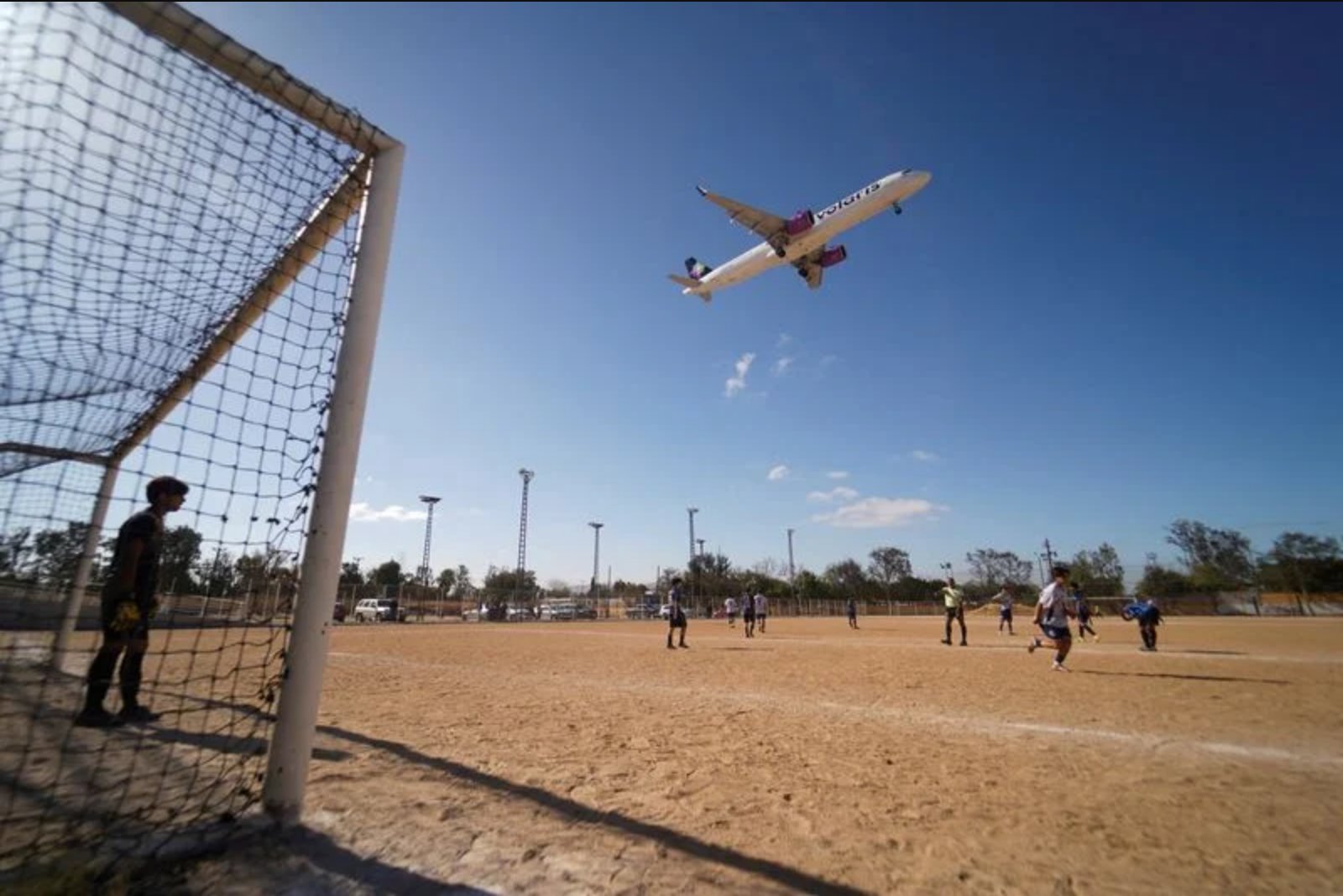
Researchers estimate that as much as 87% of the tournament’s emissions will be generated by travel - chiefly flights - as millions of supporters and participants move across the continent to follow matches. The distances involved, and the requirement for substantial air travel both to reach host countries and to move between host cities, are cited as key reasons the tournament’s emissions are so much higher than the more compact, single-country staging of the previous event.
Voices from the field
Madeleine Orr, an author and sports ecologist, offered a succinct assessment: "I think the World Cup, in theory, is really fun for the sport and for visibility -- but bad from a climate standpoint," she said. Orr highlighted both the direct emissions from travel and another growing component of the footprint - the digital ecosystem required to serve global audiences.
David Gogishvili, a geographer at the University of Lausanne, framed the trade-offs inherent in staging a larger, geographically dispersed tournament: "Increase the number of the teams and then put them in a country where there needs to be significant travel first to get there by air, and then significant travel between the host locations, okay, we’re getting rid of one source of negative environmental influence, but then we are increasing it in another," he said. He added a comparative observation, noting that the International Olympic Committee appears to be following reduction targets in a manner he regards as closer to the intended pathway.
Operational and logistical responses
Organizers have sought to reduce certain impacts. Unlike the event held in Qatar, where several new stadiums were built, this edition uses existing venues. Host cities and the governing body point to measures such as encouraging public transport use, reducing generator reliance, and implementing recycling and food waste initiatives as ways to reduce resource use and operational emissions.
FIFA said it welcomed scrutiny and noted that "Numerous environmental initiatives related to the tournament are being implemented by FIFA and the Host Cities before, during and after the tournament." The organization also described its approach as being guided by a comprehensive sustainability strategy, saying it was committed to integrating sustainability into the World Cup and is "guided by a comprehensive Sustainability and Human Rights Strategy that focuses on addressing emissions, improving resource efficiency and creating a positive legacy across host communities."
Policy commitments and perceived gaps
At the UN COP26 climate summit in 2021, FIFA pledged to halve its carbon emissions by 2030 and to reach net zero by 2040 as part of the U.N. Sports for Climate Action Framework. However, FIFA has not set a specific carbon target for this World Cup, a detail noted by observers who say the absence of event-level targets complicates efforts to measure progress.
Gogishvili expressed concern about the pace of action by football’s governing body. "(But) FIFA clearly does not prioritize reduction of its negative environmental influence ... there needs to be pressure on them from media, from players, and association countries, from researchers, from the governments, from the public," he said.
Expanded participation and digital demand
The expansion of the competition added 16 teams, including four nations making their tournament debuts: Cape Verde, Curacao, Jordan and Uzbekistan. While expansion increases the tournament’s reach and inclusivity, researchers and campaigners have questioned the climate trade-offs involved in accommodating more teams across a broader geography.
Beyond physical travel and venue operations, the modern viewing model adds a substantial and often overlooked component to the carbon footprint. Broadcasting, streaming, data feeds and betting platforms require significant energy inputs across data centres, satellite networks and billions of consumer devices. Orr emphasized this point: "The part of the carbon footprint that never gets discussed, but is massive, massive, massive, is the digital footprint," she said, noting that multi-screen viewing behavior multiplies energy demand.
National-level estimates underline this effect. The United Kingdom’s National Energy System Operator estimated that each of Scotland and England’s group games could see an additional 600 megawatts of electricity demand nationally - roughly the combined electricity use of the cities of Glasgow and Leeds. "You have to consider that everybody watching in every place all around the world is part of this," Orr added. "And the vast majority of them are watching on two screens, they’re watching on their TV, and then they’re following on their phone." She observed that emissions from digital consumption are rarely included in official event sustainability calculations.
Conclusion
The World Cup’s shift to a larger, continent-spanning format has clear social and sporting benefits, including wider participation and visibility for nations competing on football’s biggest stage. Those gains, however, are accompanied by a markedly higher carbon footprint driven primarily by travel and augmented by a growing digital energy load. Organizers point to a suite of sustainability measures and a broader emissions reduction pledge at the institutional level. Yet analysts and campaigners maintain that the tournament’s structure and the lack of an explicit event-level carbon target leave significant environmental concerns unresolved.