
European natural gas futures inched higher on Thursday amid a broader uptick in energy markets and renewed geopolitical uncertainty stemming from developments related to Iran.
By 08:52 ET (12:52 GMT) the benchmark Dutch front-month contract at the Title Transfer Facility - TTF - was up 0.7% at 49.775 euros per megawatt hour, according to data from ICE. Traders said the advance reflected a general lift in oil prices, though upward momentum was restrained by operational and weather-related factors.
Two elements limited further gains in the gas market: the easing of maintenance activity at a Norwegian gas field and lower consumption across parts of Europe as temperatures ran warmer than typical for the season. Those supply improvements and softer demand helped temper what would otherwise have been a stronger response to geopolitical headlines.
Market attention centered on a report that Iran's Supreme Leader, Ayatollah Mojtaba Khamenei, had issued a directive forbidding the transfer abroad of the country's near weapons-grade uranium, citing two senior Iranian sources. The same report said that U.S. President Donald Trump had told Israeli allies that any peace agreement would involve Iran handing over its stockpile of highly enriched uranium.
Officials in Washington pushed back against the report. The White House described the account as false, according to a Fox News report that cited a person described as directly involved in the negotiations. These conflicting public accounts left investors with continued uncertainty about whether a negotiated settlement could be secured in the near term.
A tenuous ceasefire has been in place since the start of the joint U.S.-Israeli military campaign against Iran in late February, but attempts to convert the pause into a durable resolution have so far failed. President Trump has said the United States was in the "final stages" of a possible draft peace agreement, while at the same time warning of potential renewed action if talks do not result in a settlement - saying that "we're going to do some things that are a little bit nasty" should a deal not be reached.
Iran has said it is reviewing Washington's most recent position on concluding the conflict, but has also warned it would answer additional strikes with what it described as a "crushing barrage." In parallel moves, Tehran established a new "Persian Gulf Strait Authority" to exert control over traffic through the Strait of Hormuz, and had earlier set out plans to impose tolls on vessels passing through the channel.
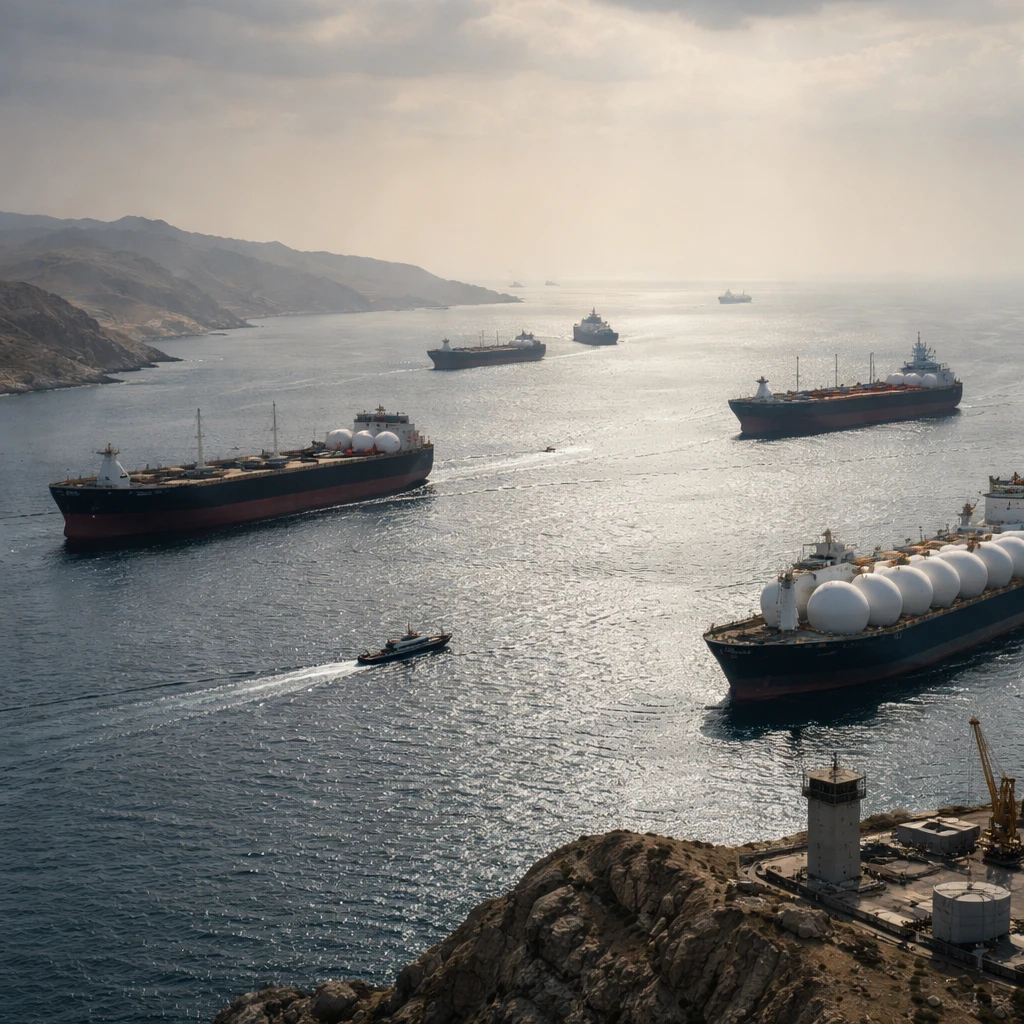
For energy markets, the critical issue is whether a peace agreement can be concluded that would reopen the Strait of Hormuz - a chokepoint off Iran's southern coast through which roughly one-fifth of the world's oil and liquefied natural gas flows. The strait has been largely closed to tanker traffic for weeks, a factor that has pushed crude benchmarks sharply higher.
Before the conflict, Brent crude traded near $70 a barrel. On Thursday, Brent was trading above $105 a barrel, reflecting the market's assessment of constrained seaborne flows. Shipping reports earlier in the week suggested some vessels had recently managed to transit the strait, but investors remain focused on firm evidence that regular traffic can resume.
In the near term, energy traders are weighing a mix of signals: modest gains in European gas tied to oil strength, tempered by short-term supply fixes in Norway and milder weather in parts of the continent. At the same time, geopolitical developments in and around Iran continue to be the principal factor capable of driving much larger price moves should the situation escalate or ease decisively.