
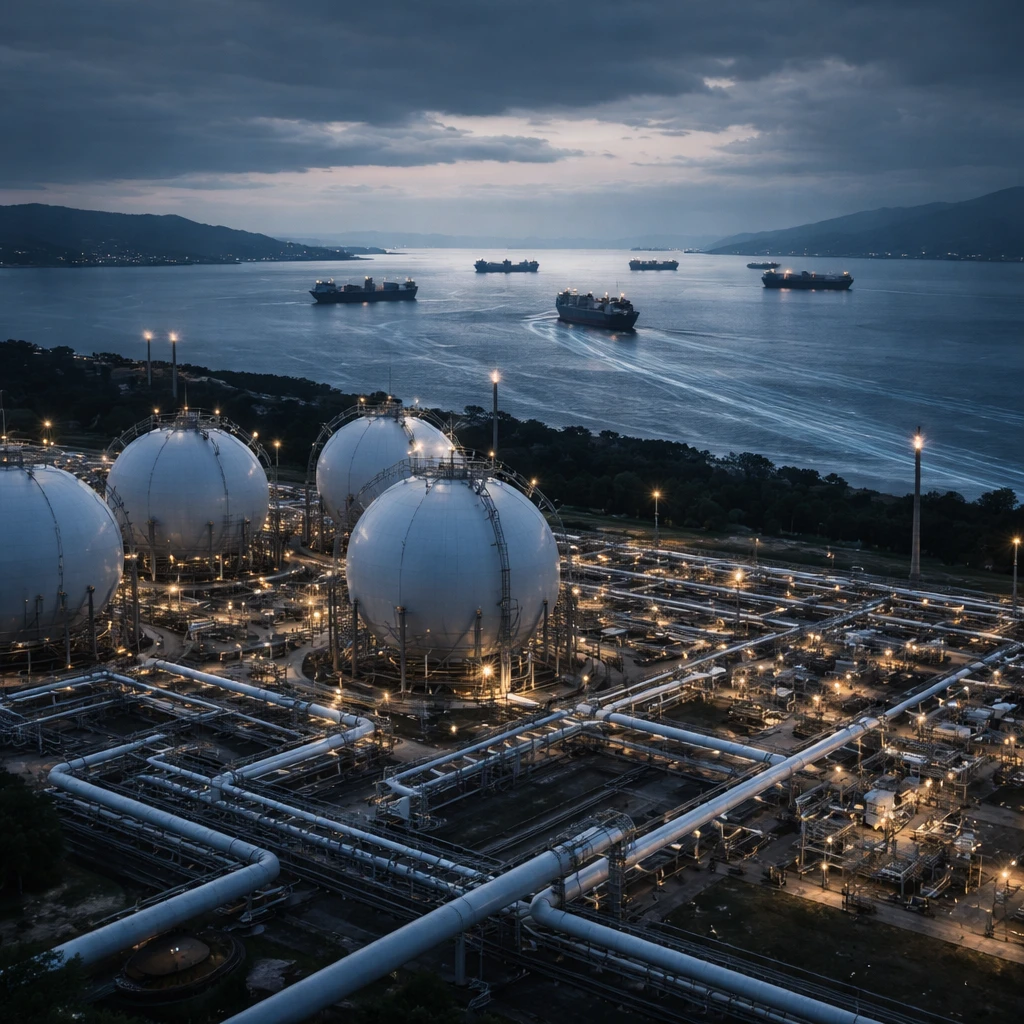
European natural gas prices moved sharply lower on Monday, reflecting a broader pullback in oil markets after reports over the weekend suggested progress toward a U.S.-Iran framework agreement that could reopen the strategic Strait of Hormuz.
By 09:08 ET (13:08 GMT), the Dutch front-month benchmark at the TTF hub had fallen 5.6% to 45.945 euros per megawatt hour. The British gas market was closed for a holiday.
U.S. President Donald Trump said negotiations with Iran were proceeding "nicely," while warning that fighting could resume and intensify if a deal is not reached to end the nearly three-month conflict. Weekend reports indicated that the proposed arrangement between Washington and Tehran would include reopening the Strait of Hormuz - a vital shipping lane off Iran's southern coast through which roughly a fifth of the world's oil flows - in return for the United States lifting a naval blockade of Iranian ports.
The strait has been largely closed to tanker traffic for weeks, a disruption that helped push oil prices higher and raised concerns about renewed inflationary pressure around the world. As hopes of a diplomatic detente grew, benchmark Brent crude futures retreated below $100 a barrel.
Changes in crude markets can ripple through to many gas contracts because numerous liquefied natural gas and pipeline gas agreements index prices to oil, meaning moves in oil often influence gas costs.
Still, analysts warned that both sides have appeared to lower expectations that an announcement of a final deal is imminent. Iran's foreign minister said a possible memorandum of understanding does not contain detailed provisions on managing the Strait of Hormuz, according to Reuters. A spokesperson also cautioned that while the two sides had reached conclusions on a range of topics, an agreement could not be described as imminent.
Market watchers noted that shipping through the strait was continuing slowly. Analysts at ING said vessels were still trickling through, and cited Iranian claims that 33 vessels transited the strait in a 24-hour period over the weekend after "obtaining approval." ING added that the figure included all commercial vessels, not only tankers.
The evolving diplomatic picture and ongoing, limited maritime traffic have combined to ease some of the acute supply concerns that had pressured oil and related energy markets, while leaving significant uncertainty about whether the tentative progress will translate into a durable resolution.
Summary
Reports of a potential framework between the U.S. and Iran that would reopen the Strait of Hormuz drove oil down, and European natural gas prices followed. The Dutch TTF front-month contract dropped to 45.945 euros per megawatt hour as traders reacted to the evolving diplomatic developments and continuing uncertainty about the timing and scope of any formal agreement.