
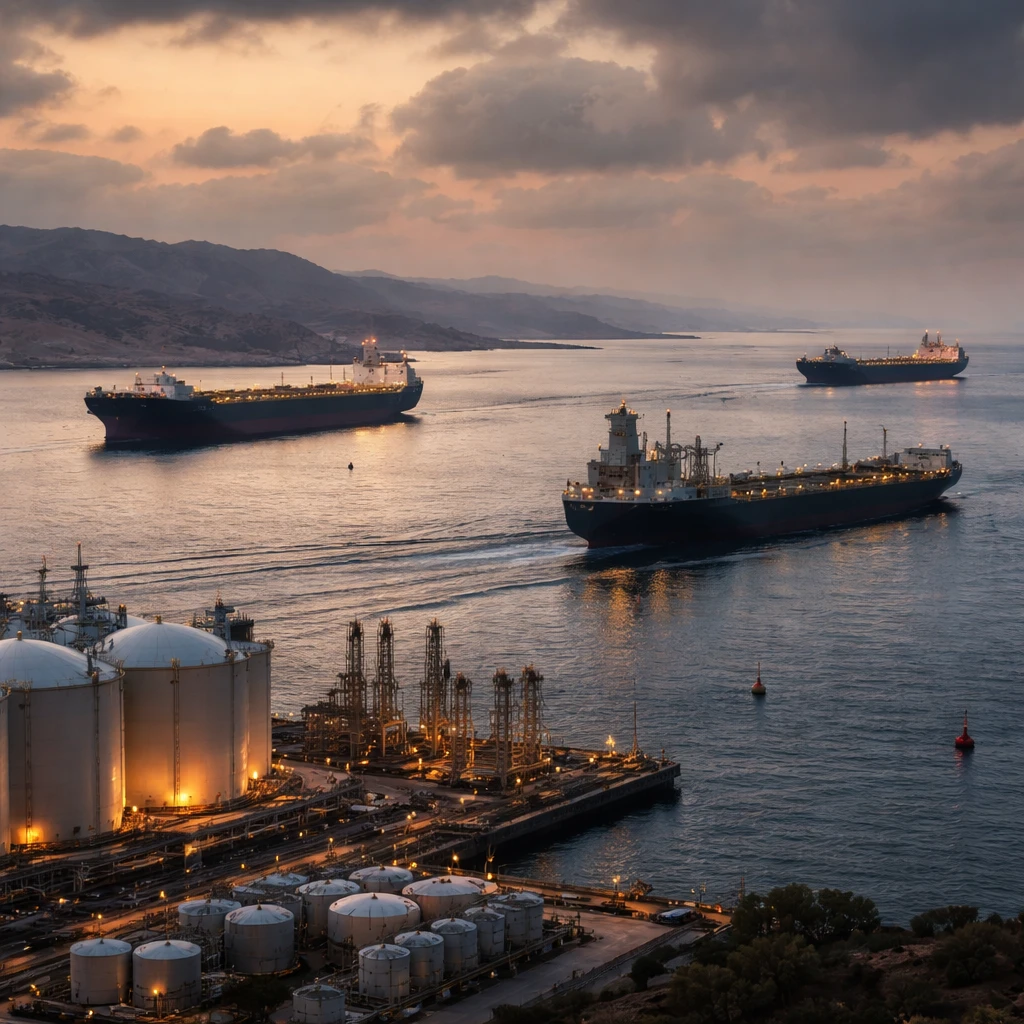
European natural gas prices moved lower on Wednesday, tracking a retreat in crude oil as market participants reassessed the prospects for a quicker resolution to the Iran war.
At 09:45 ET (13:45 GMT), the Dutch front-month contract at the Title Transfer Facility (TTF) had fallen 1.7% to 50.960 euros per megawatt hour. The U.K. front-month gas contract declined 1.6%, trading at 124.63 pence per therm.
Statements from U.S. political leaders helped shape market sentiment. U.S. President Donald Trump told lawmakers on Tuesday evening that the Iran war could end "very quickly." Earlier this week, he said he had delayed planned fresh attacks on Iran at the request of three Gulf countries. Separately, Vice President JD Vance offered an upbeat note, saying Tehran wanted to reach a deal.
Shipping activity through the Strait of Hormuz also influenced energy markets. Shipping data from LSEG and Kpler showed two Chinese-flagged supertankers carrying oil exiting the strait on Wednesday. In addition, the South Korean-flagged Very Large Crude Carrier Universal Winner was recorded leaving the narrow waterway off Iran's southern coast. That channel has been effectively closed to tanker traffic since the start of the U.S.-Israeli war on Iran in late February.
Oil prices eased on expectations that constrained flows through the strait could begin to normalize, although Brent crude futures remain well above levels observed before the conflict began. A separate report indicated there had been little progress in negotiations between Washington and Tehran, underscoring continued uncertainty around the geopolitical picture.
While crude dominated much market attention, analysts cautioned that European gas fundamentals remain a constraining factor. They pointed to relatively soft gas stock levels in Europe and heightened competition with Asian buyers to secure recently scarce LNG cargoes. Those dynamics, the analysts said, are likely to limit how far TTF prices can fall.
Strategists also highlighted a second potential source of supply pressure: attacks on Ukrainian gas infrastructure. Should such attacks materialize, Ukraine could become more dependent on gas supplies from EU countries this winter, further tightening regional availability and supporting prices.
Market implications
- Energy commodity prices are sensitive to both geopolitical signals and physical flows through key chokepoints such as the Strait of Hormuz.
- European gas benchmarks may face limited downside given stock levels and competition for LNG cargoes from Asia.
- Potential disruptions to Ukrainian gas infrastructure could increase demand on EU supplies ahead of the winter heating season.
Reporting limitations - Where commentary or analyst views are noted, those observations were reported by market participants and strategists; the broader negotiating picture between Washington and Tehran remains unclear.