
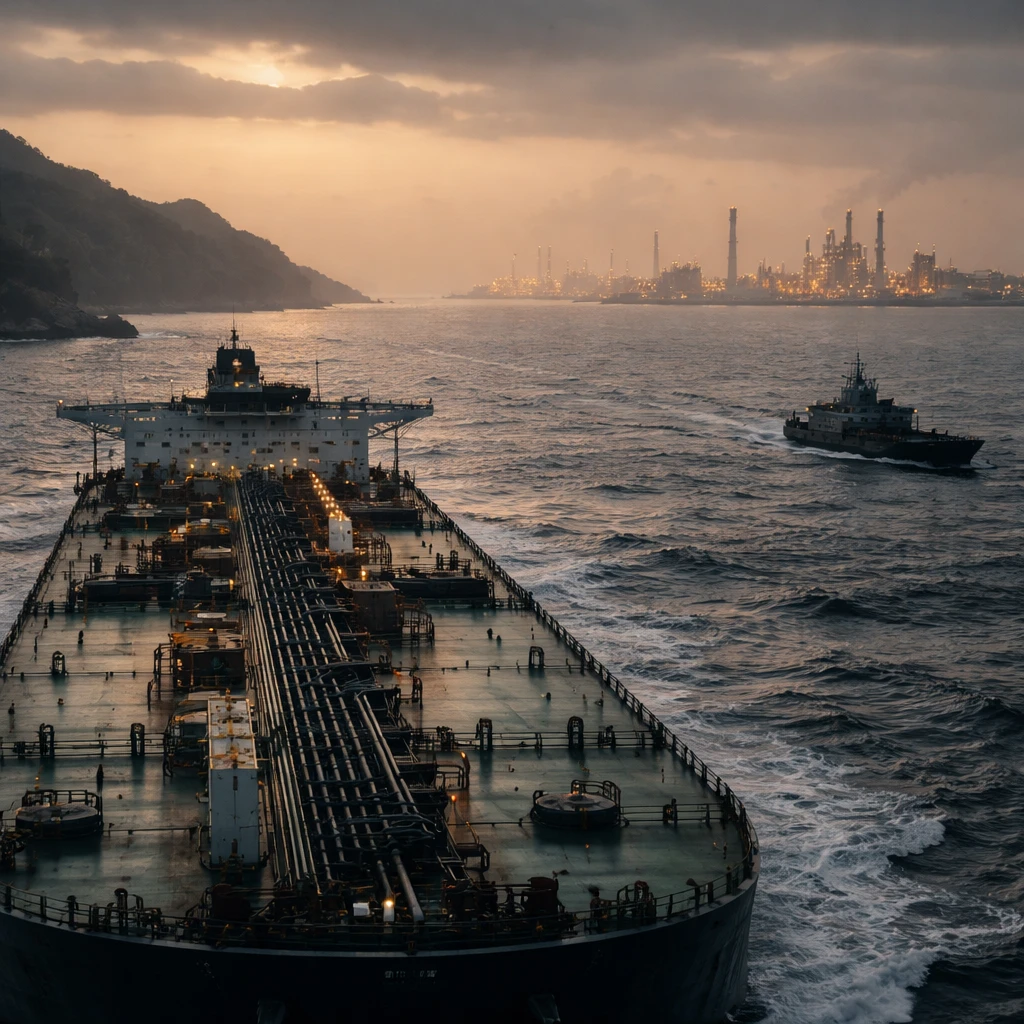
Brent crude staged a rebound this week from lows around $91 a barrel as hopes for an immediate U.S.-Iran settlement dimmed, prompting Citi analysts to reiterate a bullish near-term price stance and to warn that important global stockpiles are already thin.
The recovery in prices unfolded amid renewed hostilities in the Middle East. Iran struck Kuwait's airport, and U.S. forces carried out strikes in the vicinity of the Strait of Hormuz, highlighting the fragility of a ceasefire that had been in place for several weeks. Negotiations between Washington and Tehran remain at an impasse, with disagreements centered on control of the strait, how Iran's highly-enriched uranium would be handled, and whether Lebanon would be included in any ceasefire arrangement.
Meanwhile, an Israel-Lebanon ceasefire announced on Wednesday provided a glimmer of hope for a broader de-escalation and helped to temper upward pressure on crude. On Thursday, Brent and WTI futures traded at $94.88 and $96.65 per barrel, respectively. Iran has conditioned any deal in part on an end to fighting between Israel and Hezbollah.
Citi's outlook assumes a drawn-out negotiation phase. In the bank's base case, flows through the Strait of Hormuz would gradually return over the third quarter, but the rebuild of inventories is expected to be slow. That prolonged period of low stocks, Citi says, will keep prices elevated for longer than markets might currently assume.
The bank's specific Brent forecast calls for an average of $110 per barrel in the third quarter, easing to $90 in the fourth quarter and further to $80 in 2027. Citi also expects backwardation - the condition in which near-term contracts trade at a premium to later-dated contracts - to persist throughout the period.
Citi bases much of its case on the uneven geographic distribution of oil stocks. While headline global liquids inventories may appear to sit within historical ranges, the bank notes that crude holdings in Asia ex-China and key refined product inventories were already below their five-year ranges as of the end of May. "Continued stock draws will take levels to recently unprecedented lows, causing a scramble to pull from better supplied areas, and strong backwardation to persist to replenish low stocks even after Strait reopening," the analysts wrote.
Two main factors have so far muted the extent to which physical markets tightened in response to headline supply losses - losses that Citi estimates at over one billion barrels since disruptions around the Strait began. First, China's crude imports fell by roughly 4.3 million barrels per day between February and May. Second, releases from the International Energy Agency's emergency reserves have been supplying the market at an estimated rate of 3.3 million barrels per day across April and May.
Citi warns that once the IEA release stops - potentially by late July - the physical market will tighten significantly unless other offsets materialize.
Refined product inventories are another focal point. Diesel, gasoline and residual fuel stocks are all at or below the bottom of their historical ranges, even as crude prices moderated recently. That depletion of product stocks is keeping refinery margins elevated, reflecting the strain in the downstream market.
The International Energy Agency this week reiterated a similar warning: if current stock draws persist, global inventories could fall to critically low levels ahead of the summer demand peak. That prospect underpins Citi's view that the market's backwardation and higher near-term prices could remain in place until inventories across key regions are meaningfully rebuilt.
For market participants, the interplay between geopolitical developments around the Strait of Hormuz, regional inventory imbalances, and the scheduled phasing out of emergency reserve releases is likely to be the primary driver of price behavior in the coming months. The pace at which crude and product stocks are replenished - and whether flows through the Strait resume on schedule - will determine whether Citi's scenario of sustained elevated prices materializes.