
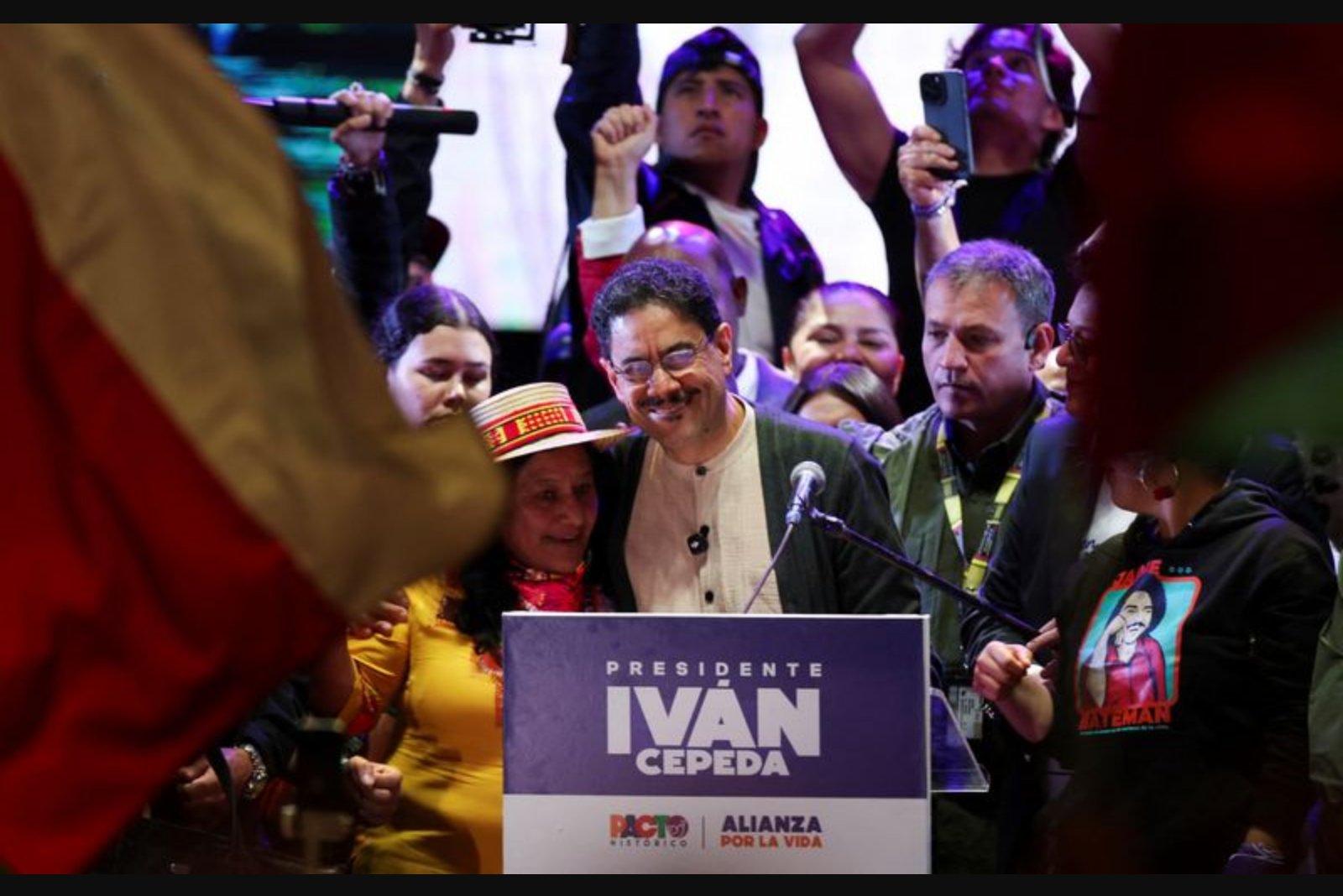
Colombian presidential hopefuls wrapped up their pre-election campaigns on Sunday with sizeable rallies in key cities, setting the stage for what analysts expect to be a contentious period of debate after the May 31 vote and potentially leading into a June 21 runoff.
In the last public poll published ahead of the first-round vote, leftist politician Ivan Cepeda, 63, emerged as a narrow front-runner. That same poll, however, projected he would be defeated in a June runoff against either of his right-wing opponents. Earlier opinion surveys had indicated Cepeda could prevail in a second round.
Cepeda has pledged to carry forward social reform measures initiated under the incumbent administration of President Gustavo Petro. Critics have seized on what they describe as the incumbent government’s unsuccessful effort at a policy of "total peace" - negotiated settlements with illegal armed groups - and have linked Cepeda to leaders of the now-defunct FARC guerrilla organization. The article’s source notes that dissident factions of the FARC remain active participants in a conflict that has persisted for roughly six decades and has involved right-wing paramilitaries and drug traffickers, contributing to a death toll of more than 450,000 people.
Polling placed businessman and lawyer Abelardo De La Espriella, 47, a close second behind Cepeda. De La Espriella’s campaign platform includes promises of tax reductions, increased investment in mining and energy, and a military-led effort to crack down on illegal armed groups and drug trafficking. He has also faced criticism for representing controversial clients, among them businessman Alex Saab - accused of serving as a front man and financial operator for Venezuela’s ousted president Nicolas Maduro. Saab was deported to the U.S. last week to face charges there.
Paloma Valencia, 48, trailed in more distant third place in the same polling. Her program calls for expanding the armed forces, shrinking the size of government and cutting taxes. Valencia counts former President Alvaro Uribe among her supporters.
Analysts anticipate the tone of the campaign to intensify rather than moderate in the coming weeks. "We can expect a fear-mongering campaign focused on each candidate’s worst attributes," said Sergio Guzman, director of consulting firm Colombia Risk Analysis. Guzman warned that insults such as "corrupt, amoral, guerrillas, drug traffickers, and paramilitary sympathizers" are likely to dominate the electoral debate in the run-up to a runoff.
Regardless of who wins, the next president will confront a series of entrenched policy challenges. The incoming administration will be tasked with restoring security, addressing the fiscal situation, combating high levels of informal employment and working to reduce poverty and inequality.
The final campaign events were staged in different regions of the country: Cepeda closed in the Caribbean coastal city of Barranquilla; De La Espriella held his concluding rally in Medellin, Colombia’s second-largest city and a corporate hub; and Valencia finished her campaign in the capital, Bogota.
Key context and next steps
Voters will head to the polls on May 31. If no candidate secures a decisive victory, a runoff is scheduled for June 21. In the weeks ahead, observers expect a campaign atmosphere marked by sharply critical rhetoric and strong divisions over security policy and economic priorities.