
Brent crude futures climbed about 4% on Tuesday after the U.S. military carried out strikes in Iran, dimming hopes that talks over the weekend would produce an agreement to end the three-month conflict and re-open the Strait of Hormuz to international shipping. Global benchmark Brent rose $3.44, or 3.6%, to settle at $99.58 a barrel.
By contrast, U.S. West Texas Intermediate (WTI) crude futures settled lower, down $2.71, or 2.8%, to $93.89 a barrel, as that market was catching up with a selloff in Brent that occurred on Monday while U.S. markets were closed for the Memorial Day holiday. On Monday, Brent had plunged 7% to close at its lowest since April 20 amid renewed optimism over a potential deal between the United States and Iran that traders hoped would restore shipping through the Strait.
Energy product contracts also moved sharply. U.S. gasoline futures tumbled 7%, and U.S. diesel futures dropped 4%, with both settling at their lowest closes in five weeks.
The U.S. strikes prompted a swift response from Tehran. Iran’s foreign ministry described the strikes in Hormozgan province in southern Iran as a "gross violation" of a tenuous ceasefire that had been in place for nearly seven weeks. Iranian media reported sounds of explosions early on Tuesday in that region.
U.S. officials have on several occasions said they were close to a deal with Iran to end the conflict, but to date agreement has been limited to a temporary ceasefire that reduced attacks to a minimum. On Tuesday, U.S. Secretary of State Marco Rubio said negotiating a deal to halt the conflict could "take a few days." Iran countered that the United States had violated the ceasefire by conducting what it called defensive strikes.
The strikes came while Iran’s top negotiator and its foreign minister were in Doha for talks with Qatar’s prime minister aimed at reaching a broader agreement. Market participants watched those discussions closely because both sides had previously indicated progress on a memorandum of understanding that could halt the war and restart shipping through the blockaded Strait of Hormuz, while providing negotiators 60 days to work through more complex issues, including Iran’s nuclear program.
Analysts noted the immediate market reaction but also highlighted continued uncertainty. "We are still waiting for more details on a potential deal," said Giovanni Staunovo at UBS. "Meanwhile we see renewed tensions in the Middle East, while flows through the Strait remain restricted."
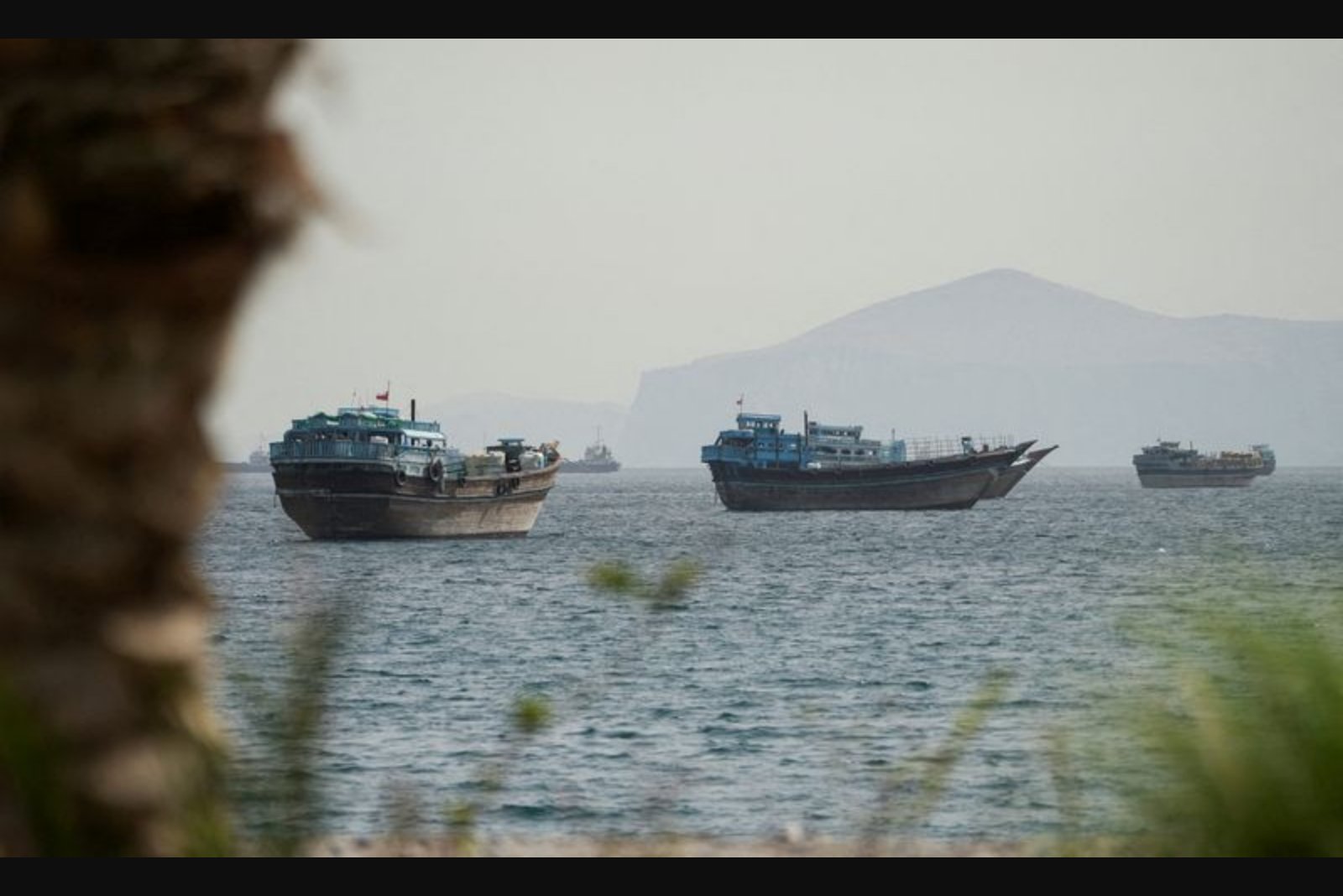
Shipping through the Strait remains a central focus for energy markets. Iran has effectively halted nearly all non-Iranian shipping in and out of the Strait of Hormuz since the war began in late February, a disruption that has choked off about one-fifth of global oil and liquefied natural gas (LNG) flows. Despite the broad stoppage, ship-tracking data showed that three LNG tankers passed through the Strait in recent days, bound for Pakistan, China and India. In addition, a supertanker carrying Iraqi crude to China that had been stranded for nearly three months also moved through.
Maritime authorities reported related incidents at sea. United Kingdom Maritime Trade Operations said a tanker reported an external explosion on its port side, close to the waterline, about 60 nautical miles off Oman’s capital, Muscat.
National governments and energy planners are taking measures in response to the instability. A government document shared with oil producers and major trading firms indicated Pakistan plans to boost domestic storage for crude oil and refined products to increase its energy security.
Financial and consumer indicators showed broader economic sensitivities to the conflict. U.S. consumer confidence slipped in May as worries about rising inflation linked to the war intensified, and households’ views of the labor market remained pessimistic. Rising inflation increases the cost of goods for consumers and raises concerns among central banks about potential monetary tightening, which could raise borrowing costs and slow economic growth.
The market moves on Tuesday reflected both the immediate reaction to the strikes and the market’s attempt to reconcile recent volatility driven by diplomatic developments, shipping disruptions and macroeconomic concerns. With negotiators meeting in Doha and limited details available on any potential memorandum, traders and policymakers remain focused on the evolution of both the conflict and efforts to restore safe shipping through the Strait of Hormuz.