
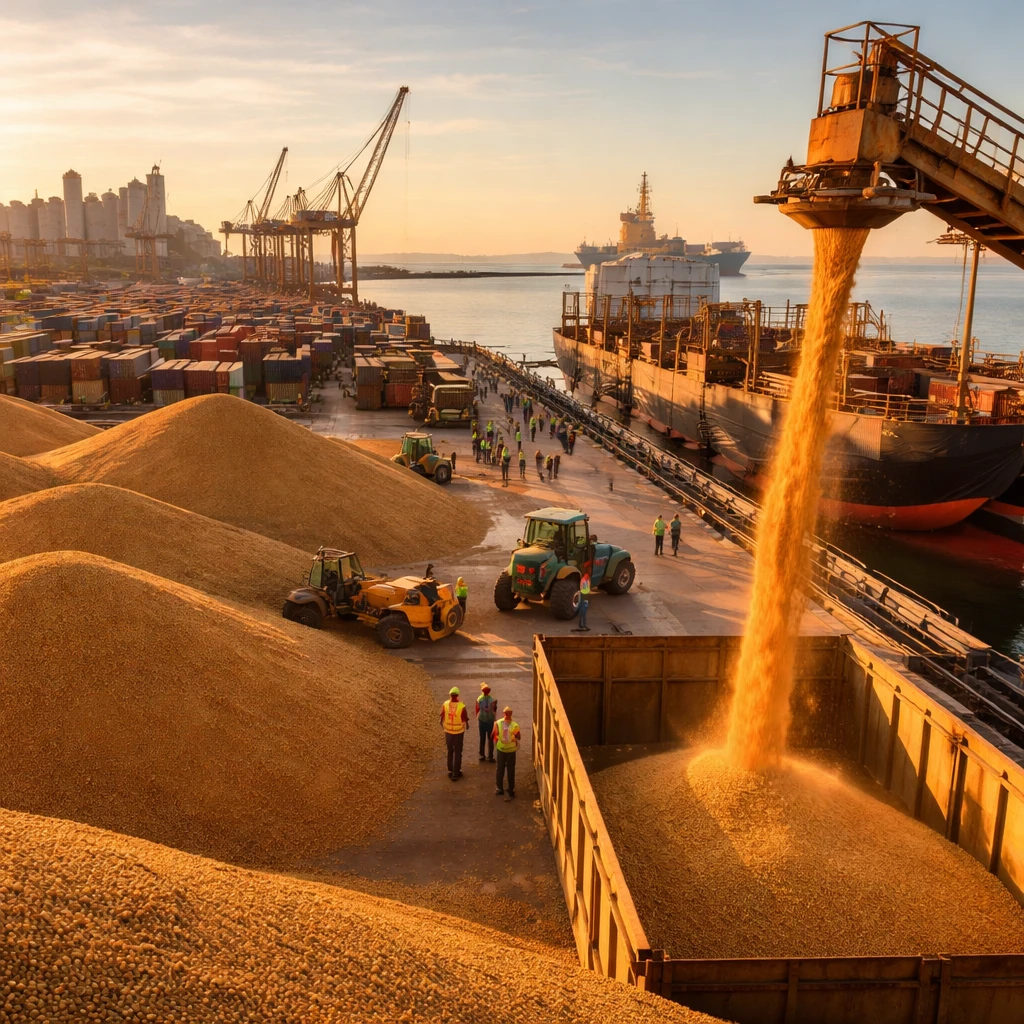
The announcement of a U.S.-China agricultural purchase arrangement has prompted industry observers to consider how global farm trade flows might adjust if Beijing follows through on increased buys of U.S. goods. Several analysts warned that, if additional Chinese demand for U.S. soybeans materializes, Brazil could move to fill gaps left elsewhere as Washington concentrates shipments on its top trading partner.
Brazil's agricultural shipments to China reached $55.22 billion in 2025, equal to roughly one-third of the country's total agricultural exports abroad last year, according to government figures cited by industry parties. Soybeans made up $34.5 billion of that total, while meat exports were valued at $9.82 billion.
The White House has estimated that China would add purchases of 25 million metric tons of U.S. soy under the agreement. Brokerage Stag International said that, should those purchases be realized, Brazil would likely re-route its own shipments. "A Chinese soybean purchase program of 25 million tons would mainly displace buyers outside China toward Brazil and other origins," the brokerage wrote in a report.
Stag also noted that Brazil remains structurally competitive and, with a forecast record crop exceeding 180 million tons in 2026, the country should be well placed to capture demand in markets apart from China.
Industry associations focused on soybean trading and processing - Anec and Abiove - did not immediately provide comment when contacted.
Shifts in soy trade could be accompanied by changes in beef flows as well. Brazil could see an opportunity to expand beef sales to the United States if U.S. exporters move more of their output to China in response to the renewed access. Paulo Mustefaga, CEO of the industry group Abrafrigo, said that if China confirms the renewal of approvals for U.S. processing plants, the United States may seek to regain some share of the Chinese market. "Given the large shortfall in U.S. production to meet domestic demand, opportunities could emerge for other countries, such as Brazil, to expand sales to the U.S.," Mustefaga said.
The Chinese customs website showed that China renewed more than 400 expired export licenses for U.S. beef processors following a summit in Beijing between U.S. President Donald Trump and Chinese President Xi Jinping. At the same time, Mustefaga emphasized that both the United States and Brazil face a quota on beef exports to China under safeguard measures, which should limit any rapid expansion of U.S. sales to the Chinese market.
Observers cautioned that it may be premature to quantify the full impact on Brazil's farm sector from the White House announcement. Nonetheless, the combination of Brazil's competitive position, its sizable expected crop in 2026, and the reallocation of U.S. shipments toward China could lead Brazil to press into markets where U.S. exporters reduce their presence.
Source notes: The figures and quotes in this report reflect industry statements and government data referenced by trade analysts and groups engaged in agricultural export markets.