
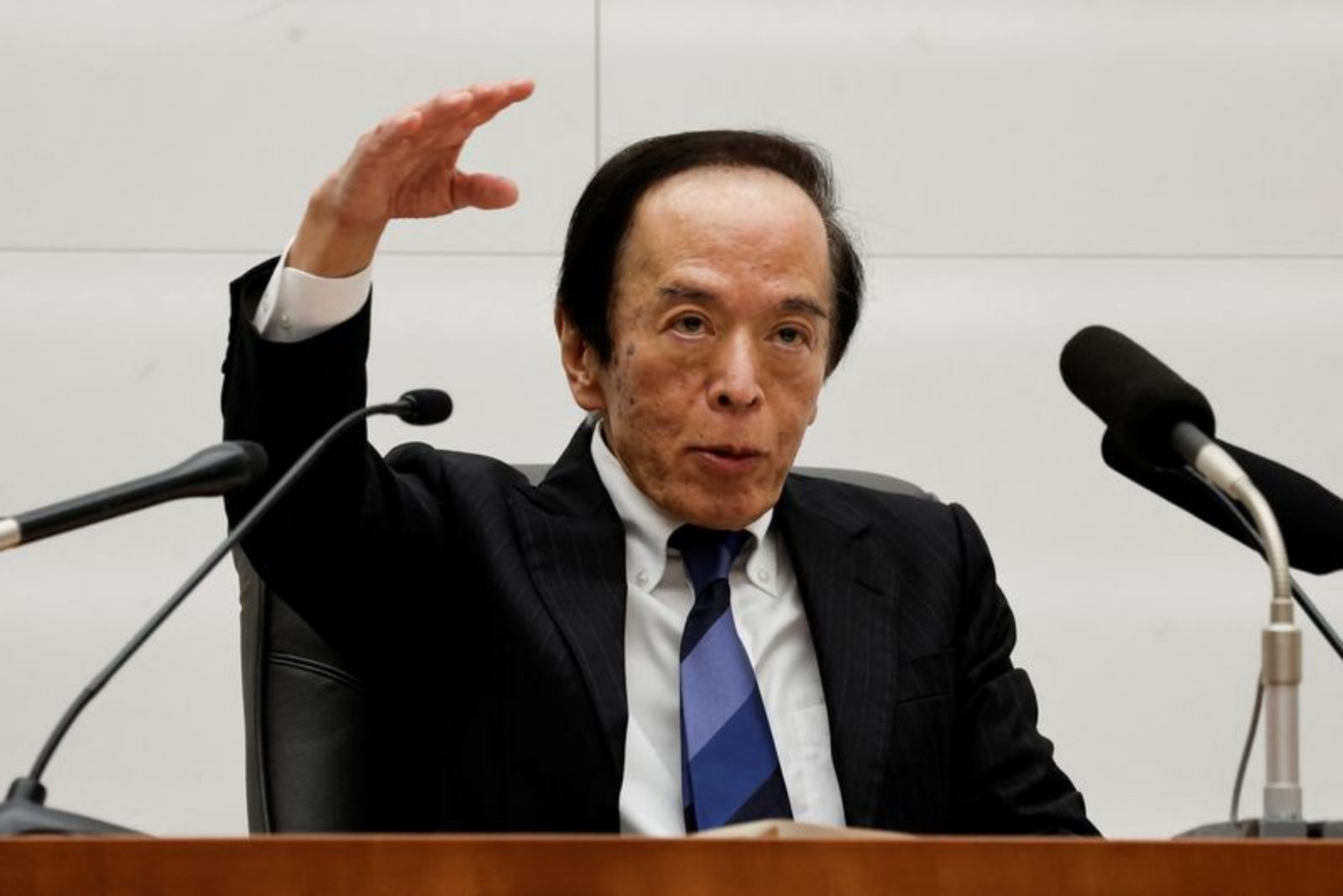
TOKYO, May 27 - Bank of Japan Governor Kazuo Ueda urged policymakers to look beyond oil price movements in isolation, arguing that whether an energy shock remains temporary or becomes entrenched depends on how it interacts with wages, expectations and firms' pricing behavior.
Speaking at a conference hosted by the BOJ and its think tank, the Institute for Monetary and Economic Studies, Ueda drew comparisons among various energy shocks Japan has experienced over past decades. He said the identical increase in oil prices can produce markedly different outcomes for wages, inflation expectations, demand and exchange rates depending on the economic starting point when the shock arrives.
"If inflation expectations are already high and wages are accelerating, the risk of second-round effects is large," Ueda said.
Ueda contrasted that scenario with one in which expectations are subdued and wages are stagnant, noting that a sizable cost shock in such circumstances "may not raise inflation expectations." He stressed that "the boundary between temporary and persistent inflation is not mechanical."
The governor reiterated the channels through which a short-term shock can harden. "A temporary shock can become persistent if it changes wages, expectations, and price-setting behavior. Conversely, a large shock can remain temporary if those channels do not activate," he said.
Ueda's remarks came amid a rise in oil prices linked to the Middle East conflict, which has added to inflationary pressure in Japan's economy. Those developments have led BOJ officials to issue firmer signals, contributing to market expectations that an interest rate increase could occur as soon as next month.
By highlighting the role of initial conditions - including prevailing inflation expectations and wage dynamics - Ueda framed the assessment of energy-driven cost shocks as dependent on broader macroeconomic interactions rather than on the size of the energy price move alone. His comments underline the importance the BOJ places on monitoring labor market and inflation-expectation indicators when judging the persistence of inflationary impulses.
While he did not quantify thresholds or offer a timeline for policy moves, Ueda's emphasis on second-round effects and price-setting behavior points to the variables central banks will track closely as they determine whether an energy shock requires a sustained policy response.