
Overview
Farmers in multiple Australian cropping zones are significantly scaling back wheat sowing and trimming fertiliser use after a squeeze from rising input costs and a bleak rainfall forecast. On a mixed-conditions farm in southern New South Wales, a grower who planned to seed a full wheat programme is now planting roughly half that area, citing rapidly higher fuel and nitrogen fertiliser prices linked to disruptions from the Iran conflict and an absence of timely rainfall.
On the ground
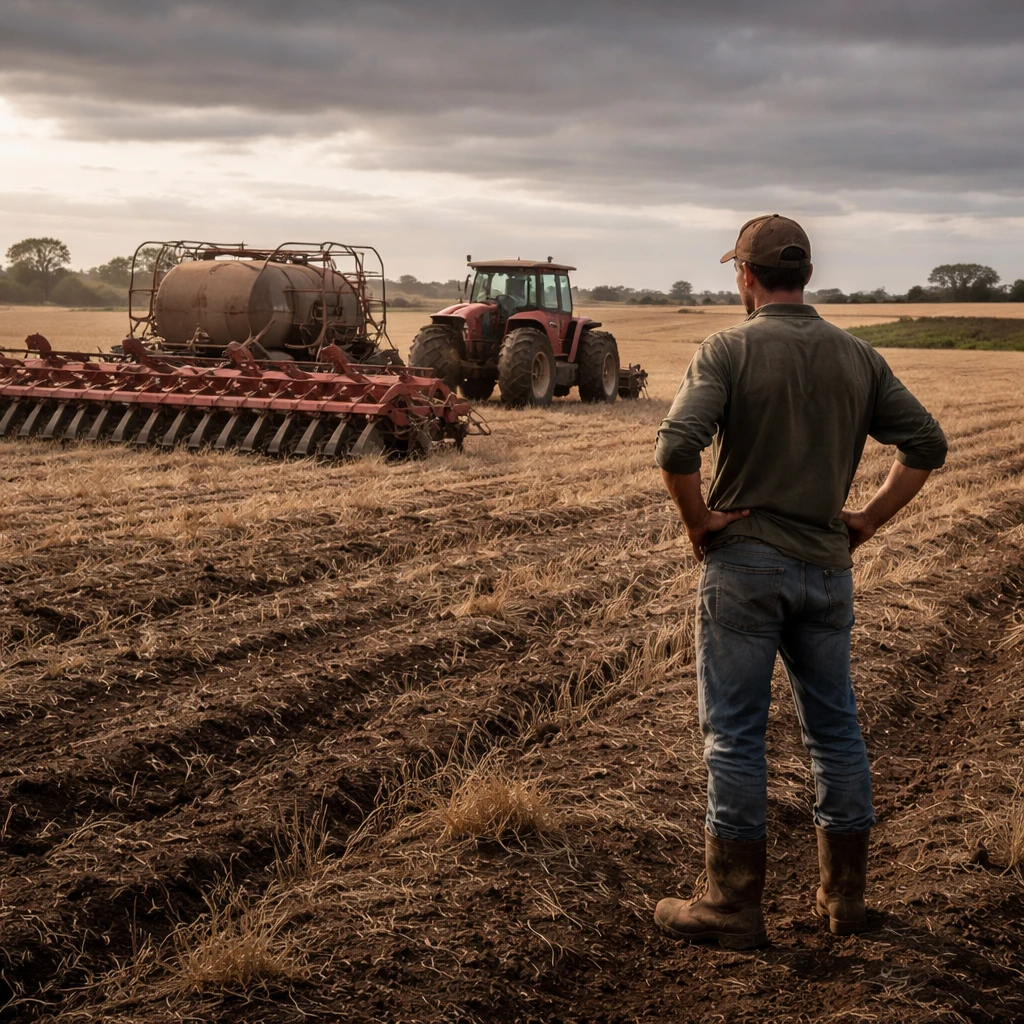
Standing beside an 11-metre-wide seeding rig in a bare paddock, a 44-year-old producer described how a lack of rain and surging input costs have forced a major revision of his plans. He said he had never previously made such extensive cuts to cropping intentions in six generations of family farming at the property near Brocklesby, 300 km northeast of Melbourne.
"Every indicator is pointing towards lower production," he said, describing a move to sow less wheat and apply less fertiliser than originally intended. Instead of heading straight into a commercial cereal, he is sowing vetch and barley as fodder crops that will support livestock but are not expected to be harvested, and applying only half the fertiliser he would normally use.
Other farmers are telling similar stories. In total, interviews were conducted with eighteen growers across the country to gauge planting intentions and input choices for the coming season. In the driest districts, most respondents reported sharply reducing the area they would plant to wheat. Many said they were switching to alternate crops such as barley or canola that either demand less nitrogen fertiliser or command a higher price.
For example, a farmer near Corowa, about 40 kilometres west of the Brocklesby property, said he would sow 20% less wheat and use one-third less fertiliser than planned. He also expects his yield to be materially lower given dry conditions, estimating around a 40% reduction in harvested wheat from his operation. He added that a doubling in the price of urea, a major nitrogen fertiliser, simply could not be absorbed within his farm budget.
National planting and production outlook
Six agricultural analysts surveyed anticipate Australian wheat plantings will fall between 7% and 20% from the prior year, a reduction that could remove grain from an area approaching the size of Belgium. Those analysts estimate the national harvest due toward year-end could be between 16% and 41% smaller than last season, with output potentially dropping from roughly 36 million tonnes last year to as low as 21.3 million tonnes under the most pessimistic scenario if dry conditions persist.
Australia is currently the third-largest wheat exporter. The scale of cuts to sowing and the dry outlook imply the country may have as much as 10 million tonnes less wheat to ship in the upcoming season - an amount equivalent to roughly 5% of annual global exports. A smaller Australian harvest would therefore reduce global wheat availability and apply upward pressure on prices already beginning to rise.
Planting by the next major exporters is also under strain. In Argentina, the Rosario Grains Exchange reported farmers facing elevated costs intend to sow about 7% less wheat and could harvest around 37% less than last year - a reduction of approximately 11 million tonnes. In Canada, spring sowing is lagging its usual pace and analysts expect lower output there as well.
An analyst at an international grain trading firm, speaking without permission to be named, said the global wheat market is likely to shift from surplus into deficit, drawing down stocks and pushing prices higher. He added that production of other crops will also be affected by the same pressures.
Weather and timing considerations
Large parts of New South Wales and Queensland have seen very little rain in recent weeks. In regions where growers might normally sow into dry soil and await follow-up rains, many are choosing not to plant at all given an unfavourable weather outlook and sharply higher input costs. Meteorological forecasts point toward a potential El Nino pattern, which typically produces warmer and drier conditions along Australia’s east coast. The national meteorological bureau expects below-median rainfall for most of the country’s cropping zones between June and September.
That combination - planting risk from dryness and elevated input prices - has led at least one New South Wales farmer to leave an entire property unsown after not stocking up on fuel or fertiliser before prices jumped.
Yet conditions are not uniformly poor. A Victorian grower near Birchip reported excellent early-season rainfall and said he had purchased the fertiliser he needs. He described the start of the season as the best he has experienced and, while admitting the cost of fertiliser made him uneasy, he remained positive about his prospects given the rainfall and his full input purchases.
Fertiliser supply and cost issues
Fertiliser availability and price are central to the dislocation. Australia typically imports more than half of its nitrogen fertilisers from Middle Eastern suppliers. Those supplies have been disrupted by the closure of the Strait of Hormuz, cutting flows of fuel and fertiliser from Gulf nations. Industry figures indicate the country currently has around 600,000 tonnes less urea than it typically consumes in a year - roughly a 20% shortfall.
Hamish McIntyre, president of the National Farmers' Federation, said supply-chain constraints also mean fertiliser may arrive later than farmers need it, reducing its agronomic effectiveness. Some growers who have sown full programmes are nevertheless planning to cut fertiliser application rates - one anonymous farmer in Western Australia said he would reduce fertiliser by 10% and still expected to lose money unless crop prices rose further.
Across regional communities, the economic effects are already flowing through local businesses. A farm machinery dealer in Corowa reported that enquiries had dried up and predicted the pinch on farmers would ripple into shops, pubs, sporting clubs and supermarkets.
Short-term fixes and longer-term concerns
Many growers are applying a form of crisis management: reducing fertiliser now to save cash, while acknowledging that this is a short-term response. Those lower applications will conserve funds but will also draw down soil nutrient levels. Several producers warned that, if fertiliser prices or supply constraints remain through the next season, it will be difficult to restore soil fertility, necessitating heavier applications later when funds allow. One farmer said he feared the 2027 season because of the nutrient drawdown this year, noting that an inability to replenish nutrients could mean fewer crops planted next year.
Implications
The combined effect of lower plantings in Australia and expected declines in other exporting countries creates a risk of tightening global markets for wheat and potentially other crops. Reduced plantings and delayed or diminished fertiliser use may depress yields, while shortages of fertiliser and higher energy costs are squeezing growers' budgets and affecting rural economies.
What remains uncertain
Outcomes will depend on the weather over the coming months, the duration of supply disruptions affecting fertiliser and fuel, and whether commodity prices move high enough to offset elevated input costs for growers. Several projections and farmer reports are conditional on dry conditions persisting; if rainfall comes earlier or fertiliser supplies normalize, the range of possible production outcomes would narrow.
Note: All figures, estimates and farmer statements above reflect information provided by interviewed growers, agricultural analysts and industry representatives and are presented without alteration.