
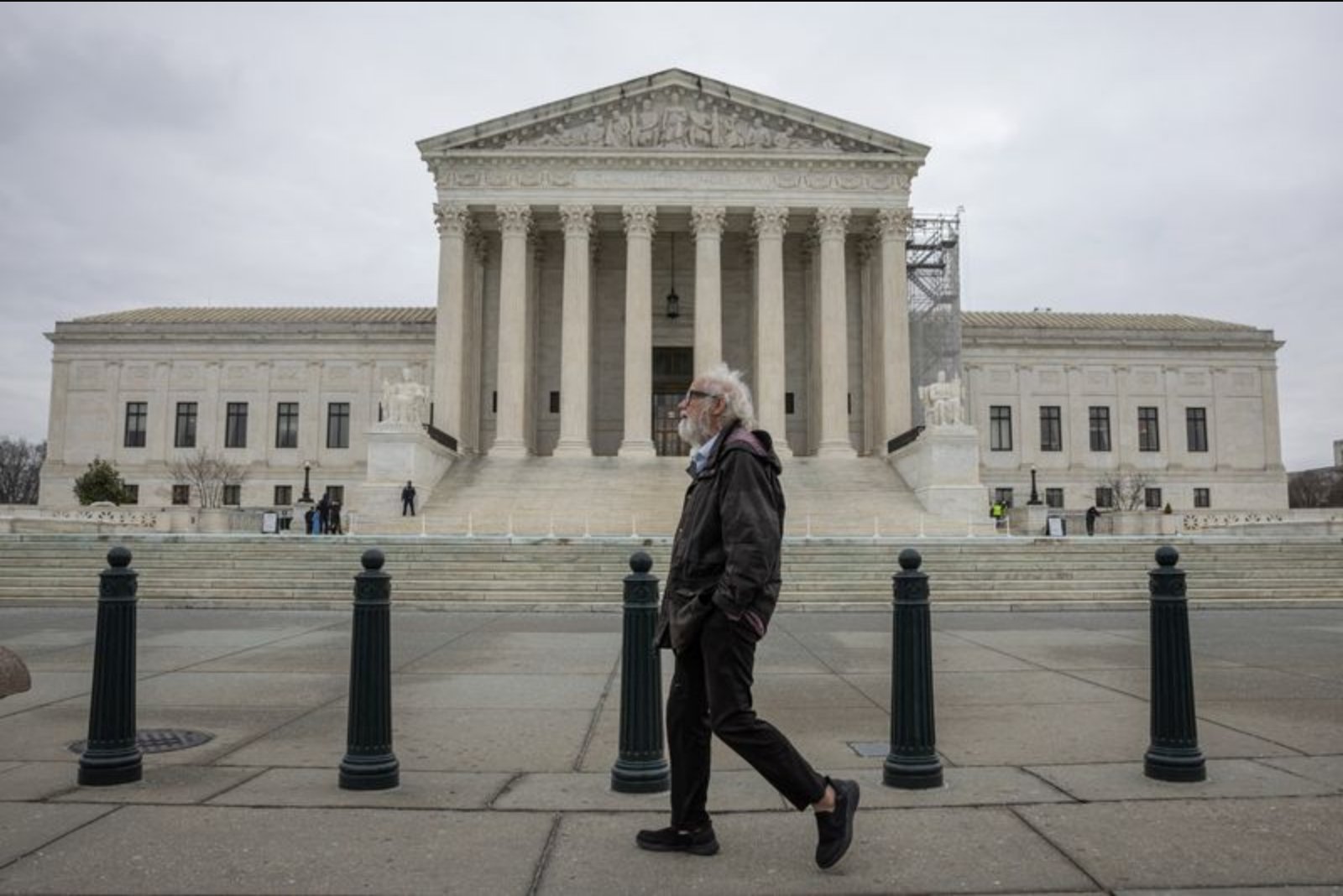
WASHINGTON, April 30 - In a decision that legal scholars described as a major rollback of a central enforcement mechanism of the Voting Rights Act, the U.S. Supreme Court on Wednesday narrowed how Section 2 may be used to challenge electoral maps. The 6-3 ruling, written by Justice Samuel Alito and joined by Chief Justice John Roberts and the court's other conservative members, shifts the focus of Section 2 toward proof of intentional racial discrimination rather than the longstanding “results test” that allowed challenges based on discriminatory impact.
The case involved a challenge to a Louisiana congressional map that previously produced a second Black-majority U.S. House district. By blocking that map, the court's majority ruled that Section 2 cannot be read to require maps to produce a certain number of majority-minority districts absent evidence that lawmakers acted with racial intent.
Scholars and advocates warned the ruling will narrow avenues for minority voters to contest maps they view as racially discriminatory. Rick Hasen, an election law expert at UCLA, called the court's approach “the metaphor is a wrecking ball,” arguing that while some parts of the Voting Rights Act remain on the books, the two principal legal mechanisms for preventing racial vote dilution have been largely eroded.
Supporters of the holding presented a contrasting view. John Yoo, a former Justice Department official under President George W. Bush, praised the decision as continuing the court's effort to uphold what he characterized as a “color-blind Constitution,” framing the ruling as a restraint on remedies that, in his view, exceed constitutional guarantees.
What the ruling changes
The Voting Rights Act of 1965 was enacted to prevent racial discrimination in voting, including measures such as poll taxes and literacy tests that had been used to block the franchise of Black Americans. Two sections of the law have historically been central to enforcing those protections: Section 5, which required preclearance of voting changes in jurisdictions with a history of discrimination, and Section 2, which bans voting practices that discriminate on the basis of race.
In 2013, a 5-4 Supreme Court decision in Shelby County removed the formula that triggered Section 5’s preclearance requirement, undercutting federal oversight for certain states and localities. That ruling left Section 2 intact as the primary federal tool for challenging discriminatory voting measures.
Congress had amended Section 2 in 1982 to bar electoral arrangements that had the effect of diminishing minority voters’ electoral power even if no explicit racial intent could be proven. For decades, litigants could prevail by showing a discriminatory result under what became known as the results test.
Wednesday’s majority opinion alters that balance by stating that interpreting Section 2 to outlaw a map simply because it fails to provide a sufficient number of majority-minority districts would create a right not protected by the 15th Amendment, the opinion said. The court tied the proper interpretation of Section 2 to the Constitution’s prohibition on intentional racial discrimination in voting found in the 15th Amendment.
Dissent and reaction
Justice Elena Kagan authored a forceful dissent, joined by the court's two liberal justices, describing the decision as the latest installment in what she called the majority’s systematic dismantling of the Voting Rights Act. Kagan pointed to the 2021 ruling in which the court, with its conservative majority, embraced Republican-backed voting measures in Arizona that a lower court had found would disproportionately burden Black, Latino and Native American voters.
Kagan also referenced Roberts’ 2013 majority opinion in the Shelby County case, which she said began the court’s course of diminishing the Act’s force. “For over a decade,” Kagan wrote in dissent, “this court has had its sights set on the Voting Rights Act.”
Harvard Law School Professor Nicholas Stephanopoulos, who filed a brief in the Louisiana case defending the Voting Rights Act, said the ruling renders the results test “effectively dead.” He argued the standard remains on paper but will be “impossible to satisfy in fact,” meaning plaintiffs who previously prevailed under the impact-based test may now be unable to do so without proof of discriminatory intent.
Voices from the case and political context
Press Robinson, one of the Louisiana residents whose legal challenge led to the establishment of the second Black-majority district, said the decision would reverberate across government at all levels and that he feared the ruling would soon produce a decline in the number of elected Black officials. On a call with reporters, Robinson said the country risked regressing to a time when slavery’s abolition did not translate into full political participation.
The ruling arrived with national elections approaching in November. President Donald Trump praised the decision and suggested that Republican-led states might seek to redraw electoral maps in light of the court's directive.
Legal framing and constitutional text
The majority opinion emphasized that the 15th Amendment, ratified in 1870, prevents Congress from enacting laws that deny the right to vote “on account of race, color or previous condition of servitude.” The court’s conservatives reasoned that permitting Section 2 to be applied in a way that effectively requires a certain number of majority-minority districts would create a protection not articulated in that constitutional amendment.
As written by the majority, the opinion places Section 2’s primary analytic focus on intentional racial discrimination. That shift means that claims based predominantly on disparate impact - where a voting rule or map produces fewer opportunities for minority-preferred candidates - will face higher hurdles without evidence pointing to a deliberate effort to discriminate.
Implications flagged by experts
Experts and civil rights advocates warned that the ruling will make it harder for minority communities to challenge electoral maps that dilute their voting strength, because plaintiffs historically relied on demonstrating the effect of a map rather than uncovering a deliberate racial motive. The decision therefore represents a significant doctrinal realignment in voting rights litigation.
Those observers point out that with both the preclearance mechanism of Section 5 neutralized a decade ago and Section 2 narrowed now, federal legal tools for policing racial discrimination in voting are substantially reduced, they said.
What remains uncertain
The court's opinion leaves intact other provisions of the Voting Rights Act and does not eliminate all private or public avenues for contesting race-based voting discrimination. However, by elevating proof of intent and limiting reliance on the results-focused test, the ruling changes the posture and likely success rate of future challenges pressed under Section 2.
How lower courts will apply the new standard across the country - and how states and localities will respond in drawing or defending maps - remains to be seen within the contours the majority has articulated.
This report summarizes the court’s opinion and reactions as provided by legal scholars, litigants and public officials directly involved in or responding to the decision.