
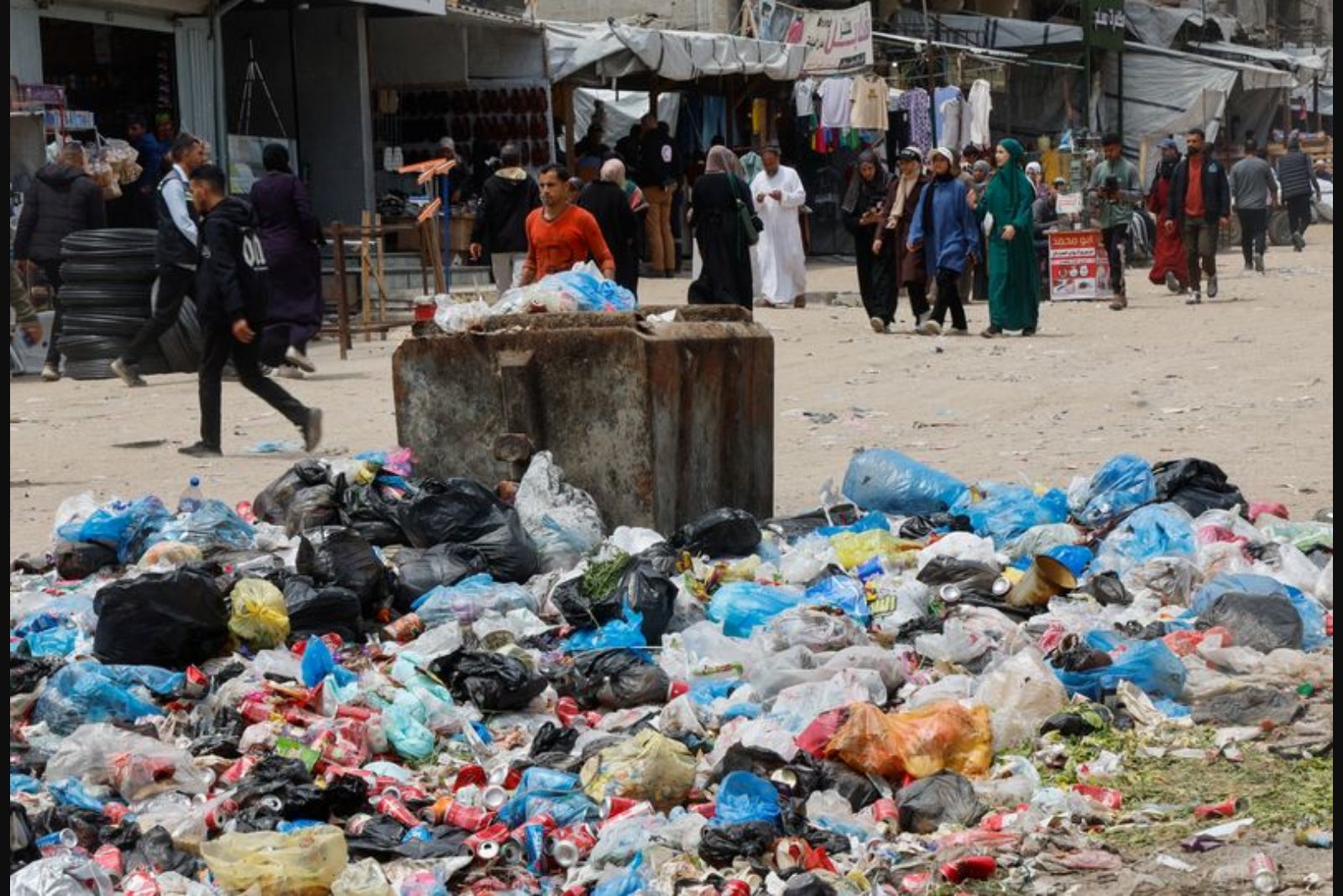
Rats and other parasites are increasingly present in Gaza’s makeshift camps and damaged dwellings, attacking people while they sleep, destroying limited personal items and contributing to a rise in disease cases, medical officials and residents say.
Most of Gaza’s population of more than 2 million people has been displaced. Many are sheltering in tents pitched on open ground, along roadsides or on the rubble of demolished buildings, creating conditions in which rodents have multiplied and spread into living spaces, according to accounts from residents and health officials.
Personal losses and bites
Twenty-year-old Amani Abu Selmi, displaced with her family in Khan Younis in the south, found that rodents had chewed through the garments and bags that made up her wedding trousseau inside the tattered tent where they are sheltering. She and her mother showed the holes rodents had eaten through her traditional burgundy embroidered wedding gown.
"All my happiness was gone, it turned to sadness, turned to heartbreak - that my things are gone, my wedding trousseau is gone," Abu Selmi said.
Residents report attacks while sleeping. Khalil Al-Mashharawi said a rat bit the hand and toes of his 3-year-old son several weeks ago. Last Friday, he said, he himself was bitten. The family now sleeps in shifts to try to protect their children and one another because they lack effective means to control the infestation.
"They strike in our sleep," said Al-Mashharawi, 26, who lives with his family in the ruins of their house in the Tuffah neighbourhood in northern Gaza. He described rodents disappearing for stretches and then returning, sometimes forcing their way under tiles in the house.
Health system warnings and disease risks
Mohamed Abu Selmia, head of Gaza’s largest hospital, Al Shifa Hospital, said hospitals are seeing daily admissions related to rodent incidents, with children, the elderly and the sick particularly affected. He expects problems to worsen as summer approaches and pointed to an Israeli ban on pest control materials such as rat poison as a limiting factor.
Israel generally restricts items it considers to have potential dual military and civilian uses, and those restrictions have affected the entry of pest control supplies into Gaza, officials say.
Abu Selmia said there is widespread fear and serious concern about the spread of dangerous diseases, naming rat-bite fever, leptospirosis and even plague as possibilities.
Sanitation collapse and environmental drivers
An October ceasefire between Israel and Hamas has not substantially eased living conditions for many Palestinians in Gaza. Sewage and sanitation systems have been largely destroyed in extensive damage across the territory, and humanitarian assistance remains subject to Israeli restrictions, according to accounts from aid groups and officials.
With waste collection operations largely halted, contaminated water and refuse have accumulated in and near the tent cities where families are forced to sleep, cook and wash. Aid groups say that build-up of waste and contaminated water has created a conducive environment for rodents and ectoparasites to breed and spread.
Reinhilde Van de Weerdt, the World Health Organization’s local representative, said there were around 17,000 rodent and ectoparasitic infection-related cases recorded in Gaza so far this year. "This is just the unfortunate but predictable consequence when people live in a collapsed living environment," she said.
Context of movement and violence
Officials say that restrictions on goods entering Gaza are linked to security concerns. Israel has continued to carry out deadly attacks, saying its actions respond to threats from Hamas. The conflict has been deadly: Israeli actions have killed more than 800 Palestinians since October, while four Israeli soldiers were killed during the same period.
Those conditions - displaced populations concentrated in inadequate shelters, damaged sanitation and limited access to pest control supplies - have converged to create a public health threat that hospital leaders, aid agencies and residents warn could intensify if waste and water systems are not restored and if supplies to control rodents remain restricted.
Outlook and immediate needs
Health officials say daily patient admissions tied to rodent incidents are increasing and that children, the elderly and those already ill are disproportionately affected. Medical leaders warn that warmer weather could accelerate rodent activity and the spread of vector-borne and zoonotic diseases. At the same time, families report losing scarce possessions and altering sleeping patterns to try to avoid bites amid ineffective trapping methods in destroyed homes and tent encampments.
The combination of collapsed infrastructure, halted waste management, limitations on pest control materials and ongoing insecurity leaves Gaza’s displaced population exposed to heightened risks of infestation and disease transmission in the near term.