
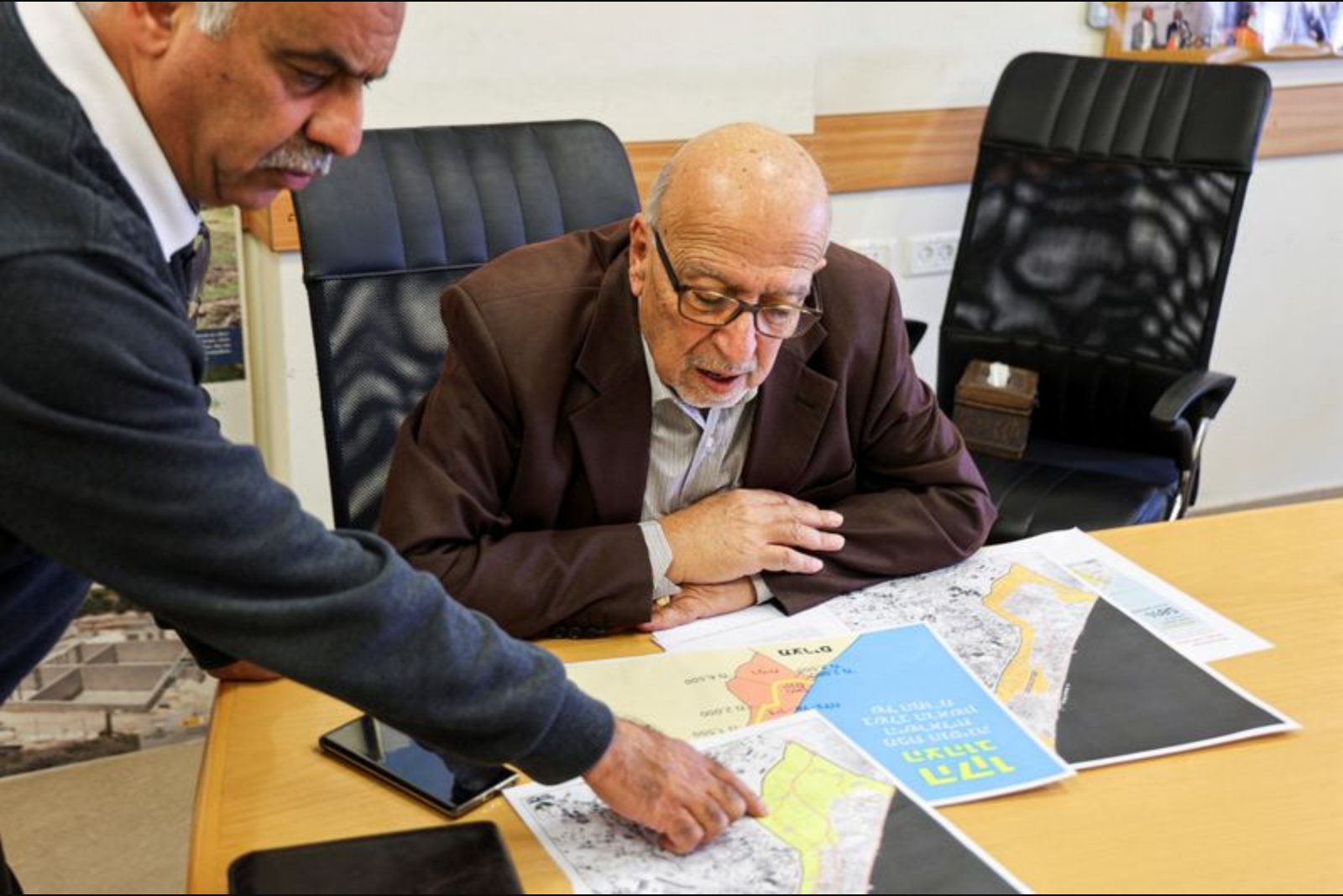
New maps provided by Israeli military authorities to humanitarian organisations in Gaza in mid-March delineate a broadened restricted zone that places thousands of displaced Palestinians within boundaries the military says it may adjust according to operational needs. The expanded area is marked by an orange line on the maps and, by the military's own description, sits outside the Yellow Line established under an October ceasefire agreement.
The orange-lined zone accounts for an estimated additional 11% of Gaza’s territory beyond the Yellow Line, according to aid sources who saw the documents. When combined with the land inside the Yellow Line, the areas marked by the two lines cordon off nearly two-thirds of Gaza’s territory overall, placing much of the population into a much smaller zone of living space.
How the maps were circulated
Two aid officials working inside Gaza told Reuters that the Israeli military sent the maps to humanitarian organisations in mid-March. The military has not made the maps publicly available, the sources said. Some organisations previously published a different map after the October ceasefire, but the updated version distributed in mid-March shows the Yellow Line as well as a new orange boundary that expands the restricted area.
According to the military agency responsible for Gaza access, COGAT, the area between the Yellow Line - the demarcation connected to the October truce - and the new orange boundary is a zone where international organisations, including humanitarian groups, must coordinate their movements with the military. COGAT said this approach is intended to enable humanitarian activity while safeguarding personnel in what it described as a complex operational environment.
"The boundaries of these areas (the Orange Line), in which coordination is required, are determined and updated in accordance with the operational situational assessment, with the aim of enabling humanitarian activity while safeguarding personnel in a complex operational environment," COGAT said.
When asked how often maps are updated or distributed to aid organisations, or whether the military had informed Palestinian civilians about the orange line, COGAT declined to provide further comment.
Humanitarian and civilian impacts
Displaced Palestinians living between the two lines say the expanded zone has heightened their anxiety. Residents and local aid workers describe a daily reality in which boundaries can shift without warning, affecting where civilians can live and whether humanitarian groups will send supplies.
Rani Ashour, a resident of a camp for displaced people near Gaza City located in the area between the two lines, said that humanitarian deliveries are limited because organisations hesitate to send staff into the orange-marked zone. "People don’t know what is what, (the orange) line is here today, you sleep, and you wake up, and you find it has passed you," Ashour said.
Local medics report that since the October ceasefire Israeli fire has killed more than 800 Palestinians in Gaza, many of them in the area near the Yellow Line where displaced persons camps and buildings damaged in the conflict remain. The same period has seen four Israeli soldiers killed, according to the available local accounts cited by aid and medical sources.
At least three Palestinians working for foreign aid agencies have been killed by Israeli attacks in the area between the two lines since mid-March - two staff members attached to UNICEF and one working with the World Health Organization. In each instance, the Israeli military said it had identified threats in the vicinity of the Yellow Line and opened fire as a result. UNICEF and the WHO did not immediately respond to questions about whether those workers coordinated their movements with Israeli forces.
Military rationale and public statements
Israeli authorities describe the territories taken in Gaza - as well as in Syria and Lebanon - as "buffer zones" intended to reduce the risk of militant attacks after the Hamas-led assault on October 7, 2023, which triggered the Gaza war. The military has indicated that areas adjacent to the Yellow Line constitute a sensitive and dangerous operational environment and that signs are posted warning civilians to keep away.
Prime Minister Benjamin Netanyahu, in a March 31 video statement, said: "In Gaza, more than half of the Strip’s territory" is under Israeli control. "We are the ones who attack and initiate, and we are the ones who surprise our enemies."
Some Israeli ministers have publicly urged Palestinians to leave Gaza, statements that have reinforced Arab concerns that Israel aims to remove Palestinians from land where they seek a future state. Behind the Yellow Line, Israeli forces have pushed civilians out of areas and bulldozed many remaining structures, while international development planning for the territory has been drafted by third countries, according to accounts in the field.
Maps suggest shifting lines of control
The two aid sources who saw the mid-March update said the new map depicts both the Yellow Line and an orange boundary marking the expanded restricted area. Palestinian researchers shared the images provided by the aid sources and superimposed the two lines on a Gaza map, concluding that the Yellow Line on the updated map appears to have moved forward to encompass the previously marked expanded zone, leaving the orange line to indicate the perimeter of a still-larger area.
The military declined to confirm whether the Yellow Line was shifted forward but reiterated that the area adjacent to the Yellow Line is a sensitive and dangerous operational environment where movement is restricted and warning signs are posted.
Jad Isaac, director general of the Applied Research Institute-Jerusalem, an independent Palestinian think tank based in the occupied West Bank, said the practical effect of these changes is to place most of Gaza's nearly 2 million residents into a small coastal sliver of territory under Hamas control. "That in effect leaves Israel in control of at least 64% of Gaza," Isaac said, adding that he believes this concentration of population into a reduced area could make living conditions untenable, prompting people to leave when they are unable to sustain viable livelihoods.
Political and diplomatic context
Observers and some officials have framed the expanded control as tied to broader security and diplomatic issues. The expansion raises questions about the viability of a Gaza plan attributed to President Donald Trump, which has been stalled for months amid a regional war involving Iran and disagreements over the disarming of Hamas militants. The shifting map boundaries widen the area in which Israel has signalled it could operate militarily without marking those operations visibly on the ground, complicating diplomatic efforts and planning for the future governance and reconstruction of Gaza.
Amjad al-Shawa, head of the Palestinian NGOs Network in Gaza, said the extra line of control has created confusion and unease: "Residents do not know where the lines begin or end. One day, the boundary is in one location, and the next day it shifts without warning," he said.
Operational consequences
From a practical standpoint, the expanded and fluid boundaries require humanitarian organisations to coordinate closely with the military to operate in the orange-marked areas. Aid groups must weigh the risks of moving supplies and staff into those parts of Gaza against the need to reach populations in urgent need. Local accounts suggest aid deliveries have been reduced in some locations amid fears for staff safety and restrictions on movement.
COGAT framed the coordination requirement as an operational necessity to protect humanitarian personnel. Yet aid groups, displaced residents and Palestinian officials say the lack of transparency about where and when the lines change leaves civilians exposed, uncertain about safe zones and in some cases cut off from crucial assistance.
What remains unclear
Certain details remain unresolved in public accounts. The military did not explain how frequently it updates and redistributes maps to aid organisations or whether it has notified Palestinian civilians about the new orange boundary. Likewise, there is limited public information about the criteria used to redraw the lines or how long the military expects the expanded restricted zone to remain in place.
Those gaps in public information - and the reported deaths of aid workers in the contested area since mid-March - underpin displaced residents' fears that the expanded zone could be treated as a target area and that civilians living within it may face increased risk.
Conclusion
The maps quietly circulated to aid groups in mid-March signal an expanded Israeli military control area in Gaza that places thousands of displaced people inside a moving perimeter. Israeli officials say the orange-marked zone is intended to enable safer humanitarian work but offer limited public detail about updates and civilian communications. The result is heightened uncertainty for residents dependent on aid, greater operational constraints for humanitarian organisations, and renewed debate about the long-term territorial control and political future of Gaza.