
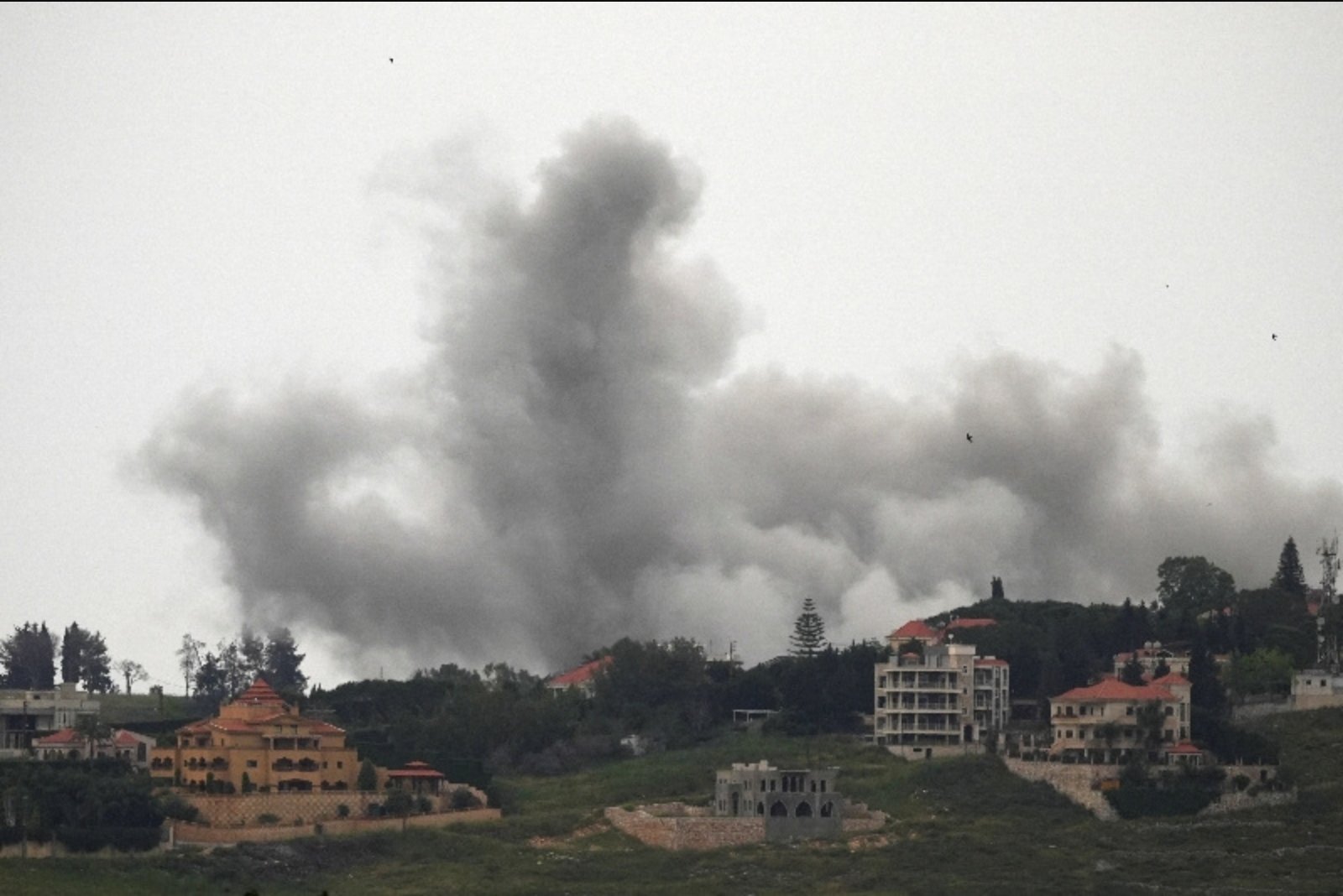
Israeli airstrikes struck targets in southern Lebanon on Monday, according to Lebanese security sources and the state news agency, while Hezbollah said it had mounted new attacks on Israeli forces. The exchanges took place even after a U.S.-backed truce was extended, underscoring how skirmishes have continued in spite of high-level mediation.
Hostilities between Iran-backed Hezbollah and Israel have flared repeatedly since the wider U.S.-Israeli conflict with Iran intensified. The clashes have persisted since U.S. President Donald Trump first announced a ceasefire on April 16, with the bulk of the fighting largely confined to southern Lebanon.
Following a third round of talks hosted by the United States between Lebanon and Israel on Friday, a Lebanese official said a 45-day ceasefire extension began at midnight. The U.S.-led mediation has proceeded in parallel with diplomacy aimed at resolving the broader U.S.-Iran confrontation. Iran has said that an end to Israel's war in Lebanon is among its demands in any deal addressing the wider conflict. Hezbollah has objected to Beirut’s participation in talks with Israel.
Overnight developments included a strike near the eastern Lebanese city of Baalbeck that, Lebanese security sources and the state news agency reported, killed a commander of the Palestinian Islamic Jihad militant group and his daughter. The Israeli military confirmed it had killed the commander, Wael Mahmoud Abd al-Halim, saying the strike was carried out after steps to "mitigate the risk of harm to civilians"; the military did not mention the death of his daughter.
Hezbollah said it launched an explosive drone at an Iron Dome air defence position in Israel's Galilee region and conducted other attacks on Israeli forces positioned inside Lebanon. The Israeli military said some projectile launches aimed at Israeli soldiers in southern Lebanon, as well as an explosive drone, had crossed into Israeli territory. Lebanon’s National News Agency reported Israeli airstrikes at more than half a dozen locations in south Lebanon.
The Israeli military said it could not comment on the airstrikes reported by Lebanese outlets without precise coordinates for each location, and it did not immediately respond to requests for comment about the Hezbollah claim of an attack on an Iron Dome position. Earlier on Monday, the Israeli military said it had struck more than 30 Hezbollah sites in southern Lebanon in the previous 24 hours, and it issued warnings for residents of three southern villages to evacuate their homes, saying it intended to act against Hezbollah positions.
Lebanon’s health ministry reported on Sunday that the death toll in Lebanon had risen to 2,988 people since the war erupted on March 2. The ministry said the total includes 613 women, children and healthcare workers, and its tally does not specify how many of the dead are combatants. Sources familiar with Hezbollah’s casualty numbers have said that many fighters from the group who have been killed are not included in the health ministry's toll.
A May 4 report said several thousand Hezbollah fighters had been killed in the conflict, citing casualty estimates from within the group; the Hezbollah media office said at the time that the figure of several thousand fighters killed was false. Israeli authorities report that 18 soldiers have been killed by Hezbollah attacks or while operating in south Lebanon since March 2, in addition to a contractor who worked for an engineering company on behalf of Israel’s defence ministry. Hezbollah attacks have killed two civilians in northern Israel.
Israeli forces have occupied a self-declared security zone in southern Lebanon, where they have been razing villages, saying their actions are intended to shield northern Israel from attacks by Hezbollah fighters embedded in civilian areas.
Despite the extension of the 45-day truce and ongoing U.S.-led mediation, exchanges of strikes and cross-border attacks demonstrate that frontline violence remains a feature of the conflict. The differing casualty tallies and contested reporting on fighter losses illustrate persistent opacity in the conflict’s human cost. Negotiations and wider diplomatic efforts continue to run alongside military operations on both sides.