
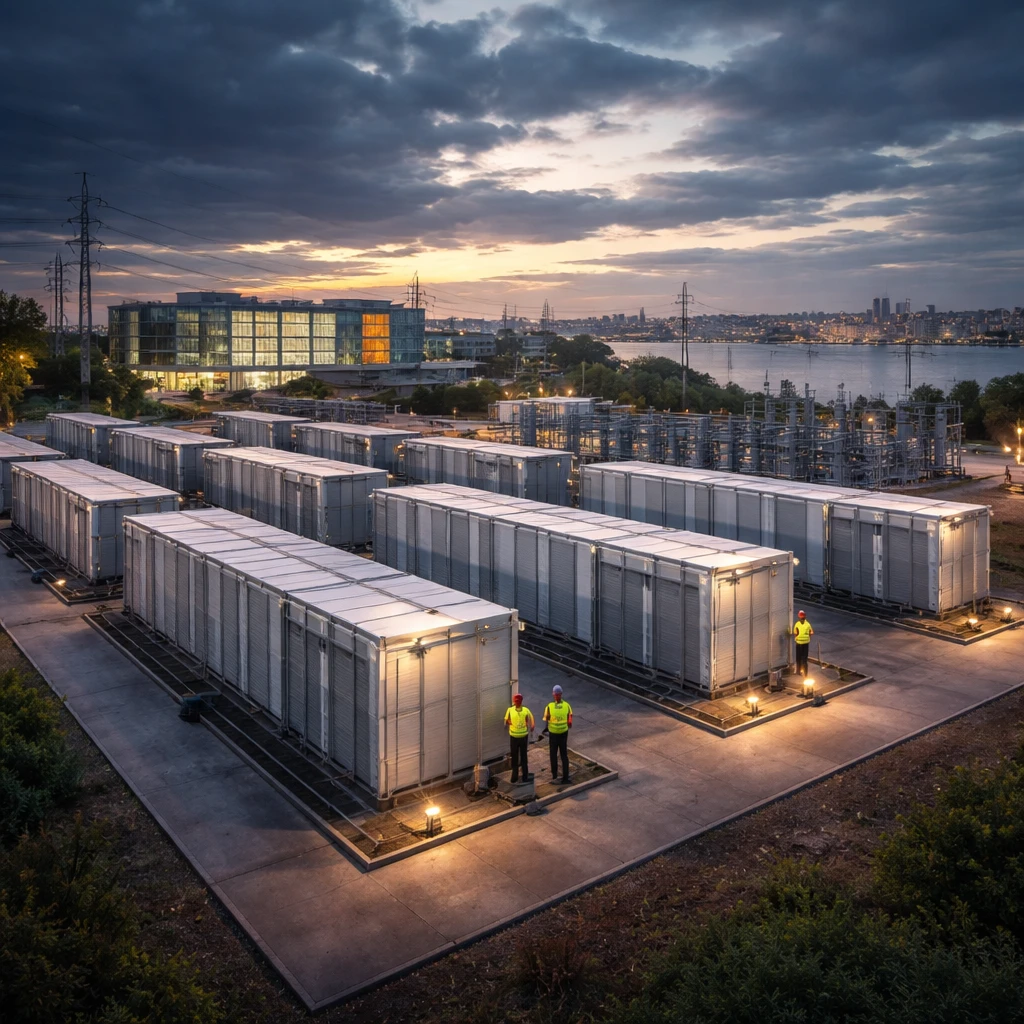
Ford Motor Company shares jumped in pre-market trading, rising 6.19% to $14.23, after the automaker's newly formed Ford Energy unit landed its first major commercial supply agreement. The five-year framework with EDF Power Solutions North America covers as much as 20 gigawatt-hours of battery energy storage systems, with EDF able to procure up to 4 GWh of DC Block battery storage units in any given year under the deal. Contracted deliveries are expected to begin in 2028.
Ford Energy was created to develop large-scale battery energy storage systems targeting data centers, utilities and industrial customers. The unit is intended to capture demand from hyperscalers and data center operators that require dependable power to support AI infrastructure. The EDF arrangement represents the business unit's first sizeable commercial win and provides a concrete order signal for Ford's ambitions in stationary energy storage.
Alongside the EDF framework, Ford announced plans to introduce seven new vehicles across Europe by 2029. The rollout includes a compact Bronco SUV scheduled to be built at Ford's Valencia, Spain facility beginning in 2028. Company executives framed the product push as part of a broader strategy to counter intensifying competition in the European market.
The pre-market surge was also buoyed by residual effects from a recent analyst thesis. Morgan Stanley analyst Andrew Percoco published a report projecting that Ford Energy could mature into a $10 billion business with 25% gross margins at scale. The note highlighted Ford's existing licensing arrangement with Chinese battery maker CATL as a strategic advantage that could help the company become a significant supplier of battery energy storage systems to data centers and utilities.
Morgan Stanley's analysis further forecasts a 38% compound annual growth rate in domestic energy storage deployments through 2030, with total deployments reaching 279 gigawatt-hours. That forecast is driven largely by demand from data centers supporting AI workloads, a market dynamic Morgan Stanley identified as a direct tailwind for Ford Energy's commercial pipeline.
On the competitive front, Ford's traditional automotive peers - General Motors, Stellantis and Tesla - had not announced comparable commercial energy storage agreements on the same day, leaving Ford with a differentiated narrative in investors' eyes. Market participants appear to be pricing the company as if a legacy automaker is gaining characteristics more commonly associated with high-growth technology firms, given the pivot toward supplying AI-supporting infrastructure.
Notably, the broader U.S. equity market provided no obvious support for Ford's move. The S&P 500, the Dow Jones and the NASDAQ were all trading lower in the same session, which underscores that Ford's pre-market advance was driven chiefly by company-specific news rather than a generalized market rally.
The combination of a tangible commercial contract with EDF, an expanded European product program and the lingering credibility of Morgan Stanley's Ford Energy outlook coalesced into a multi-layered catalyst for the stock. Earlier in the month, Ford's shares had risen to a 52-week high of $14.94 before giving back some gains; the EDF agreement appears to have reignited investor interest as each new Ford Energy customer win is viewed as evidence that the company's transition toward energy infrastructure supply is producing real commercial traction.
Contextual takeaway
- Ford Energy's EDF framework represents a measurable commercial milestone for Ford's energy ambitions and is timed to begin deliveries in 2028.
- Planned European model introductions, including a compact Bronco built in Valencia, Spain starting in 2028, reflect a parallel push to shore up automotive competitiveness in Europe through 2029.
- Analyst forecasts that envision rapid growth in energy storage demand from AI-driven data centers reinforce the investment narrative supporting Ford's stock move.