
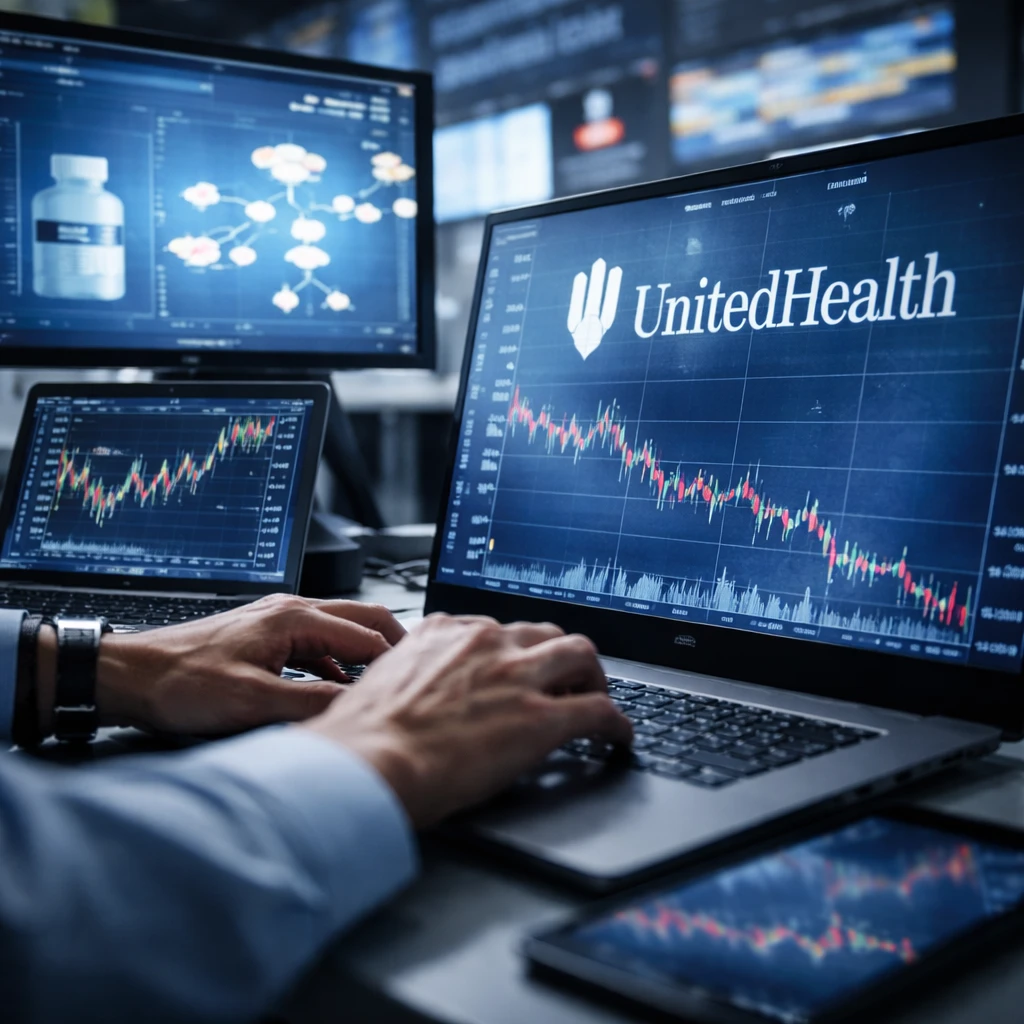
Summary: UnitedHealth Group's stock declined 0.99% in pre-open trading to $392.48 after the shares reached $397.42, a 52-week high, in the previous session. The move appeared driven largely by profit-taking after that outsized gain. Investors are weighing robust first-quarter results and an upgraded full-year EPS outlook against a new Optum Rx pricing model that recasts how pharmacy-benefit management services are billed.
UnitedHealth reported first-quarter revenue of $111.7 billion and adjusted earnings per share of $7.23, results that outpaced expectations and contributed to optimism that the company is starting to stabilize after a period marked by leadership changes, elevated costs, and an internal restructuring effort. Management raised full-year 2026 adjusted EPS guidance to above $18.25 per share and began early share repurchases, steps that analysts and investors read as a signal of confidence in the company's near-term financial trajectory.
Despite those positives, the pre-market dip indicates a consolidation in the stock rather than an immediate change in fundamentals. Market participants noted that profit-taking was a natural follow-through after the stock's jump to its 52-week high. The company’s efforts to restore margins after cost pressures have been a central focus, and observers continue to monitor how progress on margin recovery will unfold.
Adding a layer of complexity, Optum Rx - UnitedHealth's pharmacy-benefits arm - introduced a new pharmacy care model that would charge clients a per-member monthly fee, structured to be independent of manufacturers' list prices and prescription volume. The company positions the move as a transparency initiative. The shift, along with Optum Rx's digital transparency tools, could alter the way employers, health plans, and patients evaluate PBM offerings.
Analysts and investors will be watching whether the new model influences client retention, the ability to win new business, and prescription utilization patterns. Those outcomes are central to how the market values the PBM segment and could have downstream effects on UnitedHealth's revenue mix and margin dynamics, depending on adoption and behavioral responses by clients and patients.
On the analyst front, Evercore ISI reiterated its Buy rating on UnitedHealth, a development that helped cushion sentiment in the pre-market. Across the Street, UnitedHealth carries a Moderate Buy consensus derived from 18 Buy ratings, four Hold ratings, and one Sell rating. That balance of views suggests continued bullishness among many analysts while acknowledging some differing perspectives.
Broad market conditions provided mixed support for UNH's momentum. In the prior session, the Dow Jones Industrial Average rose 0.11% while the S&P 500 fell 0.16% and the NASDAQ Composite declined 0.71%. Sector leadership came from Healthcare, Telecoms, and Oil & Gas, and UnitedHealth itself was among the top performers within the Dow on the day the stock hit its 52-week high. The weakness in technology-heavy indices offered limited macro tailwind to sustain UNH's record-high momentum into the pre-market session.
Looking ahead, the market will likely remain sensitive to updates on medical cost trends and the pace of margin recovery. The company’s next quarterly report is not expected until late July, leaving a window in which incremental information - for example, client responses to the Optum Rx pricing change or new indicators of medical-cost normalization - could influence near-term price action. The long-term management of Medicare Advantage also remains a noted challenge for the firm, with observers pointing to the inherent difficulty in that business line over extended horizons.
In sum, the pre-market pullback appears to be a consolidation after an outsized rally rather than a reflection of deteriorating fundamentals. UnitedHealth’s combination of solid Q1 results, raised guidance, and early share repurchases underpins the company’s positive operating narrative, even as the market digests the implications of a reconfigured PBM pricing approach and ongoing cost pressure dynamics.
Key points
- UNH shares fell 0.99% pre-open to $392.48 after reaching a 52-week high of $397.42 in the prior session - the move appears driven by profit-taking.
- First-quarter revenue was $111.7 billion with adjusted EPS of $7.23, and management raised full-year 2026 adjusted EPS guidance to above $18.25 per share while initiating early share repurchases.
- Optum Rx introduced a per-member monthly pharmacy care pricing model, independent of manufacturers' list prices and prescription volume, which could affect PBM comparisons, client retention, and prescription utilization.
Sectors impacted: Healthcare, Insurance, Pharmacy Benefit Management
Risks and uncertainties
- Client adoption risk - It is unclear how employers, health plans, and patients will respond to Optum Rx's new per-member fee model, and any shifts could influence PBM revenue and client retention. (Impacted sectors: Healthcare, PBM)
- Margin pressure - While management is pursuing margin recovery, higher costs have previously dampened margins, and continued cost trends could complicate improvement efforts. (Impacted sectors: Insurance, Healthcare)
- Medicare Advantage complexity - The company faces ongoing challenges managing Medicare Advantage over the long term, introducing uncertainty into future margin and enrollment dynamics. (Impacted sectors: Insurance, Healthcare)