
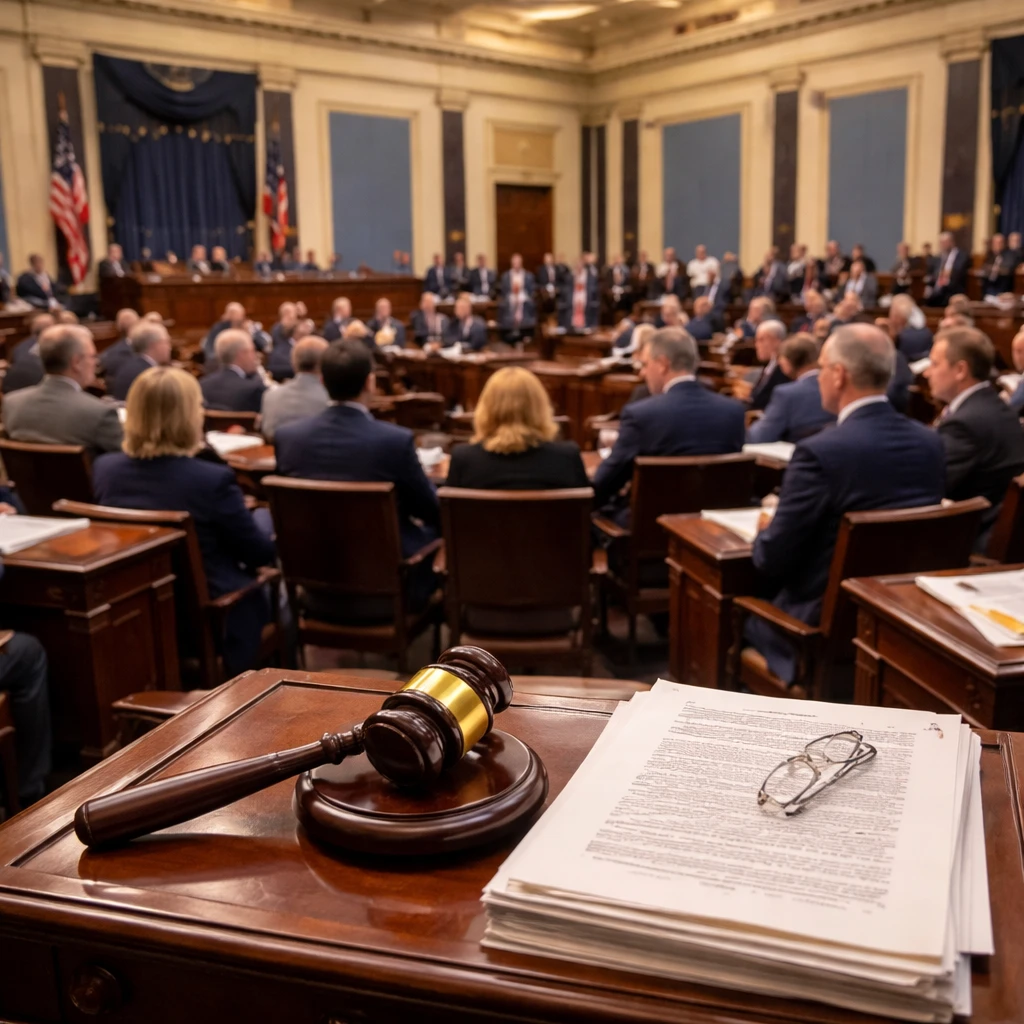
The U.S. Senate on Thursday moved to ban members of the chamber and their staff from participating in prediction markets that operate as a gambling mechanism on real-world events. The measure received unanimous approval and takes effect immediately, according to the language approved on the Senate floor.
The rule alteration was driven by Republican Senator Bernie Moreno of Ohio, who initiated the change and pressed for an immediate vote. An amendment offered by Democratic Senator Alex Padilla widened the scope of the prohibition to explicitly include Senate staff, and that amendment was incorporated into the final measure.
In addition to the internal rule change, senators included language urging other branches of government to impose comparable limits. The approved measure calls on the House of Representatives and both the executive and judicial branches to consider and adopt similar restrictions on participation in prediction markets.
Senator Moreno framed the move as an ethics and conflict concern, arguing that elected officials should not engage in speculative activities tied to public events while receiving taxpayer-funded paychecks. In a speech on the Senate floor he said, "United States senators have no business engaging in speculative activities like prediction markets while collecting a taxpayer-funded paycheck," and he used those remarks to push for the immediate rules vote.
Senate Democratic Leader Chuck Schumer expressed support for the initiative, emphasizing a need to avoid any perception that lawmakers could profit from wagering on significant national developments. He said, "We must never allow Congress to turn into a casino where members representing the public can gamble on wars or economic crises."
The change clarifies permitted conduct for active Senate participants and extends the prohibition to include those employed by the Senate. While the adoption was unanimous, the resolution itself stops short of imposing the same mandate on other branches, instead urging them to consider parallel restrictions.
Key details on enforcement, reporting requirements or the precise scope of covered platforms were not delineated in the text adopted by the Senate. The measure focuses on the conduct of incumbent senators, Senate staff and other officers and establishes an explicit public position against their participation in prediction markets.