
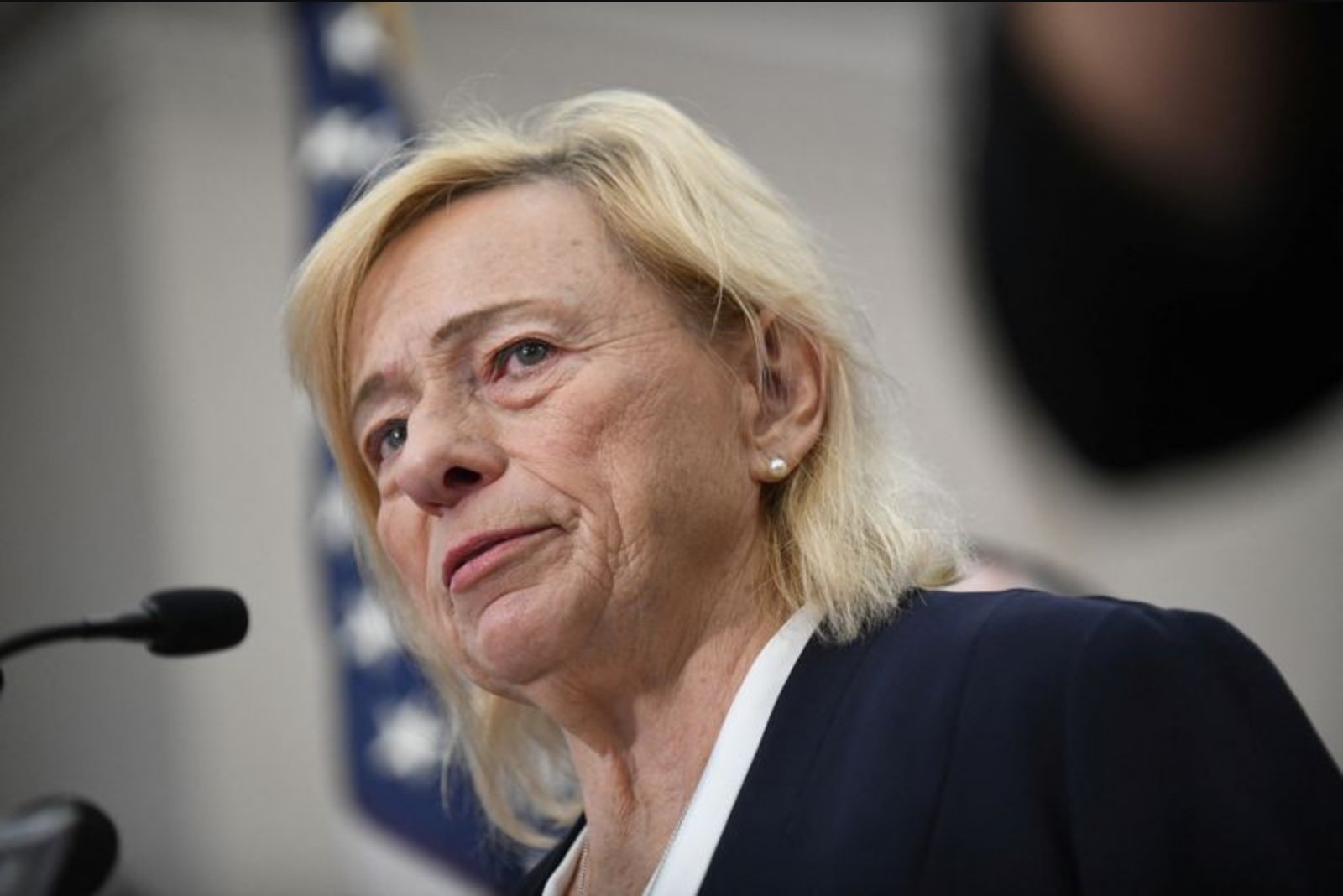
WASHINGTON, April 30 - Maine Governor Janet Mills, a prominent Democratic critic of former President Donald Trump, declared on Thursday that she is terminating her campaign to unseat Republican U.S. Senator Susan Collins.
In a statement explaining her decision, Mills, a 77-year-old two-term governor widely regarded as popular in Maine, said she possessed the enthusiasm, experience and drive to continue but lacked the essential element required for sustained political contests: sufficient financial resources.
"While I have the drive and passion, commitment and experience, and above all else - the fight - to continue on, I very simply do not have the one thing that political campaigns require: the financial resources," Mills said.
With Mills withdrawing from the race, Graham Platner, described as a progressive outsider, stands as the leading Democratic candidate to challenge Collins. Platner reported fundraising of $3.25 million in the first six weeks of his campaign, making him the most prominent Democrat remaining in the field.
Susan Collins, 72, is a long-standing Republican incumbent who chairs the Senate Appropriations Committee. The Maine Senate contest is one of seven races that analysts expect will heavily influence control of the Senate in the November midterm elections. The outcome carries particular weight for Democrats seeking to flip the chamber, which is presently controlled by Republicans by a 53-47 margin.
The dynamics of the race have been altered by Mills' departure. Her candidacy had been positioned as a direct effort to challenge Collins. With Mills no longer running, the Democratic contest in Maine has narrowed, leaving voters and party strategists to assess Platner's viability as he seeks to consolidate support ahead of the general election.
The narrowed field also brings into focus the fundraising realities that can determine whether high-profile state officials translate name recognition and governing experience into viable national campaigns. Mills explicitly tied her decision to the campaign's financial shortfall, rather than to questions of qualification or political will.
As the campaign season progresses, attention will remain on Maine's Senate race because of its potential influence on the broader balance of power in the U.S. Senate and on the strategic calculations of both political parties for November.