
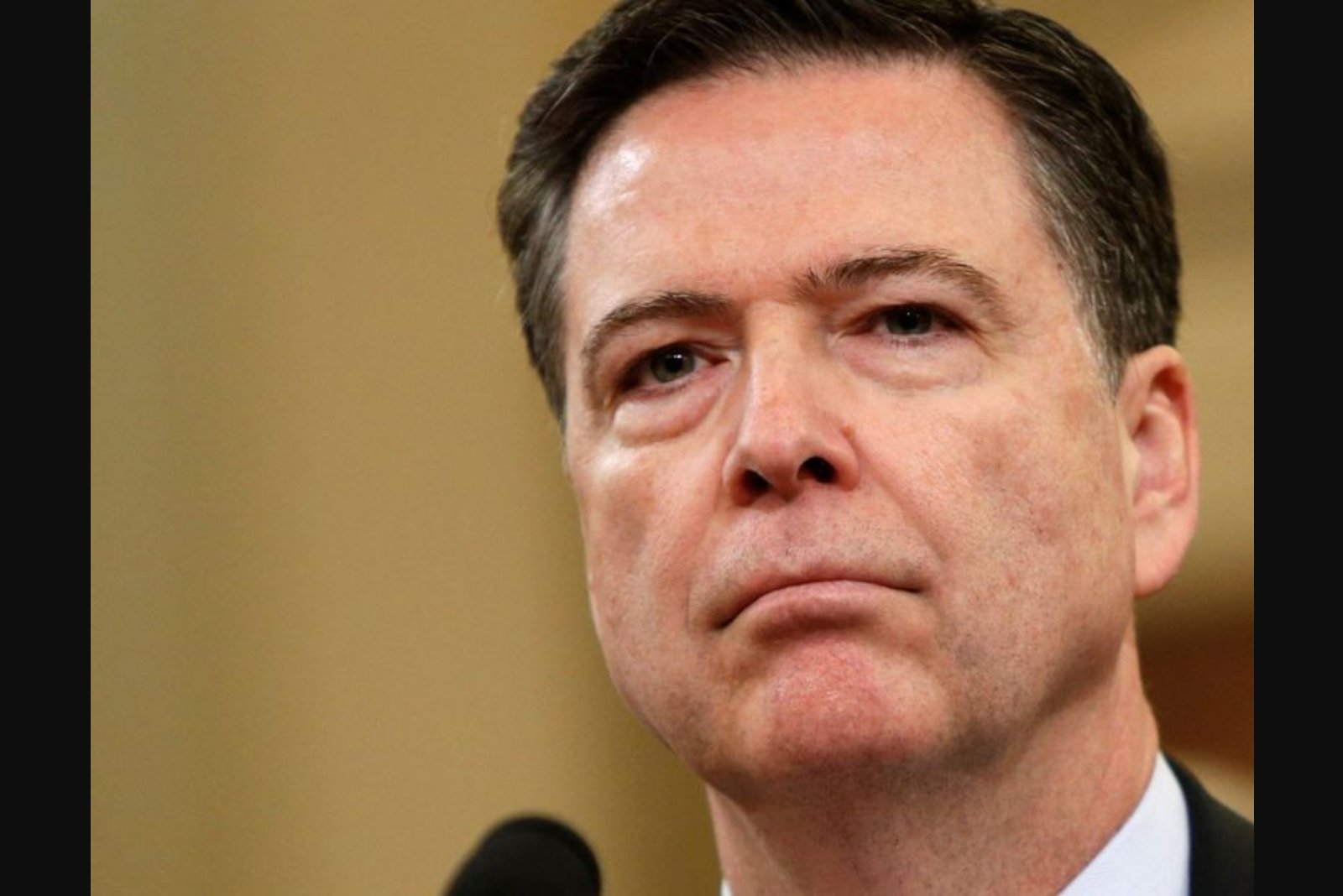
ALEXANDRIA, Virginia, April 29 - Former FBI Director James Comey appeared in federal court in Virginia on Wednesday after turning himself in to face charges that prosecutors say flowed from a social media post perceived as a threat to President Donald Trump.
Comey surrendered on two federal charges: threatening the life of the president and transmitting threats across state lines. The court appearance was brief and the former FBI director did not address the court. His legal counsel, Patrick Fitzgerald, told the court he intends to argue that the prosecution is vindictive - that it was pursued to punish Comey for exercising his legal rights.
A U.S. magistrate judge ordered Comey released and imposed no special conditions on that release. Members of Comey’s family entered the courthouse shortly before the proceeding began. Prosecutors returned the indictment on Tuesday from a federal grand jury in North Carolina, and Comey’s next scheduled court appearance is expected there.
Comey has publicly stated his innocence and said he will contest the charges in court. The indictment arises from an Instagram post made last May that displayed seashells on a beach arranged to form the numbers "86 47." Prosecutors say a reasonable recipient of that message would understand it as a threat directed at President Trump. The number "86" is described in the indictment as slang that can mean to remove or get rid of someone, and "47" is identified as a possible reference to Trump as the 47th U.S. president.
The former FBI director removed the Instagram post shortly after publishing it, saying at the time he regarded the image as a political message and that he did not realize the numeric arrangement could be associated with violence.
This indictment represents a continuation of Justice Department actions under the current administration that critics say target perceived political opponents. The move comes during President Trump’s second administration and follows an earlier prosecution that had accused Comey of lying to Congress; that previous case was dismissed by a federal judge.
President Trump has long criticized Comey, including during the period when Comey supervised an FBI inquiry into alleged ties between Trump’s first presidential campaign and Russian officials in 2016. Last year the president mentioned Comey by name in a social media post that called for criminal charges against adversaries.
Acting Attorney General Todd Blanche has rapidly advanced several high-profile matters since assuming the role, after his predecessor, Pam Bondi, was removed in part for perceived delays in pursuing cases. Since Blanche took the acting post in April, the Justice Department has filed criminal charges against the Southern Poverty Law Center, issued a report alleging misconduct in prior prosecutions of anti-abortion activists, and indicted a former National Institutes of Health official for allegedly concealing records related to COVID-19 pandemic research.
Comey now faces two separate criminal cases brought by the Justice Department during the same administration. The department’s recent string of actions has heightened attention on how prosecutorial discretion is being exercised and on the institutional processes that determine whether allegations are converted into indictments.
Court logistics and next steps
Following Wednesday’s brief hearing in Alexandria, Comey was released by the U.S. magistrate judge without special conditions. His attorney signaled a defense strategy that will include arguments about vindictiveness. The indictment was returned in North Carolina and that venue is scheduled to host the next court appearance, where procedural and substantive matters will proceed.
Background on the alleged conduct
The criminal counts stem from a single Instagram post in May showing seashells arranged to form "86 47." Prosecutors say the symbolism would be interpreted by a reasonable recipient as a threat to the president. Comey deleted the image and characterized it as a political expression, asserting he was unaware of any violent connotation the numeric formation might carry.
Department of Justice activity under acting leadership
Prosecutions and investigatory steps taken since Todd Blanche became acting attorney general in April include a criminal case against the Southern Poverty Law Center, publication of a report alleging misconduct in earlier prosecutions of anti-abortion activists, and an indictment of a former NIH official tied to alleged concealment of records related to pandemic research. Observers note these moves have come more quickly following the predecessor’s removal, which was in part attributed to a slower pace in initiating certain prosecutions.
Comey has pleaded not guilty and plans to contest the charges in court.