
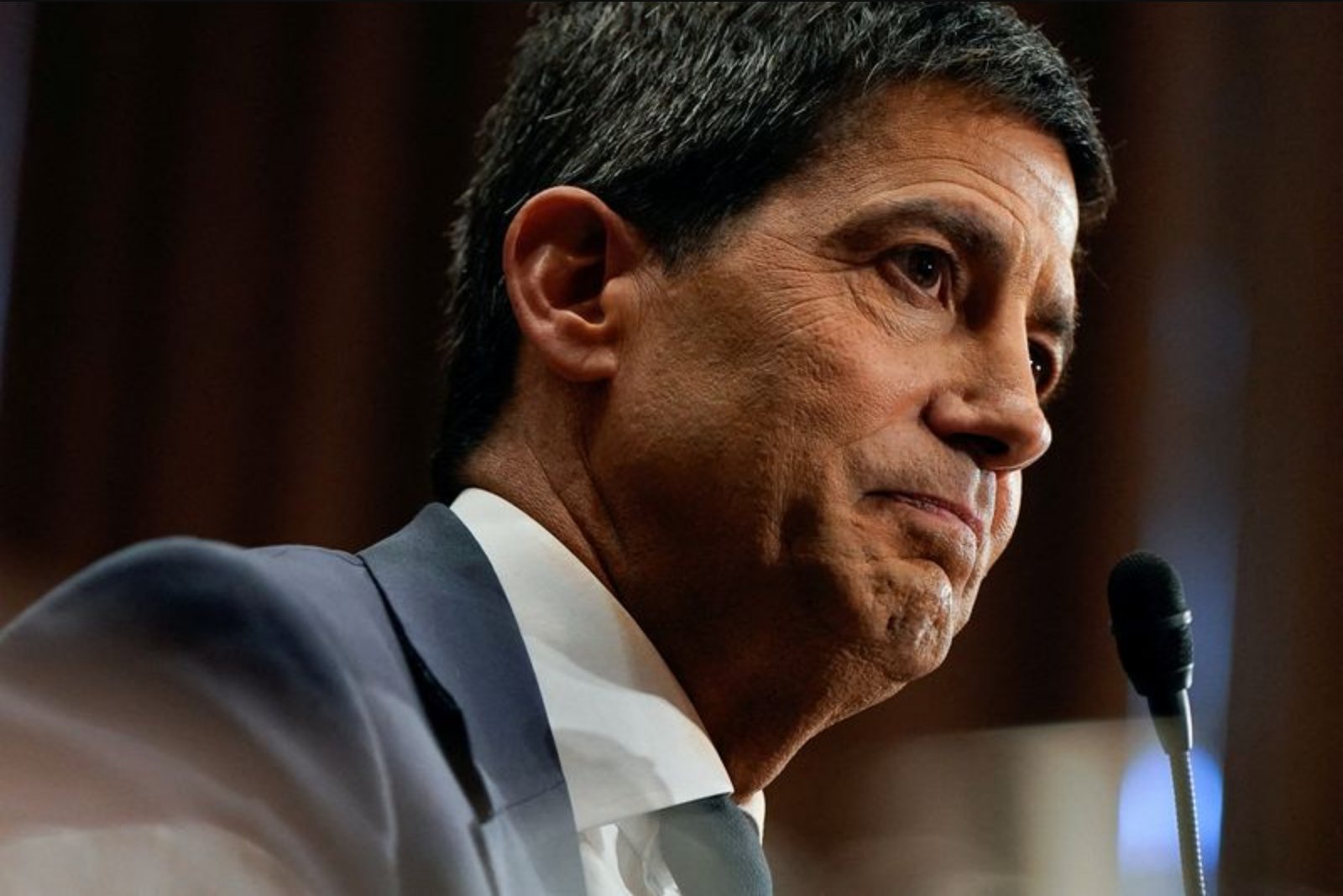
WASHINGTON, May 6 - Kevin Warsh, the nominee to lead the U.S. central bank, argues in a forthcoming book that the Federal Reserve's routine capture and later publication of meeting transcripts runs the risk of smothering the kind of candid debate that yields robust monetary policy.
In an interview recorded in 2023 for a book by New York University Stern School of Business Professor Simon Bowmaker, Warsh said he favors limiting the taping and subsequent transcript release to what he described as the "decision round of discussions" - the second-day conversations where officials make and defend their policy votes. He said the current practice prompts participants to adopt hedged language because they are conscious their comments will be part of a permanent public record.
"Policymakers do not want to appear wrong with the benefit of hindsight, and so they instinctively tend to hedge their bets," Warsh told Bowmaker for the book "Fed Reckoning: Conversations on America’s Central Bank," which is scheduled for publication early next year. "If we want that deliberation to be robust, we need a family fight. If people think the decision is 60-40 one way, I would prefer them to argue as if it were 95-5. I want to hear the best arguments," he added in the interview shared with Reuters.
Warsh, who served as a governor at the Fed from 2006 to 2011, described research he conducted for the Bank of England that led to a change in practice there. As a result of the 2014 work he performed, he said, the recording device is switched off during the initial round of policy meetings to permit freer exchange of views, while transcripts and recordings of day-two deliberations are released so the public can see how members voted and why.
"The tape recorder, however, still looms large at the Federal Reserve," Warsh said. He argued the institution should preserve transparency about final votes and rationales by making second-day transcripts available, but should allow the earlier, exploratory discussions to remain off the record in order to foster more vigorous internal contestation.
The Fed has published full transcripts of its two-day policy sessions since the early 1990s, with a standard five-year lag between the meeting and the public release of the transcript. That delayed release has long been described as a compromise intended to balance the public's interest in transparency with the practical concern that a more immediate publication schedule would discourage free discussion among officials.
Warsh emphasized that the second day of talks serves as the formal judgment about policy and therefore "should be recorded" and "the transcript should be made available because it is a judgment of what each member believes and his rationale. The historical record should ensure accountability for the decisions," he said.
His remarks for the book echo a broader set of critiques Warsh has made about Fed communications, which he has said at his Senate Banking Committee confirmation hearing need retooling to encourage "messier meetings" and allow "a good family fight." He is expected to be confirmed as the next Fed chair by the U.S. Senate this month, and the comments feed into questions about how he might alter the central bank's communications strategy if confirmed.
Warsh did not provide responses to questions about potential changes to the Fed's transcripts policy or other communications rules when asked by Reuters. But his comments in the Bowmaker interview repeat long-standing criticisms he has made that the Fed's public communications at times inhibited faster responses to rising inflation following the pandemic-era economic shock.
Proposals to change the transcripts policy would revive an earlier controversy over the Fed's internal recording practices. In the early 1990s it emerged that meetings had been recorded and, contrary to widely held belief, transcripts going back to 1976 had been retained rather than erased. The disclosure drew sharp attention and comparisons to historical episodes of secret recordings, intensifying pressure on the central bank to open up its deliberations.
Former Fed Vice Chair Donald Kohn, who was involved in earlier internal discussions about how to treat the recordings, said the tapes are valuable not only to historians but for the process of preparing meeting minutes. He acknowledged that the certainty of later publication has reduced some spontaneity in discussions, but he also pointed out that chairs' practices of canvassing colleagues in advance produce a similar effect.
"Did it impede discussion? Yes, to some extent," Kohn said, while noting that efforts by recent chairs to hear colleagues ahead of time also reduce spontaneity. "His thing about messier meetings suggests there may be less of that beforehand," he added.
Another area Warsh has signaled he might re-examine is the Fed's schedule and modes of outward communication. Under outgoing Fed Chair Jerome Powell, the central bank held press conferences eight times a year after policy meetings; his predecessors Janet Yellen and Ben Bernanke typically held them quarterly, while Alan Greenspan held none. Warsh has suggested changing the cadence of such briefings and has not ruled out cutting the number of formal meetings, which by statute can be as few as four annually.
He has also indicated skepticism about the Fed's quarterly economic projections, calling them a form of constraining "forward guidance." During his April 20 confirmation hearing he did not dismiss the idea of reducing the number of meetings, a move that would also alter how the institution coordinates and communicates policy decisions.
Market and investment professionals have weighed in on the potential change. Michael Arone, chief investment strategist at State Street Investment Management, said that while Fed communications are not a binary choice, a Warsh chairmanship would likely dial down transparency relative to Powell's approach. "Powell was incredibly transparent ... Should Warsh be confirmed, it will be turned down a few notches," Arone said, warning that less disclosure "would increase the risk of misinterpretation. It may increase the volatility around expectations." He noted that as a consumer of information, more disclosure is preferable to less.
Some experts warn that rolling back disclosure could reawaken older suspicions about the Fed's motives. Sarah Binder, a political science professor and author of a history of the Fed and politics, argued that moves to curtail recordings and other communications would be difficult to reverse and could invite conspiratorial thinking about how decisions were reached. "Changes on disclosure are hard to take back ... The moment it becomes known that they are turning off the tape recorder, suspicions grow. How did they reach that decision? People’s minds can go pretty conspiratorial," Binder said.
Proponents of clearer, more frequent communication have long argued the opposite: that broader openness helps the public and markets understand policy moves and thereby amplifies their effectiveness. The Fed over recent decades has expanded its public outreach through more detailed statements, periodic press conferences, and frequent speeches by officials. Dialing back elements of that openness would mark a reversal of a decades-long trend toward greater transparency at the institution.
The debate over the right balance between candor in internal debate and accountability to the public is therefore at the center of Warsh's proposals. He frames the change as a way to improve the quality of deliberation while preserving a historical record of final decisions. Others see trade-offs in terms of market reactions, trust, and the potential for increased speculation about closed-door decision-making.
Summary
Kevin Warsh argues for limiting the recording and broader public release of Federal Reserve two-day policy meeting transcripts to the final decision round, contending that the current practice prompts officials to hedge remarks and weakens candid debate. He points to reforms at the Bank of England, resulting from his 2014 study, where early-round recordings were stopped and day-two proceedings were preserved. Warsh would retain public disclosure of final votes and rationales through transcripts, while potentially rethinking other communication tools such as press conference frequency, quarterly projections, and the number of formal meetings. Critics warn that reducing disclosure could spur misinterpretation, increase volatility, and intensify suspicions about Fed decision-making.
Key points
- Warsh proposes turning off recording for initial rounds of Fed policy meetings to encourage more candid debate, while recording and publishing the second-day decision discussions to preserve accountability - implications for central bank communications and market expectations.
- He cites work done for the Bank of England in 2014 that led to similar changes there; the Fed currently releases full transcripts after a five-year lag - relevant to policymakers, financial markets, and historians.
- Potential changes could include altering press conference cadence, scaling back quarterly economic projections, and even reducing the number of formal meetings - implications for how monetary policy guidance is conveyed to markets and stakeholders.
Risks and uncertainties
- Lowering transparency could raise the risk of misinterpretation among market participants and increase short-term volatility in expectations - a concern for investors and financial markets.
- Reversing long-standing disclosure practices may fuel public suspicion and political controversy around how decisions are made, especially amid calls for greater influence from the presidential level - a governance and reputational risk for the Fed.
- Changes that reduce spontaneous debate before meetings might not fully restore candid internal contestation if chairs continue to canvass views ahead of time - an operational uncertainty in whether the intended improvement in deliberation would be achieved.