
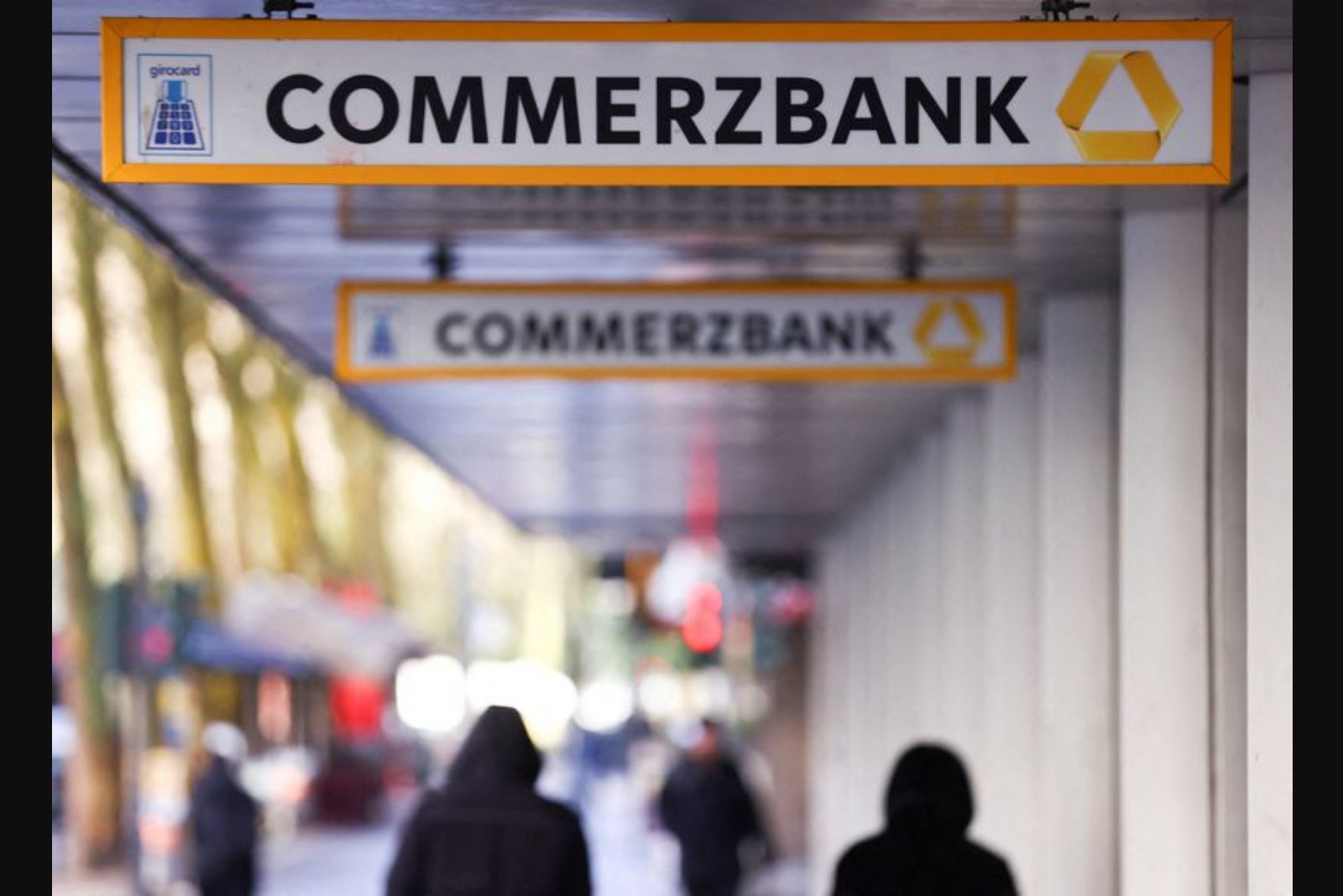
As UniCredit advances a cross-border approach to acquire Commerzbank, officials in Berlin are quietly weighing an extreme defensive option: using state-owned KfW to lift Germany’s existing stake in the bank, potentially creating a bloc large enough to impede a full takeover, people close to the discussions said.
Germany currently holds 12% of Commerzbank from a bailout conducted during the financial crisis two decades ago. Two people with direct knowledge of the matter, speaking on condition of anonymity, said some in Berlin are assessing whether the government could deploy KfW to purchase additional shares and thereby make a takeover materially more difficult.
Proponents of a possible KfW intervention argue it could be justified by Commerzbank’s importance to the Mittelstand companies that form the backbone of Germany’s economy. Those supporters describe the option as a last resort given the political and fiscal obstacles involved, including the need to find several billion euros to finance any major acquisition of shares on the open market.
Armand Zorn, an influential Social Democratic Party member whose party now controls the finance ministry, said a potential KfW stake "should certainly be considered." He added that such an action "should be viewed as a last resort if all other options fail ... The impact would go far beyond the symbolic," reflecting concerns in Berlin about Commerzbank’s role for the country’s financial resilience.
The debate in government corridors has intensified as UniCredit CEO Andrea Orcel continued his pursuit of Commerzbank, formally launching a takeover bid at a price that many in Germany regard as low. Orcel has been building his position since 2024 and has amassed nearly a 30% stake in the bank, prompting public expressions of alarm from German Chancellor Friedrich Merz and Commerzbank CEO Bettina Orlopp.
Those urging decisive action say the government should persist in signaling that a hostile takeover is not in the interest of Germany’s financial centre. They emphasize Commerzbank’s central role in financing medium-sized businesses and the possible downstream effects on the economy if the bank’s independence is lost.
KfW, the finance ministry and Commerzbank declined to comment on whether an increase in the state stake is being actively pursued.
Any move to substantially raise the government stake would face political headwinds. Germany’s ruling coalition combines the free-market, pro-business Christian Democrats with the more left-leaning SPD, and it is unclear whether the coalition would support a large state-funded intervention as the government tightens its fiscal belt.
Still, ministers and the chancellor have repeatedly warned UniCredit against pressing ahead with its acquisition attempt. For many in Berlin, doing nothing could be seen as a further sign of weakness after internal disputes among ministers and slow-moving economic reforms have coincided with an economy that has largely stagnated.
Loss of Commerzbank would also be viewed as an additional blow to Germany as it confronts external economic pressures. The government is already contending with tariffs on trade with the U.S., and China's emergence as a competitor across several industries has compounded the challenges facing German exporters.
The takeover fight reached a flashpoint after Orcel formally launched his bid at what many see as a lowball valuation. He contends that Commerzbank is underperforming and that larger banks would better serve Europe amid volatile geopolitics. On Friday, Commerzbank plans to publish an updated strategy, which its managers hope will demonstrate the value of remaining independent.
Those plans are expected to include fresh cost cuts, people familiar with the matter said, likely encompassing further reductions to staff - a third round of cuts this decade. Commerzbank has already shed 10,000 employees, roughly one-third of its German workforce, earlier in the decade and announced plans last year to cut another 3,900 roles. Orcel has signalled he would reduce the prominence of the Frankfurt-based headquarters if the takeover succeeds.
The takeover campaign has played out beyond boardrooms. Orcel told investors that Commerzbank’s "current trajectory will put at risk its survival in the medium term," and UniCredit has run a critical advertising campaign on social media. Germany’s financial regulator intervened by instructing UniCredit to stop advertisements that were critical of Commerzbank.
Internal resistance at Commerzbank has been visible as well. A workers’ council WhatsApp group opposing a tie-up has attracted more than 3,000 followers. One post circulated last week showing a cartoon Trojan horse filled with UniCredit soldiers and a caption that read: "Andrea Orcel can’t be trusted."
Some of Commerzbank’s longstanding corporate clients have publicly voiced concerns and threatened to switch banks should a takeover proceed. Juergen Lindhorst, chair of Lindhorst Group, which has about 4,000 employees and operates in solar park development and real estate, said he "sees a takeover very critically and don’t see any benefits."
Berlin’s present 12% stake in Commerzbank is valued at more than 4.5 billion euros. Reaching a 25% share, widely viewed as a blocking minority, could require more than doubling that holding on the open market and may cost at least that much - and there is no guarantee it would prevent a takeover.
Until 2024, Germany held a larger stake, but a failed attempt to sell down a portion of the holding ended up with UniCredit rather than being distributed among a broad group of institutional investors. That outcome has contributed to current tensions over control of the bank.
KfW has a long history of state-directed finance. Founded in 1948 to help reconstruct Germany after World War Two, it also provided assistance most recently by helping to bail out Lufthansa during the COVID-19 pandemic, a point often cited in discussions about the bank’s capacity to support strategic interventions.
For some corporate customers, the federal government’s position will be decisive. Michael Wisser, CEO of WISAG, a facilities management firm with about 60,000 employees and a customer of both banks who opposes a deal, said: "There will be no deal if the federal government takes a very clear stance."
- What happens next: Commerzbank will publish an updated strategy on Friday and is expected to outline cost cuts that may include further staff reductions.
- Political considerations: Any KfW-led purchase would require several billion euros and the backing of a coalition that includes pro-business and left-leaning elements.
- Market dynamics: UniCredit has amassed close to a 30% stake and launched a 37 billion euro takeover bid that Berlin has tried to discourage.