
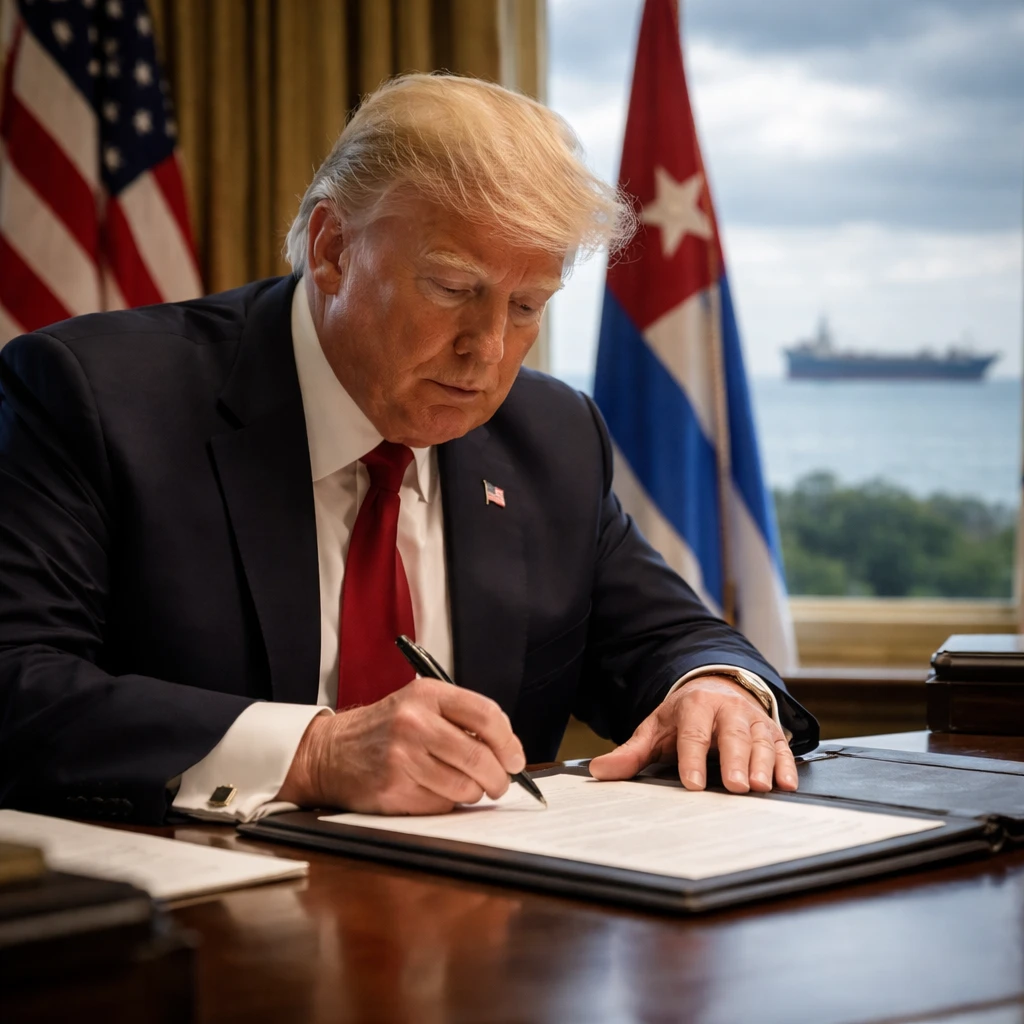
President Donald Trump signed an executive order on Friday that imposes fresh sanctions on people and organizations identified as supporting Cuba's security apparatus or engaged in government corruption and serious human rights violations, a White House fact sheet said. The administration did not provide names or other specifics about who will be targeted under the measure.
The text of the order grants the State Department and the U.S. Treasury broader authority to impose further economic penalties on any individual or entity deemed connected to those designated under the directive. The White House fact sheet did not list particular companies, officials, or other entities that will be affected.
Officials framed the action as part of a wider U.S. strategy to tighten restrictions on the island's access to fuel and financing. President Trump has warned of steps against Cuba's government tied to those objectives. Cuba, which has long been subject to a U.S. embargo, has faced extensive blackouts in recent weeks after disruptions to shipments of crude oil and other fuel supplies, according to the White House summary.
Secretary of State Marco Rubio previously told Fox News that Cuba poses a national security threat because it has "rolled out the welcome mat to adversaries" of the United States, according to the fact sheet. U.S. officials have accused Havana of providing access in the hemisphere to Chinese and Russian forces.
On Wednesday, Cuba's top diplomat accused Washington of attempting to create a pretext for overthrowing the government in Havana. That accusation reflects the heightened tensions between the two capitals following the announcement of the new sanctions authority.
Context and implications
The order expands the tools available to U.S. agencies to target not only those directly designated but also individuals and entities with ties to them. The White House did not specify timing, names, or the mechanics of how further penalties would be applied.
Details remain limited in the public record provided by the administration, leaving the identity of potential targets and the scope of forthcoming actions unclear.