
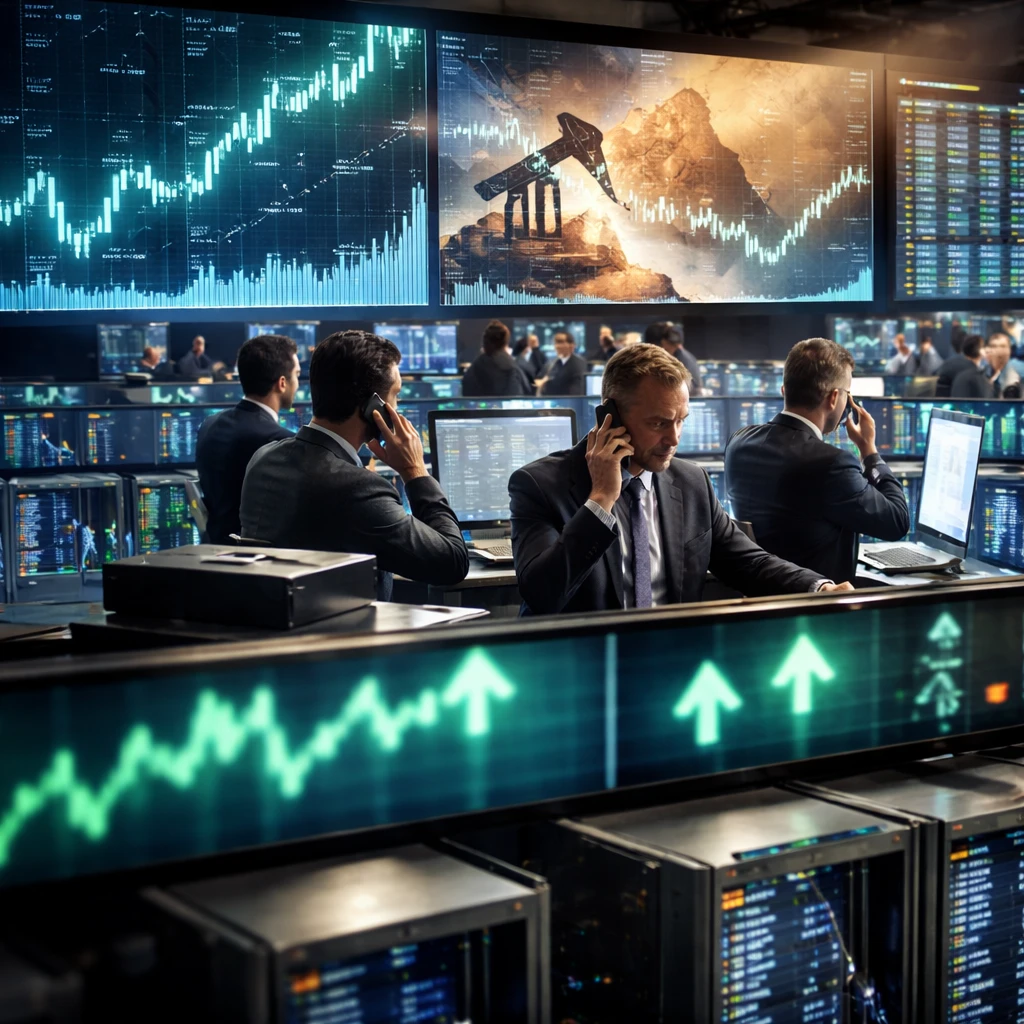
Asian investors who began the day gloomy found themselves on the wrong side of a powerful U.S.-led equity surge that lifted markets despite rising oil costs. Optimism around corporate profit results, particularly in technology and related suppliers, has driven buying that overshadowed broader macro concerns.
Even businesses tied to traditional industrial activity joined the tech-led advance. Heavy equipment maker Caterpillar reported results that beat Wall Street forecasts, aided in part by demand from data centres for its power equipment. The news sent its shares up almost 10% following the announcement. Apple also posted results above expectations, though the margin of the beat was smaller than in prior quarters. Analysts labelled the outcome "solid," and Apple shares traded about 1.9% higher in after-hours trading.
Momentum has become an important market force. As traders often observe, prices rise because investors are buying, and they keep buying because prices are rising. Yet several investment-bank strategists warn that the market move is more than pure momentum. Analysts at Goldman Sachs describe the rally as unusually narrow, with earnings upgrades concentrated in a few sectors - primarily semiconductors, information technology and communications - rather than broad-based corporate improvement.
That narrowness is occurring even as oil markets undergo what some market participants regard as the worst shock on record. Brent crude previously peaked at $126.41, but that high relates to the June futures contract rolling off into July. The July contract is about 1% higher and sits above $111.00. There is no clear sign that the Strait of Hormuz will reopen, and diplomatic exchanges between Iran and the United States have remained at the level of verbal threats.
As supplies of petrol, diesel, jet fuel, bunker fuel and fertiliser become scarcer, the logic of commodity markets suggests prices will need to rise further to reduce demand and restore balance. Policymakers have taken note: four major central banks issued warnings this week about inflation risks ahead. The European Central Bank and the Bank of England both indicated that interest rates could move higher as early as June. Meanwhile, the Federal Open Market Committee appears unready to contemplate rate cuts, regardless of the views expressed by Kevin Warsh and his superior.
High crude costs also complicate recent efforts by Japanese authorities to influence currency markets. Initial Ministry of Finance and Bank of Japan selling briefly pushed the dollar down five big figures to around 155.50, but the greenback has since risen above 157.00 as markets test Tokyo's resolve. Defending a level of 160.00 would likely require much larger dollar sales, a step that raises questions about how the U.S. Treasury and former President Trump might react to such intervention.
Market participants will watch a small slate of events for further directional cues. Bank of England Chief Economist Huw Pill is scheduled to present on the central bank's latest interest rate decision, and the Institute for Supply Management's manufacturing survey for April is due to provide fresh data on U.S. factory activity.
For now, equity investors appear willing to overlook mounting energy and inflation risks in favour of corporate earnings momentum, particularly in technology-related industries. Whether that selective enthusiasm broadens or proves vulnerable to the persistence of elevated oil prices and tightening central bank rhetoric remains a central question for markets in the near term.
Key developments that could influence markets on Friday:
- Bank of England Chief Economist Huw Pill - presentation on the central bank's latest interest rate decision
- ISM manufacturing survey for April