
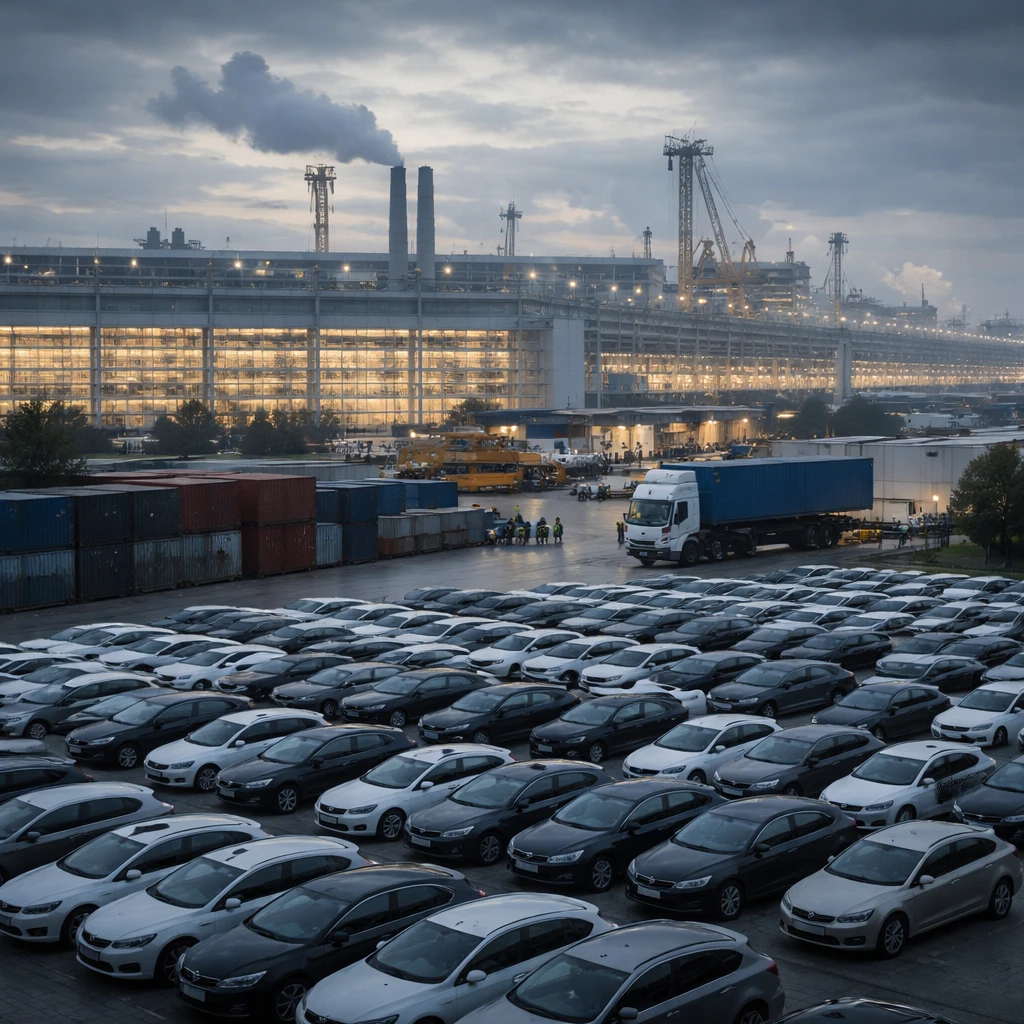
A recent assessment by the Kiel Institute for the World Economy (IfW) finds that raising U.S. tariffs on cars and trucks imported from the European Union to 25% could cut German output by nearly 15 billion euros, equal to about $17.58 billion at the exchange rate cited in the analysis.
The institute said the German automotive sector has already absorbed multi-billion-euro losses from existing U.S. import duties, and that the announced tariff escalation would add materially to those costs. "The effects would be substantial," IfW President Moritz Schularick said, and the institute's modelling indicates output losses could climb to around 30 billion euros over the longer term.
The tariff increase was announced by U.S. President Donald Trump, who said he would raise duties to 25% next week from a previously agreed 15%, stating that the bloc had not complied with its trade deal with Washington. IfW economist Julian Hinz warned of a significant hit to national performance, saying: "Germany’s already sluggish growth rate would be hit hard." The institute currently projects that the German economy will expand by 0.8% this year.
Beyond Germany, the IfW flagged other EU economies with sizable automotive sectors as vulnerable to notable output declines. The analysis named Italy, Slovakia, and Sweden among countries likely to face significant losses if the higher tariffs are applied.
Voices in Berlin urged restraint in responding to the U.S. announcement. Jens Suedekum, chief adviser to Germany's economy minister, counselled a measured approach: "The EU should simply wait and see for now." He added that it is "well known that Trump is quick to suspend or withdraw his grandiose tariff threats." Suedekum also said the U.S. president would need to justify why he believes the EU is not complying with the existing trade agreement and noted that it was unclear whether a legal basis exists for the latest tariff threat. "It all seems quite impulsive," the adviser said.
The institute's figures use the conversion rate provided with the analysis: $1 = 0.8532 euros.
Context and economic implications
- The immediate near-term output reduction for Germany is estimated at nearly 15 billion euros, with possible longer-term losses approaching 30 billion euros according to IfW analysis.
- Projected impacts extend to other auto-centric EU economies, including Italy, Slovakia, and Sweden.
- German growth is forecast by the institute at 0.8% for the current year, a rate that IfW economists say would be adversely affected by the tariff increase.