
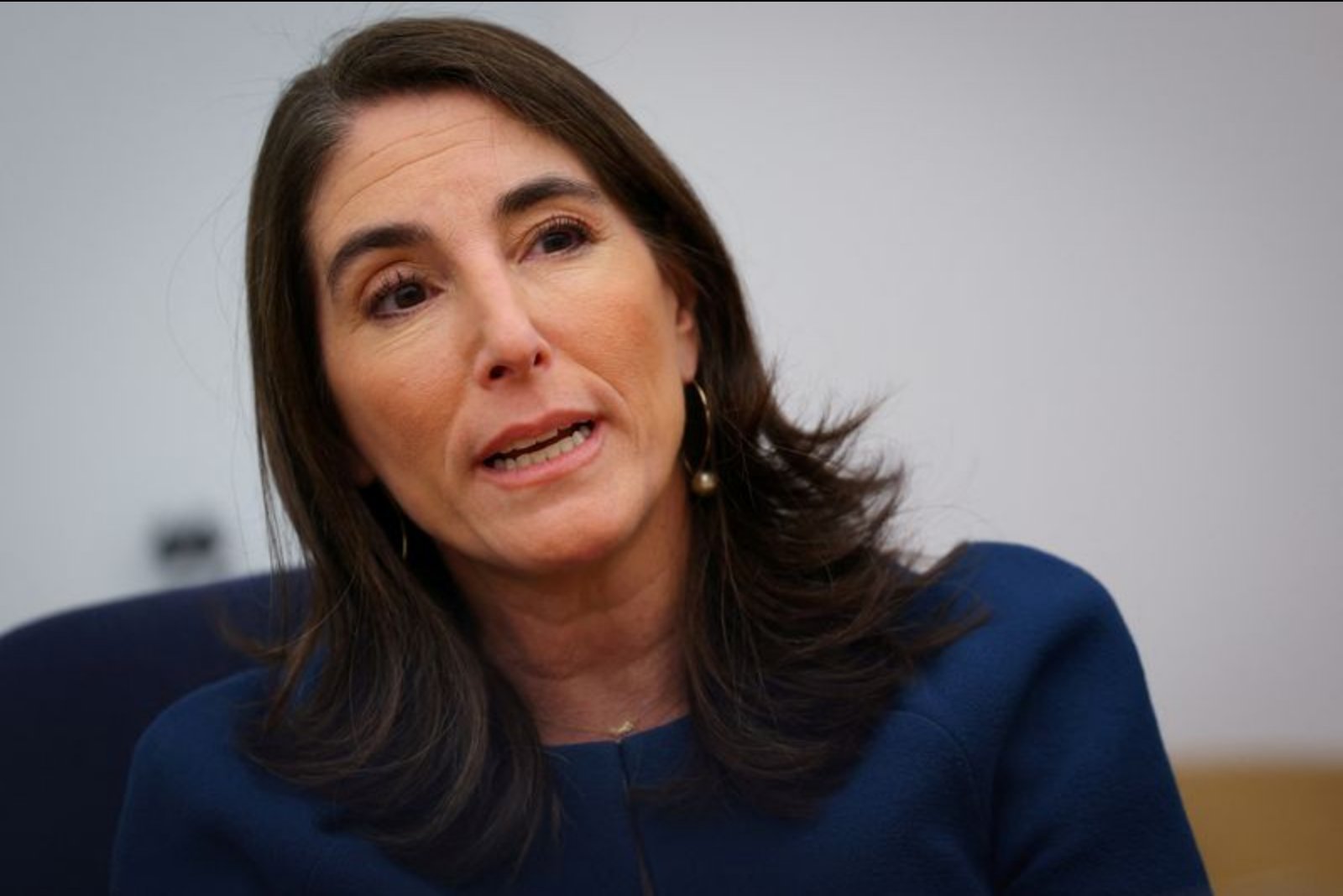
Federal Reserve Bank of Cleveland President Beth Hammack publicly opposed the Federal Reserve’s decision to keep language in the FOMC statement that suggested the next policy move would likely be easing. Hammack said she voted against the committee’s policy statement on Wednesday after concluding that the message of a continued easing bias was no longer appropriate given current conditions.
Hammack noted that the policy statement retained wording that pointed to "a pause rather than an end to the easing cycle." She said that she sees that "clear easing bias as no longer appropriate given the outlook." The official also said she had concerns about evolving risks to both inflation and the labor market.
In a written explanation of her dissent, Hammack said: "Uncertainty around the economic outlook has increased in 2026 and makes the future path for monetary policy more uncertain." She added that inflationary pressures were "broad based" and warned that "and rising oil prices present an additional source of inflationary pressure." At the same time, she said there are now upside risks to inflation and downside risks to the job market.
The vote occurred while the Fed left its target range for the federal funds rate unchanged at between 3.5% and 3.75%. Hammack’s opposition was part of a wider break from unanimity on the committee. Four officials diverged from the consensus in an unusually fractious FOMC vote: Hammack and the presidents of the Minneapolis and Dallas Federal Reserve banks opposed the statement because of its continued inclusion of language that suggested easing would be the next policy move, and one official, Fed Governor Stephen Miran, dissented in favor of an immediate rate cut.
Hammack’s remarks highlight the tensions within the committee over how to communicate future policy intentions amid shifting risks. By objecting to the easing tilt in the statement, she signaled a view that the balance of risks has changed enough to warrant removing forward-leaning language that could be interpreted as pre-committing the Fed to lower rates.
Context and implications
While the committee kept the federal funds rate target range steady at 3.5% to 3.75%, Hammack and several colleagues signaled discomfort with guiding markets toward an expected cut. Her comments emphasized both the persistence and breadth of inflation pressures and the potential for rising energy costs to add to inflation, alongside a weakening tilt in labor market prospects.