
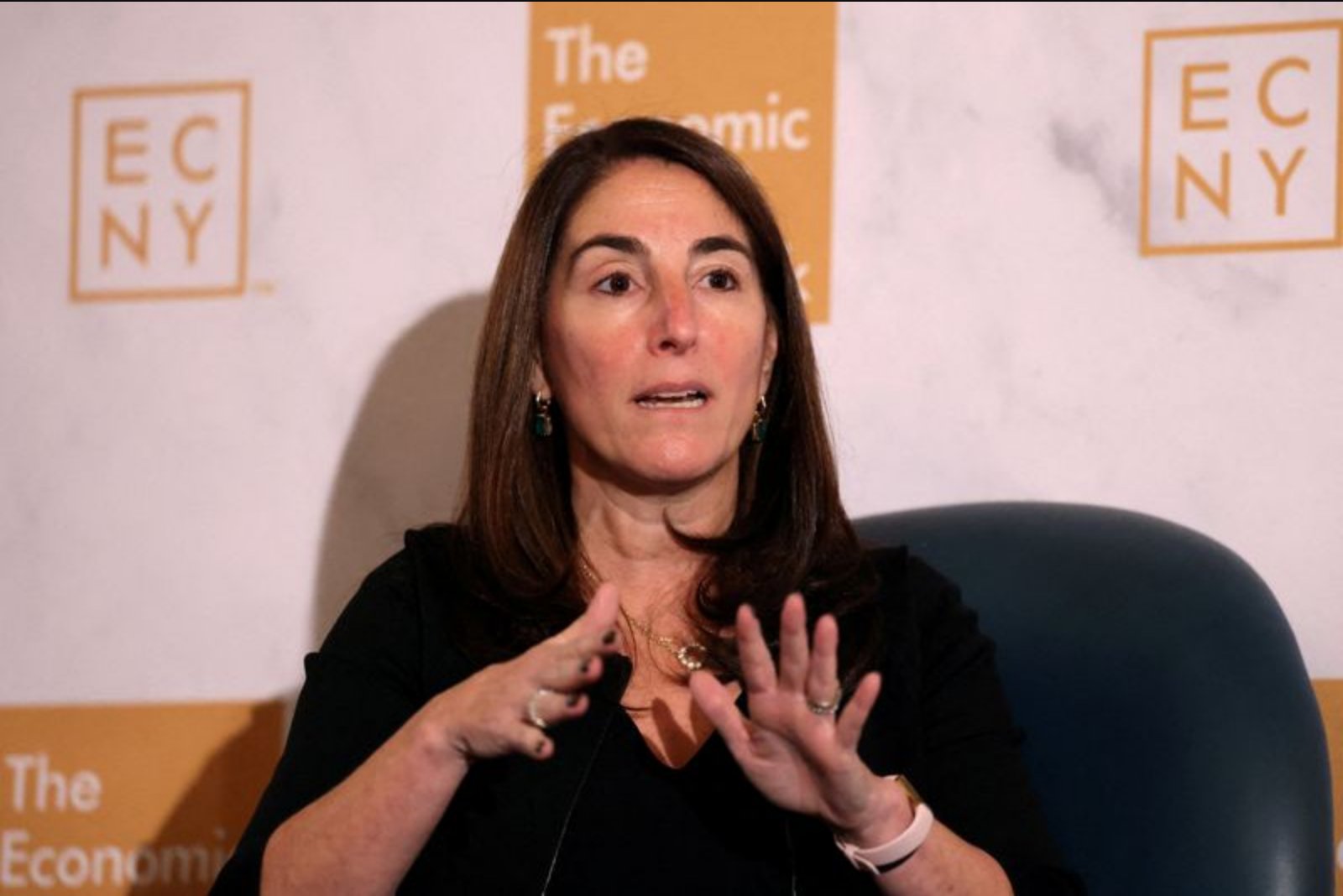
WASHINGTON, May 7 - Federal Reserve Bank of Cleveland President Beth Hammack said on Thursday that she is encountering rising concern among businesses and households that an inflationary mindset may be becoming entrenched, and that policy makers should keep an open mind about future actions.
Addressing attendees at the Ohio CEO Summit in Columbus, Hammack said her conversations with corporate leaders and ordinary citizens alike have emphasized the continuing pain of higher prices. "What I hear when I’m out with businesses is I hear concern that an inflationary mindset is starting to become entrenched in people’s minds," she said, adding: "I hear about the pain of inflation when I’m out talking to individuals."
Hammack also noted she dissented at the Federal Open Market Committee's most recent meeting over the decision to retain language that suggested the central bank's next move would be a rate cut. Her dissent reflected concern about signaling a predetermined path for policy at a time when underlying inflation dynamics remain uncertain.
She attributed the prolonged failure to reach the Fed's 2% inflation objective to a sequence of temporary price shocks. Those shocks, she said, include supply and demand disruptions tied to the COVID-19 pandemic, Russia's invasion of Ukraine, and the current Iran war. Hammack said these events have contributed to inflation remaining above target for more than five years.
Hammack's remarks underscored the practical feedback she is receiving from market participants and the public, and the way that lived experience of inflation is shaping expectations. By highlighting both business and individual perspectives, she framed inflationary expectations as a factor that could influence the economy's path and the Federal Reserve's judgment about timing and direction of policy.
Her comments at the summit reiterated a cautious approach to policy messaging - one that avoids foreclosing options. That caution informed her decision to oppose the committee's language implying the next move would be a reduction in rates.
Summary
Hammack reported hearing persistent concern about inflation from businesses and individuals, linked the failure to hit the Fed's 2% target to a series of temporary price shocks, and said she dissented at the Fed's last meeting because she favors keeping an open mind on future policy moves.
Key points
- Hammack hears growing worry among businesses that an inflationary mindset is becoming entrenched - impact on corporate planning and pricing behavior.
- She has observed households experiencing the "pain of inflation," indicating consumer-facing sectors could remain sensitive to price pressures.
- She dissented at the most recent Fed meeting over language implying the next move would be a rate cut, signaling a preference for policy flexibility.
Risks and uncertainties
- Entrenched inflation expectations could complicate monetary policy and extend price pressures - affects businesses and consumers.
- Temporary global shocks cited by Hammack have kept inflation above target for over five years, creating uncertainty about when the Fed will sustainably return inflation to 2% - impacts economic planning.
- Policy signaling that presumes a rate cut could be premature if inflation dynamics remain influenced by episodic shocks, introducing uncertainty for firms and households.