
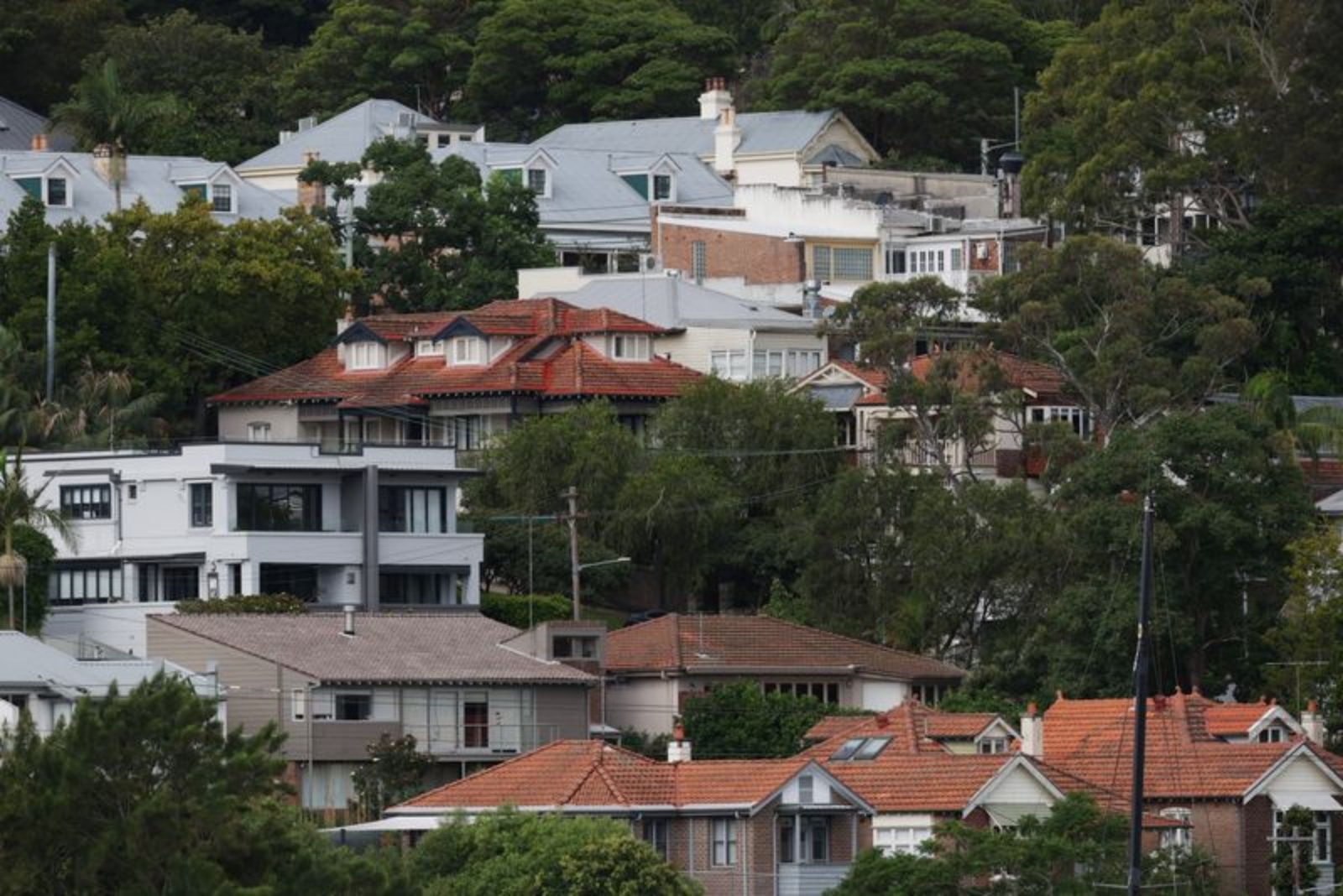
SYDNEY, May 1 - Australia's housing market lost momentum in April, with national prices rising at the slowest monthly rate in more than a year as higher borrowing costs and fallout from conflict in the Middle East put downward pressure on the largest cities.
Data from Cotality showed national home prices increasing 0.3% in April, taking the median dwelling value to a record A$940,048 ($668,844). That monthly rise marks the weakest pace of growth since January last year, just before the Reserve Bank of Australia (RBA) began a series of rate cuts that subsequently supported house prices.
The RBA has moved to lift the cash rate twice so far this year - in February and March - taking it to 4.1%. Those moves have reversed two of the three rate cuts implemented last year as policymakers aim to rein in inflation.
While national figures were positive, the two largest markets saw outright falls. House prices in Sydney and Melbourne both declined 0.6% in April as listing volumes increased. Advertised listings in Sydney were recorded at 9.4% above the five-year average, and in Melbourne they were 2.2% above the five-year average, contributing to softer price dynamics in those cities.
By contrast, other state capitals posted firmer monthly outcomes. Perth led gains with a 2.1% rise in prices, while Brisbane and Adelaide recorded increases of 1.1% and 1.2% respectively. These cities benefited from relatively low inventory levels that supported buyer competition in those markets.
Growth was not uniform across the market. Cotality noted that activity and price increases were concentrated in lower-priced segments, driven in part by demand from first-home buyers.
"The housing market was losing momentum from late last year as affordability and serviceability constraints weighed on demand," said Tim Lawless, Cotality's research director. "Now we have the additional downside pressure of higher interest rates, sentiment has fallen off a cliff, and rising inflation is set to drive the cost of debt even higher."
The report also highlighted the broader economic backdrop. The conflict in the Middle East has pushed energy costs sharply higher, denting consumer and business sentiment and clouding the domestic economic outlook.
For reference on currency conversions, the data used an exchange rate of $1 = 1.4055 Australian dollars.
Impacted sectors: mortgage lenders and housing market participants are sensitive to higher borrowing costs; energy cost increases affect household budgets and business outlook; regional housing markets and construction sectors may see divergent demand based on local inventory conditions.