
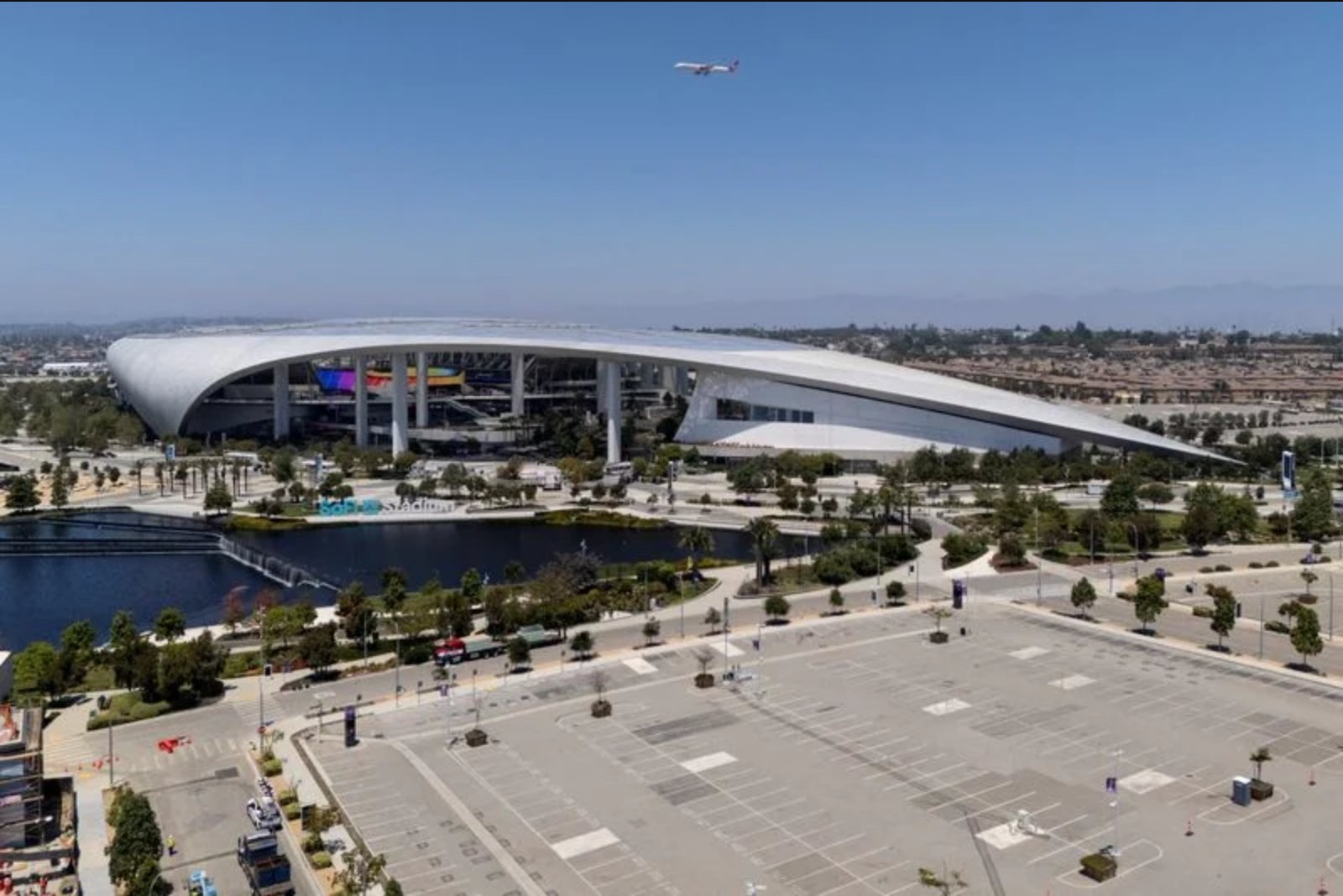
Security planning for the upcoming World Cup in the United States has added a major new variable: consumer drones. Officials, public safety teams and private counter-drone firms are working to protect stadiums, fan zones, hotels, training grounds and transit corridors across multiple host cities as they confront aircraft that can enter restricted airspace quickly and quietly.
Industry executives and U.S. officials describe a threat spectrum that ranges from well-meaning spectators hoping for social media footage to more concerning cases in which drones could be used to carry out surveillance, study security routines or attempt to disrupt matches. Melissa Swisher, chief revenue officer at SkySafe, a company that provides drone detection and airspace security services, said inexpensive unmanned aircraft have "fundamentally changed" the calculus for securing large sporting events.
"A thousand-dollar drone that’s going 40 to 45 miles per hour could cross two miles in under three minutes," Swisher said. "By the time somebody sees it, that’s already over." She added that the most likely role for drones around the World Cup is observation rather than deployment of a payload, noting that devices may be flown by hobbyists, members of the media or fans who are unaware of temporary flight restrictions.
Tom Adams, director of public safety at DroneShield and a retired FBI agent, emphasized how these aircraft can evade traditional physical security measures. "You have something that can overcome all those traditional security measures and get right over everything," Adams said. "In a lot of cases, it’s just a careless and clueless person who wants to get a cool picture to put on their social media page."
Because drones can bypass bollards, magnetometers and widened pedestrian perimeters, counter-drone firms are collaborating with law enforcement and public safety agencies to create detection networks around tournament sites. SkySafe said its sensor systems can recognize drone signals, trace flight paths and, where feasible, locate the operator. DroneShield said it is assisting with a Kansas City-area deployment, working with police and regional partners to detect drones across several jurisdictions.
Shooting a drone down is seldom a straightforward option when crowds are present, executives noted, because falling debris could injure spectators. In many scenarios, the safest immediate response may be to identify the operator, particularly when the aircraft appears to be collecting information rather than posing an imminent physical hazard.
The scope of the World Cup makes coordination more complex. The tournament will have matches and related activity across metropolitan areas and regions where security operations can span city, county and state lines. Examples cited by planners include New York-New Jersey, Boston, Kansas City and Los Angeles. California hosts matches at SoFi Stadium in Inglewood and at the venue in Santa Clara, and the state received the largest FEMA grant among hosts, nearly $34.6 million.
Federal avenues have been tapped to bolster local preparations. The Trump administration has reportedly spent $250 million since December to help U.S. host cities address drone threats. That allocation, routed through the Federal Emergency Management Agency, was distributed to 11 host states and Washington, D.C., with the stated purpose of helping to track and mitigate unauthorized aircraft.
On match days, the Federal Aviation Administration will impose airspace restrictions that bar planes and drones within 3.5 miles of stadiums and below 3,000 feet. Even with such limits, operators and security teams highlighted how the combination of many venues, fan activities and multi-jurisdictional boundaries raises the difficulty of consistent enforcement.
Executives offered a forward-looking observation about how this World Cup experience may influence future event planning. Swisher said lessons learned now are likely to affect preparations for the 2028 Los Angeles Olympics. "They’re not going away," she said of drones. "Tech continues to get more and more sophisticated."
Key points
- Consumer drones are viewed as a primary and complex threat to World Cup security because they can enter restricted areas quickly and bypass standard physical protections. Sectors affected: public safety, stadium operations, aviation.
- Counter-drone firms such as SkySafe and DroneShield are deploying sensors and coordinating with law enforcement to detect signals, track flights and, where possible, locate operators across multiple jurisdictions. Sectors affected: security technology, law enforcement, municipal governments.
- Federal funding and FAA restrictions are in place to assist hosts, including roughly $250 million distributed via FEMA and match-day airspace limits within 3.5 miles and below 3,000 feet. Sectors affected: emergency management, aviation, event logistics.
Risks and uncertainties
- Operational risk: Drones can defeat conventional perimeter measures and reach areas that are otherwise secured, increasing the vulnerability of venues and transit routes. This impacts stadium operations and public safety planning.
- Mitigation trade-offs: Shooting down drones over crowds presents a safety hazard due to falling debris, constraining response options and placing emphasis on detection and operator identification rather than immediate kinetic removal. This affects law enforcement tactics and spectator safety considerations.
- Coordination complexity: The tournament’s broad geographic footprint complicates enforcement and response because security activities span city, county and state lines, making consistent detection and mitigation more difficult. This impacts regional emergency management and interagency collaboration.